Gelest, Inc. TRICHLOROSILANE, 99% SIT8155.0

Description
Additional Properties Hydrolytic Sensitivity 8: reacts rapidly with moisture, water, protic solvents Surface Tension (mN/m) 14.3 Application Generates chlorosilylene chemistry.1 Carries out thionation and selenation of amides and lactams with elemental sulfur or selenium, respectively.2 Fieser F&F: Vol. 3, p 298; Vol. 4, p 525; Vol. 5, p 688; Vol. 7, p 606; Vol. 11, p 553; Vol. 13, p 322; Vol. 14, p 82; Vol. 18, p 373. Reference 1. Jung, I. N. et al. Organometallics 2003, 22, 2551. 2. Shibahara, F. et al. Org. Lett. 2009, 11, 3064. Safety Hazard Info oral rat, LD50: 1,030 mg/kg Flammability Limit 6.9-70.0% Packaging Under Nitrogen Tri-substituted Silane Reducing Agent Organosilanes are hydrocarbon-like and possess the ability to serve as both ionic and free-radical reducing agents. These reagents and their reaction by-products are safer and more easily handled and disposed than many other reducing agents. The metallic nature of silicon and its low electronegativity relative to hydrogen lead to polarization of the Si-H bond yielding a hydridic hydrogen and a milder reducing agent compared to aluminum-, boron-, and other metal-based hydrides. A summary of some key silane reductions are presented in Table 1 of the Silicon-Based Reducing Agents brochure. Trichlorosilane; Silicochloroform hydrotrichlorosilane ; Silicon chloride hydride; Trichloromonosilane SURFACE TRANSPORT ONLY, UPS FORBIDDEN AIR TRANSPORT FORBIDDEN Viscosity, 25 °C: 0.23 cSt ΔHform: -482 kJ/mol ΔHvap: 28.0 kJ/mol Dipole moment: 0.97 debye Specific wetting surface: 240 m2/g Surface tension: 14.3 mN/m Specific heat: 1.05 J/g/°C Coefficient of thermal expansion: 1.9 x 10⁻³ Vapor pressure, -70 °C: 2.5 mm Vapor pressure, 14.5 °C: 400 mm Critical temperature: 234 °C Critical pressure: 37 atm Flammability limit: 6.9-70.0% Undergoes hydrosilylation reactions Employed in production of high purity silicon metal Generates chlorosilylene chemistry Carries out thionation and selenation of amides and lactams with elemental sulfur or selenium, respectively Will form high-boiling polymeric by-products with aqueous work-up Reduces aromatic carbonyl systems to give benzyltrichlorosilan es, which can be desilylated to toluenes Reduces phosphine oxides to phosphines Extensive review of silicon based reducing agents: Larson, G.; Fry, J. L. "Ionic and Organometallic-Catal yzed Organosilane Reductions", Wipf, P., Ed.; Wiley, 2007
Datasheet
Description
Additional Properties Hydrolytic Sensitivity 8: reacts rapidly with moisture, water, protic solvents Surface Tension (mN/m) 14.3 Application Generates chlorosilylene chemistry.1 Carries out thionation and selenation of amides and lactams with elemental sulfur or selenium, respectively.2 Fieser F&F: Vol. 3, p 298; Vol. 4, p 525; Vol. 5, p 688; Vol. 7, p 606; Vol. 11, p 553; Vol. 13, p 322; Vol. 14, p 82; Vol. 18, p 373. Reference 1. Jung, I. N. et al. Organometallics 2003, 22, 2551. 2. Shibahara, F. et al. Org. Lett. 2009, 11, 3064. Safety Hazard Info oral rat, LD50: 1,030 mg/kg Flammability Limit 6.9-70.0% Packaging Under Nitrogen Tri-substituted Silane Reducing Agent Organosilanes are hydrocarbon-like and possess the ability to serve as both ionic and free-radical reducing agents. These reagents and their reaction by-products are safer and more easily handled and disposed than many other reducing agents. The metallic nature of silicon and its low electronegativity relative to hydrogen lead to polarization of the Si-H bond yielding a hydridic hydrogen and a milder reducing agent compared to aluminum-, boron-, and other metal-based hydrides. A summary of some key silane reductions are presented in Table 1 of the Silicon-Based Reducing Agents brochure. Trichlorosilane; Silicochloroform hydrotrichlorosilane ; Silicon chloride hydride; Trichloromonosilane SURFACE TRANSPORT ONLY, UPS FORBIDDEN AIR TRANSPORT FORBIDDEN Viscosity, 25 °C: 0.23 cSt ΔHform: -482 kJ/mol ΔHvap: 28.0 kJ/mol Dipole moment: 0.97 debye Specific wetting surface: 240 m2/g Surface tension: 14.3 mN/m Specific heat: 1.05 J/g/°C Coefficient of thermal expansion: 1.9 x 10⁻³ Vapor pressure, -70 °C: 2.5 mm Vapor pressure, 14.5 °C: 400 mm Critical temperature: 234 °C Critical pressure: 37 atm Flammability limit: 6.9-70.0% Undergoes hydrosilylation reactions Employed in production of high purity silicon metal Generates chlorosilylene chemistry Carries out thionation and selenation of amides and lactams with elemental sulfur or selenium, respectively Will form high-boiling polymeric by-products with aqueous work-up Reduces aromatic carbonyl systems to give benzyltrichlorosilan es, which can be desilylated to toluenes Reduces phosphine oxides to phosphines Extensive review of silicon based reducing agents: Larson, G.; Fry, J. L. "Ionic and Organometallic-Catal yzed Organosilane Reductions", Wipf, P., Ed.; Wiley, 2007
Datasheet

Suppliers

Company
Product
Description
Supplier Links
TRICHLOROSILANE, 99% - SIT8155.0 - Gelest, Inc.
Morrisville, PA, United States
TRICHLOROSILANE, 99%
SIT8155.0
TRICHLOROSILANE, 99% SIT8155.0
Additional Properties Hydrolytic Sensitivity 8: reacts rapidly with moisture, water, protic solvents Surface Tension (mN/m) 14.3 Application Generates chlorosilylene chemistry.1 Carries out thionation and selenation of amides and lactams with elemental sulfur or selenium, respectively.2 Fieser F&F: Vol. 3, p 298; Vol. 4, p 525; Vol. 5, p 688; Vol. 7, p 606; Vol. 11, p 553; Vol. 13, p 322; Vol. 14, p 82; Vol. 18, p 373. Reference 1. Jung, I. N. et al. Organometallics 2003, 22, 2551. 2. Shibahara, F. et al. Org. Lett. 2009, 11, 3064. Safety Hazard Info oral rat, LD50: 1,030 mg/kg Flammability Limit 6.9-70.0% Packaging Under Nitrogen Tri-substituted Silane Reducing Agent Organosilanes are hydrocarbon-like and possess the ability to serve as both ionic and free-radical reducing agents. These reagents and their reaction by-products are safer and more easily handled and disposed than many other reducing agents. The metallic nature of silicon and its low electronegativity relative to hydrogen lead to polarization of the Si-H bond yielding a hydridic hydrogen and a milder reducing agent compared to aluminum-, boron-, and other metal-based hydrides. A summary of some key silane reductions are presented in Table 1 of the Silicon-Based Reducing Agents brochure. Trichlorosilane; Silicochloroform hydrotrichlorosilane ; Silicon chloride hydride; Trichloromonosilane SURFACE TRANSPORT ONLY, UPS FORBIDDEN AIR TRANSPORT FORBIDDEN Viscosity, 25 °C: 0.23 cSt ΔHform: -482 kJ/mol ΔHvap: 28.0 kJ/mol Dipole moment: 0.97 debye Specific wetting surface: 240 m2/g Surface tension: 14.3 mN/m Specific heat: 1.05 J/g/°C Coefficient of thermal expansion: 1.9 x 10⁻³ Vapor pressure, -70 °C: 2.5 mm Vapor pressure, 14.5 °C: 400 mm Critical temperature: 234 °C Critical pressure: 37 atm Flammability limit: 6.9-70.0% Undergoes hydrosilylation reactions Employed in production of high purity silicon metal Generates chlorosilylene chemistry Carries out thionation and selenation of amides and lactams with elemental sulfur or selenium, respectively Will form high-boiling polymeric by-products with aqueous work-up Reduces aromatic carbonyl systems to give benzyltrichlorosilan es, which can be desilylated to toluenes Reduces phosphine oxides to phosphines Extensive review of silicon based reducing agents: Larson, G.; Fry, J. L. "Ionic and Organometallic-Catal yzed Organosilane Reductions", Wipf, P., Ed.; Wiley, 2007
Additional Properties


  • Hydrolytic Sensitivity 8: reacts rapidly with moisture, water, protic solvents
  • Surface Tension (mN/m) 14.3
    Application
    Generates chlorosilylene chemistry.1 Carries out thionation and selenation of amides and lactams with elemental sulfur or selenium, respectively.2
    Fieser
    F&F: Vol. 3, p 298; Vol. 4, p 525; Vol. 5, p 688; Vol. 7, p 606; Vol. 11, p 553; Vol. 13, p 322; Vol. 14, p 82; Vol. 18, p 373.
    Reference
    1. Jung, I. N. et al. Organometallics 2003, 22, 2551. 2. Shibahara, F. et al. Org. Lett. 2009, 11, 3064.
    Safety
  • Hazard Info oral rat, LD50: 1,030 mg/kg
  • Flammability Limit 6.9-70.0%
  • Packaging Under Nitrogen
    Tri-substituted Silane Reducing Agent
    Organosilanes are hydrocarbon-like and possess the ability to serve as both ionic and free-radical reducing agents. These reagents and their reaction by-products are safer and more easily handled and disposed than many other reducing agents. The metallic nature of silicon and its low electronegativity relative to hydrogen lead to polarization of the Si-H bond yielding a hydridic hydrogen and a milder reducing agent compared to aluminum-, boron-, and other metal-based hydrides. A summary of some key silane reductions are presented in Table 1 of the Silicon-Based Reducing Agents brochure.
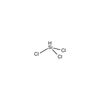
    Trichlorosilane; Silicochloroform hydrotrichlorosilane; Silicon chloride hydride; Trichloromonosilane
  • SURFACE TRANSPORT ONLY, UPS FORBIDDEN
  • AIR TRANSPORT FORBIDDEN
  • Viscosity, 25 °C: 0.23 cSt
  • ΔHform: -482 kJ/mol
  • ΔHvap: 28.0 kJ/mol
  • Dipole moment: 0.97 debye
  • Specific wetting surface: 240 m2/g
  • Surface tension: 14.3 mN/m
  • Specific heat: 1.05 J/g/°C
  • Coefficient of thermal expansion: 1.9 x 10⁻³
  • Vapor pressure, -70 °C: 2.5 mm
  • Vapor pressure, 14.5 °C: 400 mm
  • Critical temperature: 234 °C
  • Critical pressure: 37 atm
  • Flammability limit: 6.9-70.0%
  • Undergoes hydrosilylation reactions
  • Employed in production of high purity silicon metal
  • Generates chlorosilylene chemistry
  • Carries out thionation and selenation of amides and lactams with elemental sulfur or selenium, respectively
  • Will form high-boiling polymeric by-products with aqueous work-up
  • Reduces aromatic carbonyl systems to give benzyltrichlorosilanes, which can be desilylated to toluenes
  • Reduces phosphine oxides to phosphines
  • Extensive review of silicon based reducing agents: Larson, G.; Fry, J. L. "Ionic and Organometallic-Catalyzed Organosilane Reductions", Wipf, P., Ed.; Wiley, 2007
Supplier's Site Datasheet

Technical Specifications

  Gelest, Inc.
Product Category Inorganic Chemicals and Compounds
Product Number SIT8155.0
Product Name TRICHLOROSILANE, 99%
Acids All Inorganic Acids; Hydrochloric Acid (HCl)
Unlock Full Specs
to access all available technical data

Similar Products

pH Buffer 10.01 - 238898 - Hamilton Company
Specs
Type Other; Buffer
State of Matter Liquids
Volume 262 gallons (990 liters)
View Details
Specs
Type Other; Transition Metal Compound
Chemical Name Zirconium Silicate
State of Matter Powders
View Details
Silver Nitrate 0.5 percent (for Churukian Schenk) - s2021 - Poly Scientific
Specs
Chemical Name Silver Nitrate 0.5 percent (for Churukian Schenk)
View Details
Indium Compounds - Indium Acetate - Anhydrous Powder - Indium Corporation
Specs
Chemical Name Indium Acetate
Chemical Formula In(CH3COO)3
State of Matter Powders
View Details