Additional Properties
Hydrolytic Sensitivity 8: reacts rapidly with moisture, water, protic solvents Application May be reduced to silicon metal.1 Reacts with NH3 <500° to form SiN.2 Reference 1. Szekely,G. J. Electrochem. Soc. 1957, 104, 663. 2. Kaloyeros, A. et al. Chemical Aspects of Electronic Ceramic Processing MRS Proc 1998, 495. Safety
Packaging Under Nitrogen ALD Material Atomic layer deposition (ALD) is a chemically self-limiting deposition technique that is based on the sequential use of a gaseous chemical process. A thin film (as fine as -0.1 Å per cycle) results from repeating the deposition sequence as many times as needed to reach a certain thickness. The major characteristic of the films is the resulting conformality and the controlled deposition manner. Precursor selection is key in ALD processes, namely finding molecules which will have enough reactivity to produce the desired films yet are stable enough to be handled and safely delivered to the reaction chamber. Tetraiodosilane; Silicon tetraiodide; Silicon iodide
?Hform: -189.5 kJ/mol
?Hfus: -29 kJ/mol
UV absorption max: 284 nm
May be reduced to silicon metal
Reacts with NH3 <500 °C to form SiN
Can be ignited in air forming SiO2
Gelest, Inc.
Done
Datasheet
Description
Additional Properties
Hydrolytic Sensitivity 8: reacts rapidly with moisture, water, protic solvents Application May be reduced to silicon metal.1 Reacts with NH3 <500° to form SiN.2 Reference 1. Szekely,G. J. Electrochem. Soc. 1957, 104, 663. 2. Kaloyeros, A. et al. Chemical Aspects of Electronic Ceramic Processing MRS Proc 1998, 495. Safety
Packaging Under Nitrogen ALD Material Atomic layer deposition (ALD) is a chemically self-limiting deposition technique that is based on the sequential use of a gaseous chemical process. A thin film (as fine as -0.1 Å per cycle) results from repeating the deposition sequence as many times as needed to reach a certain thickness. The major characteristic of the films is the resulting conformality and the controlled deposition manner. Precursor selection is key in ALD processes, namely finding molecules which will have enough reactivity to produce the desired films yet are stable enough to be handled and safely delivered to the reaction chamber. Tetraiodosilane; Silicon tetraiodide; Silicon iodide
?Hform: -189.5 kJ/mol
?Hfus: -29 kJ/mol
UV absorption max: 284 nm
May be reduced to silicon metal
Reacts with NH3 <500 °C to form SiN
Can be ignited in air forming SiO2
Additional Properties
Hydrolytic Sensitivity 8: reacts rapidly with moisture, water, protic solvents Application May be reduced to silicon metal.1 Reacts with NH3 <500° to form SiN.2 Reference 1. Szekely,G. J. Electrochem. Soc. 1957, 104, 663. 2. Kaloyeros, A. et al. Chemical Aspects of Electronic Ceramic Processing MRS Proc 1998, 495. Safety
Packaging Under Nitrogen ALD Material Atomic layer deposition (ALD) is a chemically self-limiting deposition technique that is based on the sequential use of a gaseous chemical process. A thin film (as fine as -0.1 Å per cycle) results from repeating the deposition sequence as many times as needed to reach a certain thickness. The major characteristic of the films is the resulting conformality and the controlled deposition manner. Precursor selection is key in ALD processes, namely finding molecules which will have enough reactivity to produce the desired films yet are stable enough to be handled and safely delivered to the reaction chamber. Tetraiodosilane; Silicon tetraiodide; Silicon iodide
?Hform: -189.5 kJ/mol
?Hfus: -29 kJ/mol
UV absorption max: 284 nm
May be reduced to silicon metal
Reacts with NH3 <500 °C to form SiN
Can be ignited in air forming SiO2
Additional Properties
Hydrolytic Sensitivity 8: reacts rapidly with moisture, water, protic solvents
Application
May be reduced to silicon metal.1 Reacts with NH3 <500° to form SiN.2
Reference
1. Szekely,G. J. Electrochem. Soc. 1957, 104, 663. 2. Kaloyeros, A. et al. Chemical Aspects of Electronic Ceramic Processing MRS Proc 1998, 495.
Safety
Packaging Under Nitrogen
ALD Material
Atomic layer deposition (ALD) is a chemically self-limiting deposition technique that is based on the sequential use of a gaseous chemical process. A thin film (as fine as -0.1 Å per cycle) results from repeating the deposition sequence as many times as needed to reach a certain thickness. The major characteristic of the films is the resulting conformality and the controlled deposition manner. Precursor selection is key in ALD processes, namely finding molecules which will have enough reactivity to produce the desired films yet are stable enough to be handled and safely delivered to the reaction chamber.
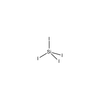
Tetraiodosilane; Silicon tetraiodide; Silicon iodide