Additional Properties
Hydrolytic Sensitivity 7: reacts slowly with moisture/water Safety
Packaging Under Nitrogen Arylsilane Cross-Coupling Agent The cross-coupling reaction is a highly useful methodology for the formation of carbon-carbon bonds. It involves two reagents, with one typically being a suitable organometallic reagent - the nucleophile - and the other a suitable organic substrate, normally an unsaturated halide, tosylate or similar - the electrophile. Pentafluorophenyltri
ethoxysilane; Triethoxysilylperflu
orobenzene
Forms hydrogen-free silicone resins useful in optical coatings
Useful for the preparation of pentafluorophenyl derivatives
Extensive review of silicon based cross-coupling agents: Denmark, S. E. et al. "Organic Reactions, Volume 75" Denmark, S. E. ed., John Wiley and Sons, 233, 2011
Gelest, Inc.
Done
Datasheet
Description
Additional Properties
Hydrolytic Sensitivity 7: reacts slowly with moisture/water Safety
Packaging Under Nitrogen Arylsilane Cross-Coupling Agent The cross-coupling reaction is a highly useful methodology for the formation of carbon-carbon bonds. It involves two reagents, with one typically being a suitable organometallic reagent - the nucleophile - and the other a suitable organic substrate, normally an unsaturated halide, tosylate or similar - the electrophile. Pentafluorophenyltri
ethoxysilane; Triethoxysilylperflu
orobenzene
Forms hydrogen-free silicone resins useful in optical coatings
Useful for the preparation of pentafluorophenyl derivatives
Extensive review of silicon based cross-coupling agents: Denmark, S. E. et al. "Organic Reactions, Volume 75" Denmark, S. E. ed., John Wiley and Sons, 233, 2011
Additional Properties
Hydrolytic Sensitivity 7: reacts slowly with moisture/water Safety
Packaging Under Nitrogen Arylsilane Cross-Coupling Agent The cross-coupling reaction is a highly useful methodology for the formation of carbon-carbon bonds. It involves two reagents, with one typically being a suitable organometallic reagent - the nucleophile - and the other a suitable organic substrate, normally an unsaturated halide, tosylate or similar - the electrophile. Pentafluorophenyltri
ethoxysilane; Triethoxysilylperflu
orobenzene
Forms hydrogen-free silicone resins useful in optical coatings
Useful for the preparation of pentafluorophenyl derivatives
Extensive review of silicon based cross-coupling agents: Denmark, S. E. et al. "Organic Reactions, Volume 75" Denmark, S. E. ed., John Wiley and Sons, 233, 2011
Additional Properties
Hydrolytic Sensitivity 7: reacts slowly with moisture/water
Safety
Packaging Under Nitrogen
Arylsilane Cross-Coupling Agent
The cross-coupling reaction is a highly useful methodology for the formation of carbon-carbon bonds. It involves two reagents, with one typically being a suitable organometallic reagent - the nucleophile - and the other a suitable organic substrate, normally an unsaturated halide, tosylate or similar - the electrophile.
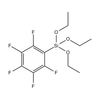
Pentafluorophenyltriethoxysilane; Triethoxysilylperfluorobenzene
Forms hydrogen-free silicone resins useful in optical coatings
Useful for the preparation of pentafluorophenyl derivatives
Extensive review of silicon based cross-coupling agents: Denmark, S. E. et al. "Organic Reactions, Volume 75" Denmark, S. E. ed., John Wiley and Sons, 233, 2011