Description
Additional Properties
Hydrolytic Sensitivity 8: reacts rapidly with moisture, water, protic solvents Application Review of synthetic utility.1 Initiator for group transfer polymerization.2 With SmI2 converts ketones and aldehydes to silyl enol ethers.3 Cross-couples with aryl bromides.4 Undergoes ?-arylation to form 2-aryl acetates.5 Reacts with fullerenes to form ?-fullerenyl esters.6 Adds to ethyl propiolate in a 2+2 cycloaddition fashion.7 Reference 1. Handbook of Reagents for Organic Synthesis, Reagents for Silicon-Mediated Organic Synthesis, Fuchs, P. L. Ed., John Wiley and Sons, Ltd., 2011, p. 376-380. 2. Webster, O. et al. Science 1983, 222, 39. 3. Hydrio, J. et al. Synthesis 1997, 68, 1. 4. Hama, T. et al. J. Am. Chem. Soc. 2003, 125, 11176. 5. Liu, X.; Hartwig, J. F. J. Am. Chem. Soc. 2004, 126, 5182. 6. Nakamura, E. et al. Org. Lett. 2008, 10, 4923. 7. Quendo, A.; Rousseau, Tetrahedron Lett. 1988, 29, 6443. Safety
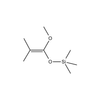
Packaging Under Nitrogen Trimethylsilyl Blocking Agent Used as a protecting group for reactive hydrogens in alcohols, amines, thiols, and carboxylic acids. Organosilanes are hydrogen-like, can be introduced in high yield, and can be removed under selective conditions. They are stable over a wide range of reaction conditions and can be removed in the presence of other functional groups, including other protecting groups. The tolerance of silylated alcohols to chemical transformations summary is presented in Table 1 of the Silicon-Based Blocking Agents brochure. 1- Methoxy-1-trimethysi
loxy-2-methyl-1-prop
ene; Methyl(trimethylsily
l)dimethylketene acetal; 1-Methoxy-2-methyl-1
-(trimethylsiloxy)pr
opene
Used for silylation of acids, alcohols, thiols, amides and ketones
Nafion SAC-13 has been shown to be a recyclable catalyst for the trimethylsilylation of primary, secondary, and tertiary alcohols in excellent yields and short reaction times
Summary of selective deprotection conditions is provided in Table 7 through Table 20 of the Silicon-Based Blocking Agents brochure