Additional Properties
Hydrolytic Sensitivity 1: no significant reaction with aqueous systems Application Intermediate for curare analogs.1 Potential vinyl nucleophile in cross-coupling reactions.2 Reference 1. Tacke, R. et al. Z. Naturforsch., B: Anorg. Chem., Org. Chem. 1982, 37B, 1461. 2. Larson, G. L. “Silicon-Based Cross-Coupling Reagents” Gelest, Inc. 2011. Safety
Packaging Under Nitrogen Alkenylsilane Cross-Coupling Agent The cross-coupling reaction is a highly useful methodology for the formation of carbon-carbon bonds. It involves two reagents, with one typically being a suitable organometallic reagent - the nucleophile - and the other a suitable organic substrate, normally an unsaturated halide, tosylate or similar - the electrophile. 1,4-Divinyl-1,1,4,4-
tetramethyl-1,4-disi
labutane; Bis(ethenyldimethyls
ilyl)ethane
Potential vinyl donor in cross-coupling reactions
Intermediate for curare analogs
Potential vinyl nucleophile in cross-coupling reactions
Extensive review of silicon based cross-coupling agents: Denmark, S. E. et al. "Organic Reactions, Volume 75" Denmark, S. E. ed., John Wiley and Sons, 233, 2011
Gelest, Inc.
Done
Datasheet
Description
Additional Properties
Hydrolytic Sensitivity 1: no significant reaction with aqueous systems Application Intermediate for curare analogs.1 Potential vinyl nucleophile in cross-coupling reactions.2 Reference 1. Tacke, R. et al. Z. Naturforsch., B: Anorg. Chem., Org. Chem. 1982, 37B, 1461. 2. Larson, G. L. “Silicon-Based Cross-Coupling Reagents” Gelest, Inc. 2011. Safety
Packaging Under Nitrogen Alkenylsilane Cross-Coupling Agent The cross-coupling reaction is a highly useful methodology for the formation of carbon-carbon bonds. It involves two reagents, with one typically being a suitable organometallic reagent - the nucleophile - and the other a suitable organic substrate, normally an unsaturated halide, tosylate or similar - the electrophile. 1,4-Divinyl-1,1,4,4-
tetramethyl-1,4-disi
labutane; Bis(ethenyldimethyls
ilyl)ethane
Potential vinyl donor in cross-coupling reactions
Intermediate for curare analogs
Potential vinyl nucleophile in cross-coupling reactions
Extensive review of silicon based cross-coupling agents: Denmark, S. E. et al. "Organic Reactions, Volume 75" Denmark, S. E. ed., John Wiley and Sons, 233, 2011
Additional Properties
Hydrolytic Sensitivity 1: no significant reaction with aqueous systems Application Intermediate for curare analogs.1 Potential vinyl nucleophile in cross-coupling reactions.2 Reference 1. Tacke, R. et al. Z. Naturforsch., B: Anorg. Chem., Org. Chem. 1982, 37B, 1461. 2. Larson, G. L. “Silicon-Based Cross-Coupling Reagents” Gelest, Inc. 2011. Safety
Packaging Under Nitrogen Alkenylsilane Cross-Coupling Agent The cross-coupling reaction is a highly useful methodology for the formation of carbon-carbon bonds. It involves two reagents, with one typically being a suitable organometallic reagent - the nucleophile - and the other a suitable organic substrate, normally an unsaturated halide, tosylate or similar - the electrophile. 1,4-Divinyl-1,1,4,4-
tetramethyl-1,4-disi
labutane; Bis(ethenyldimethyls
ilyl)ethane
Potential vinyl donor in cross-coupling reactions
Intermediate for curare analogs
Potential vinyl nucleophile in cross-coupling reactions
Extensive review of silicon based cross-coupling agents: Denmark, S. E. et al. "Organic Reactions, Volume 75" Denmark, S. E. ed., John Wiley and Sons, 233, 2011
Additional Properties
Hydrolytic Sensitivity 1: no significant reaction with aqueous systems
Application
Intermediate for curare analogs.1 Potential vinyl nucleophile in cross-coupling reactions.2
Reference
1. Tacke, R. et al. Z. Naturforsch., B: Anorg. Chem., Org. Chem. 1982, 37B, 1461. 2. Larson, G. L. “Silicon-Based Cross-Coupling Reagents” Gelest, Inc. 2011.
Safety
Packaging Under Nitrogen
Alkenylsilane Cross-Coupling Agent
The cross-coupling reaction is a highly useful methodology for the formation of carbon-carbon bonds. It involves two reagents, with one typically being a suitable organometallic reagent - the nucleophile - and the other a suitable organic substrate, normally an unsaturated halide, tosylate or similar - the electrophile.
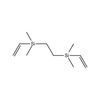
1,4-Divinyl-1,1,4,4-tetramethyl-1,4-disilabutane; Bis(ethenyldimethylsilyl)ethane
Potential vinyl donor in cross-coupling reactions
Intermediate for curare analogs
Potential vinyl nucleophile in cross-coupling reactions
Extensive review of silicon based cross-coupling agents: Denmark, S. E. et al. "Organic Reactions, Volume 75" Denmark, S. E. ed., John Wiley and Sons, 233, 2011
Chemical Name
Trifluoroacetic Acid, Trifluoroacetic Anhydride, Ethyl Trifluoroacetate, Sodium Trifluoroacetate, 2,3,4-Trifluoro aniline, Trifluoroacetamide, & More
CAS Number
76-05-1, 407-25-0, 383-63-1, 2923-18-4, 3862-73-5, 354-38-1, 148043-73-6, 30071-93-3, 677-69-0, 122665-97-8, 118612-00-3, 136040-19-2, and More



![2-[2-(4-Fluorophenyl)-2-oxo-1-phenyl-ethyl]-4-methyl-3-oxo.. - 10354 - Medical Isotopes, Inc.](https://partimages.globalspec.com/21/1771/1326771_medium.png)
