Additional Properties
Hydrolytic Sensitivity 3: reacts with aqueous base Application Employed in the kinetic resolution of racemic alcohols.1 Reference 1. Weickgenannt, A. et al. Angew. Chem., Int. Ed. Engl. 2010, 49, 2223. Safety
Packaging Under Nitrogen Tri-substituted Silane Reducing Agent Organosilanes are hydrocarbon-like and possess the ability to serve as both ionic and free-radical reducing agents. These reagents and their reaction by-products are safer and more easily handled and disposed than many other reducing agents. The metallic nature of silicon and its low electronegativity relative to hydrogen lead to polarization of the Si-H bond yielding a hydridic hydrogen and a milder reducing agent compared to aluminum-, boron-, and other metal-based hydrides. A summary of some key silane reductions are presented in Table 1 of the Silicon-Based Reducing Agents brochure. Diphenylmethylsilane
; Hydridomethyldipheny
lsilane; Methyldiphenylsilane
ΔHvap: 64.5 kJ/mol
Vapor pressure, 100 °C: 1 mm
Employed in the kinetic resolution of racemic alcohols
Used to reduce α-alkoxy ketones to diols and α-amino ketones to aminoethanols with high stereoselectivity
Extensive review of silicon based reducing agents: Larson, G.; Fry, J. L. "Ionic and Organometallic-Catal
yzed Organosilane Reductions", Wipf, P., Ed.; Wiley, 2007
Gelest, Inc.
Done
Datasheet
Description
Additional Properties
Hydrolytic Sensitivity 3: reacts with aqueous base Application Employed in the kinetic resolution of racemic alcohols.1 Reference 1. Weickgenannt, A. et al. Angew. Chem., Int. Ed. Engl. 2010, 49, 2223. Safety
Packaging Under Nitrogen Tri-substituted Silane Reducing Agent Organosilanes are hydrocarbon-like and possess the ability to serve as both ionic and free-radical reducing agents. These reagents and their reaction by-products are safer and more easily handled and disposed than many other reducing agents. The metallic nature of silicon and its low electronegativity relative to hydrogen lead to polarization of the Si-H bond yielding a hydridic hydrogen and a milder reducing agent compared to aluminum-, boron-, and other metal-based hydrides. A summary of some key silane reductions are presented in Table 1 of the Silicon-Based Reducing Agents brochure. Diphenylmethylsilane
; Hydridomethyldipheny
lsilane; Methyldiphenylsilane
ΔHvap: 64.5 kJ/mol
Vapor pressure, 100 °C: 1 mm
Employed in the kinetic resolution of racemic alcohols
Used to reduce α-alkoxy ketones to diols and α-amino ketones to aminoethanols with high stereoselectivity
Extensive review of silicon based reducing agents: Larson, G.; Fry, J. L. "Ionic and Organometallic-Catal
yzed Organosilane Reductions", Wipf, P., Ed.; Wiley, 2007
Additional Properties
Hydrolytic Sensitivity 3: reacts with aqueous base Application Employed in the kinetic resolution of racemic alcohols.1 Reference 1. Weickgenannt, A. et al. Angew. Chem., Int. Ed. Engl. 2010, 49, 2223. Safety
Packaging Under Nitrogen Tri-substituted Silane Reducing Agent Organosilanes are hydrocarbon-like and possess the ability to serve as both ionic and free-radical reducing agents. These reagents and their reaction by-products are safer and more easily handled and disposed than many other reducing agents. The metallic nature of silicon and its low electronegativity relative to hydrogen lead to polarization of the Si-H bond yielding a hydridic hydrogen and a milder reducing agent compared to aluminum-, boron-, and other metal-based hydrides. A summary of some key silane reductions are presented in Table 1 of the Silicon-Based Reducing Agents brochure. Diphenylmethylsilane
; Hydridomethyldipheny
lsilane; Methyldiphenylsilane
ΔHvap: 64.5 kJ/mol
Vapor pressure, 100 °C: 1 mm
Employed in the kinetic resolution of racemic alcohols
Used to reduce α-alkoxy ketones to diols and α-amino ketones to aminoethanols with high stereoselectivity
Extensive review of silicon based reducing agents: Larson, G.; Fry, J. L. "Ionic and Organometallic-Catal
yzed Organosilane Reductions", Wipf, P., Ed.; Wiley, 2007
Additional Properties
Hydrolytic Sensitivity 3: reacts with aqueous base
Application
Employed in the kinetic resolution of racemic alcohols.1
Reference
1. Weickgenannt, A. et al. Angew. Chem., Int. Ed. Engl. 2010, 49, 2223.
Safety
Packaging Under Nitrogen
Tri-substituted Silane Reducing Agent
Organosilanes are hydrocarbon-like and possess the ability to serve as both ionic and free-radical reducing agents. These reagents and their reaction by-products are safer and more easily handled and disposed than many other reducing agents. The metallic nature of silicon and its low electronegativity relative to hydrogen lead to polarization of the Si-H bond yielding a hydridic hydrogen and a milder reducing agent compared to aluminum-, boron-, and other metal-based hydrides. A summary of some key silane reductions are presented in Table 1 of the Silicon-Based Reducing Agents brochure.
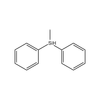
Diphenylmethylsilane; Hydridomethyldiphenylsilane; Methyldiphenylsilane
ΔHvap: 64.5 kJ/mol
Vapor pressure, 100 °C: 1 mm
Employed in the kinetic resolution of racemic alcohols
Used to reduce α-alkoxy ketones to diols and α-amino ketones to aminoethanols with high stereoselectivity
Extensive review of silicon based reducing agents: Larson, G.; Fry, J. L. "Ionic and Organometallic-Catalyzed Organosilane Reductions", Wipf, P., Ed.; Wiley, 2007