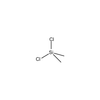
Gelest, Inc. DIMETHYLDICHLOROSILANE, 98% SID4120.0

Description
Additional Properties Hydrolytic Sensitivity 8: reacts rapidly with moisture, water, protic solvents Surface Tension (mN/m) 20.1 Application Review of synthetic utility.1 Employed in the tethering of two olefins for the cross metathesis-coupling step in the synthesis of Attenol A.2 Aids in the intramolecular Pinacol reaction.3 Fieser F&F: Vol. 3, p 114; Vol. 4, p 183. Reference 1. Handbook of Reagents for Organic Synthesis, Reagents for Silicon-Mediated Organic Synthesis, Fuchs, P. L. Ed., John Wiley and Sons, Ltd., 2011, p. 228-230. 2. Van de Weghe, P. et al. Org. Lett. 2002, 4, 4105. 3. Corey, E. J.; Carney, R. L. J. Am. Chem. Soc. 1971, 93, 7318. Safety Hazard Info ihl rat, LC50: 930 ppm/4H Flammability Limit 3.4-10.4% Packaging Under Nitrogen Bridging Silicon-Based Blocking Agent Used as a protecting group for reactive hydrogens in alcohols, amines, thiols, and carboxylic acids. Organosilanes are hydrogen-like, can be introduced in high yield, and can be removed under selective conditions. They are stable over a wide range of reaction conditions and can be removed in the presence of other functional groups, including other protecting groups. The tolerance of silylated alcohols to chemical transformations summary is presented in Table 1 of the Silicon-Based Blocking Agents brochure. Alkyl Silane - Conventional Surface Bonding Aliphatic, fluorinated aliphatic or substituted aromatic hydrocarbon substituents are the hydrophobic entities which enable silanes to induce surface hydrophobicity. The organic substitution of the silane must be non-polar. The hydrophobic effect of the organic substitution can be related to the free energy of transfer of hydrocarbon molecules from an aqueous phase to a homogeneous hydrocarbon phase. A successful hydrophobic coating must eliminate or mitigate hydrogen bonding and shield polar surfaces from interaction with water by creating a non-polar interphase. Although silane and silicone derived coatings are in general the most hydrophobic, they maintain a high degree of permeability to water vapor. This allows coatings to breathe and reduce deterioration at the coating interface associated with entrapped water. Since ions are not transported through non-polar silane and silicone coatings, they offer protection to composite structures ranging from pigmented coatings to rebar reinforced concrete. A selection guide for hydrophobic silanes can be found on pages 22-31 of the Hydrophobicity, Hydrophilicity and Silane Surface Modification brochure. Dimethyldichlorosila ne; Dichlorodimethylsila ne; DMS AIR TRANSPORT FORBIDDEN Viscosity: 0.47 cSt Vapor pressure, 17 °C: 100 mm Specific heat: 0.92 J/g/° ΔHcomb: -2,055 kJ/mol ΔHvap: 33.5 kJ/mol Surface tension: 20.1 mN/m Coefficient of thermal expansion: 1.3 x 10⁻³ Critical temperature: 247.2 °C Critical pressure: 34.4 atm Fundamental monomer for silicones Employed in the tethering of two olefins for the cross metathesis-coupling step in the synthesis of Attenol A Aids in the intramolecular Pinacol reaction Reacts with alcohols, diols, and hydroxy carboxylic acids Employed as a protecting group/template in C-glycoside synthesis Higher purity available as SID4120.1 Summary of selective deprotection conditions is provided in Table 7 through Table 20 of the Silicon-Based Blocking Agents brochure
Datasheet
Description
Additional Properties Hydrolytic Sensitivity 8: reacts rapidly with moisture, water, protic solvents Surface Tension (mN/m) 20.1 Application Review of synthetic utility.1 Employed in the tethering of two olefins for the cross metathesis-coupling step in the synthesis of Attenol A.2 Aids in the intramolecular Pinacol reaction.3 Fieser F&F: Vol. 3, p 114; Vol. 4, p 183. Reference 1. Handbook of Reagents for Organic Synthesis, Reagents for Silicon-Mediated Organic Synthesis, Fuchs, P. L. Ed., John Wiley and Sons, Ltd., 2011, p. 228-230. 2. Van de Weghe, P. et al. Org. Lett. 2002, 4, 4105. 3. Corey, E. J.; Carney, R. L. J. Am. Chem. Soc. 1971, 93, 7318. Safety Hazard Info ihl rat, LC50: 930 ppm/4H Flammability Limit 3.4-10.4% Packaging Under Nitrogen Bridging Silicon-Based Blocking Agent Used as a protecting group for reactive hydrogens in alcohols, amines, thiols, and carboxylic acids. Organosilanes are hydrogen-like, can be introduced in high yield, and can be removed under selective conditions. They are stable over a wide range of reaction conditions and can be removed in the presence of other functional groups, including other protecting groups. The tolerance of silylated alcohols to chemical transformations summary is presented in Table 1 of the Silicon-Based Blocking Agents brochure. Alkyl Silane - Conventional Surface Bonding Aliphatic, fluorinated aliphatic or substituted aromatic hydrocarbon substituents are the hydrophobic entities which enable silanes to induce surface hydrophobicity. The organic substitution of the silane must be non-polar. The hydrophobic effect of the organic substitution can be related to the free energy of transfer of hydrocarbon molecules from an aqueous phase to a homogeneous hydrocarbon phase. A successful hydrophobic coating must eliminate or mitigate hydrogen bonding and shield polar surfaces from interaction with water by creating a non-polar interphase. Although silane and silicone derived coatings are in general the most hydrophobic, they maintain a high degree of permeability to water vapor. This allows coatings to breathe and reduce deterioration at the coating interface associated with entrapped water. Since ions are not transported through non-polar silane and silicone coatings, they offer protection to composite structures ranging from pigmented coatings to rebar reinforced concrete. A selection guide for hydrophobic silanes can be found on pages 22-31 of the Hydrophobicity, Hydrophilicity and Silane Surface Modification brochure. Dimethyldichlorosila ne; Dichlorodimethylsila ne; DMS AIR TRANSPORT FORBIDDEN Viscosity: 0.47 cSt Vapor pressure, 17 °C: 100 mm Specific heat: 0.92 J/g/° ΔHcomb: -2,055 kJ/mol ΔHvap: 33.5 kJ/mol Surface tension: 20.1 mN/m Coefficient of thermal expansion: 1.3 x 10⁻³ Critical temperature: 247.2 °C Critical pressure: 34.4 atm Fundamental monomer for silicones Employed in the tethering of two olefins for the cross metathesis-coupling step in the synthesis of Attenol A Aids in the intramolecular Pinacol reaction Reacts with alcohols, diols, and hydroxy carboxylic acids Employed as a protecting group/template in C-glycoside synthesis Higher purity available as SID4120.1 Summary of selective deprotection conditions is provided in Table 7 through Table 20 of the Silicon-Based Blocking Agents brochure
Datasheet

Suppliers

Company
Product
Description
Supplier Links
DIMETHYLDICHLOROSILANE, 98% - SID4120.0 - Gelest, Inc.
Morrisville, PA, United States
DIMETHYLDICHLOROSILANE, 98%
SID4120.0
DIMETHYLDICHLOROSILANE, 98% SID4120.0
Additional Properties Hydrolytic Sensitivity 8: reacts rapidly with moisture, water, protic solvents Surface Tension (mN/m) 20.1 Application Review of synthetic utility.1 Employed in the tethering of two olefins for the cross metathesis-coupling step in the synthesis of Attenol A.2 Aids in the intramolecular Pinacol reaction.3 Fieser F&F: Vol. 3, p 114; Vol. 4, p 183. Reference 1. Handbook of Reagents for Organic Synthesis, Reagents for Silicon-Mediated Organic Synthesis, Fuchs, P. L. Ed., John Wiley and Sons, Ltd., 2011, p. 228-230. 2. Van de Weghe, P. et al. Org. Lett. 2002, 4, 4105. 3. Corey, E. J.; Carney, R. L. J. Am. Chem. Soc. 1971, 93, 7318. Safety Hazard Info ihl rat, LC50: 930 ppm/4H Flammability Limit 3.4-10.4% Packaging Under Nitrogen Bridging Silicon-Based Blocking Agent Used as a protecting group for reactive hydrogens in alcohols, amines, thiols, and carboxylic acids. Organosilanes are hydrogen-like, can be introduced in high yield, and can be removed under selective conditions. They are stable over a wide range of reaction conditions and can be removed in the presence of other functional groups, including other protecting groups. The tolerance of silylated alcohols to chemical transformations summary is presented in Table 1 of the Silicon-Based Blocking Agents brochure. Alkyl Silane - Conventional Surface Bonding Aliphatic, fluorinated aliphatic or substituted aromatic hydrocarbon substituents are the hydrophobic entities which enable silanes to induce surface hydrophobicity. The organic substitution of the silane must be non-polar. The hydrophobic effect of the organic substitution can be related to the free energy of transfer of hydrocarbon molecules from an aqueous phase to a homogeneous hydrocarbon phase. A successful hydrophobic coating must eliminate or mitigate hydrogen bonding and shield polar surfaces from interaction with water by creating a non-polar interphase. Although silane and silicone derived coatings are in general the most hydrophobic, they maintain a high degree of permeability to water vapor. This allows coatings to breathe and reduce deterioration at the coating interface associated with entrapped water. Since ions are not transported through non-polar silane and silicone coatings, they offer protection to composite structures ranging from pigmented coatings to rebar reinforced concrete. A selection guide for hydrophobic silanes can be found on pages 22-31 of the Hydrophobicity, Hydrophilicity and Silane Surface Modification brochure. Dimethyldichlorosila ne; Dichlorodimethylsila ne; DMS AIR TRANSPORT FORBIDDEN Viscosity: 0.47 cSt Vapor pressure, 17 °C: 100 mm Specific heat: 0.92 J/g/° ΔHcomb: -2,055 kJ/mol ΔHvap: 33.5 kJ/mol Surface tension: 20.1 mN/m Coefficient of thermal expansion: 1.3 x 10⁻³ Critical temperature: 247.2 °C Critical pressure: 34.4 atm Fundamental monomer for silicones Employed in the tethering of two olefins for the cross metathesis-coupling step in the synthesis of Attenol A Aids in the intramolecular Pinacol reaction Reacts with alcohols, diols, and hydroxy carboxylic acids Employed as a protecting group/template in C-glycoside synthesis Higher purity available as SID4120.1 Summary of selective deprotection conditions is provided in Table 7 through Table 20 of the Silicon-Based Blocking Agents brochure

Additional Properties


  • Hydrolytic Sensitivity 8: reacts rapidly with moisture, water, protic solvents
  • Surface Tension (mN/m) 20.1
    Application
    Review of synthetic utility.1 Employed in the tethering of two olefins for the cross metathesis-coupling step in the synthesis of Attenol A.2 Aids in the intramolecular Pinacol reaction.3
    Fieser
    F&F: Vol. 3, p 114; Vol. 4, p 183.
    Reference
    1. Handbook of Reagents for Organic Synthesis, Reagents for Silicon-Mediated Organic Synthesis, Fuchs, P. L. Ed., John Wiley and Sons, Ltd., 2011, p. 228-230. 2. Van de Weghe, P. et al. Org. Lett. 2002, 4, 4105. 3. Corey, E. J.; Carney, R. L. J. Am. Chem. Soc. 1971, 93, 7318.
    Safety
  • Hazard Info ihl rat, LC50: 930 ppm/4H
  • Flammability Limit 3.4-10.4%
  • Packaging Under Nitrogen
    Bridging Silicon-Based Blocking Agent
    Used as a protecting group for reactive hydrogens in alcohols, amines, thiols, and carboxylic acids. Organosilanes are hydrogen-like, can be introduced in high yield, and can be removed under selective conditions. They are stable over a wide range of reaction conditions and can be removed in the presence of other functional groups, including other protecting groups. The tolerance of silylated alcohols to chemical transformations summary is presented in Table 1 of the Silicon-Based Blocking Agents brochure.
    Alkyl Silane - Conventional Surface Bonding
    Aliphatic, fluorinated aliphatic or substituted aromatic hydrocarbon substituents are the hydrophobic entities which enable silanes to induce surface hydrophobicity. The organic substitution of the silane must be non-polar. The hydrophobic effect of the organic substitution can be related to the free energy of transfer of hydrocarbon molecules from an aqueous phase to a homogeneous hydrocarbon phase. A successful hydrophobic coating must eliminate or mitigate hydrogen bonding and shield polar surfaces from interaction with water by creating a non-polar interphase. Although silane and silicone derived coatings are in general the most hydrophobic, they maintain a high degree of permeability to water vapor. This allows coatings to breathe and reduce deterioration at the coating interface associated with entrapped water. Since ions are not transported through non-polar silane and silicone coatings, they offer protection to composite structures ranging from pigmented coatings to rebar reinforced concrete. A selection guide for hydrophobic silanes can be found on pages 22-31 of the Hydrophobicity, Hydrophilicity and Silane Surface Modification brochure.
    Dimethyldichlorosilane; Dichlorodimethylsilane; DMS
  • AIR TRANSPORT FORBIDDEN
  • Viscosity: 0.47 cSt
  • Vapor pressure, 17 °C: 100 mm
  • Specific heat: 0.92 J/g/°
  • ΔHcomb: -2,055 kJ/mol
  • ΔHvap: 33.5 kJ/mol
  • Surface tension: 20.1 mN/m
  • Coefficient of thermal expansion: 1.3 x 10⁻³
  • Critical temperature: 247.2 °C
  • Critical pressure: 34.4 atm
  • Fundamental monomer for silicones
  • Employed in the tethering of two olefins for the cross metathesis-coupling step in the synthesis of Attenol A
  • Aids in the intramolecular Pinacol reaction
  • Reacts with alcohols, diols, and hydroxy carboxylic acids
  • Employed as a protecting group/template in C-glycoside synthesis
  • Higher purity available as SID4120.1
  • Summary of selective deprotection conditions is provided in Table 7 through Table 20 of the Silicon-Based Blocking Agents brochure

Supplier's Site Datasheet

Technical Specifications

  Gelest, Inc.
Product Category Organic Chemicals
Product Number SID4120.0
Product Name DIMETHYLDICHLOROSILANE, 98%
Chemical Formula C 2 H 6 Cl 2 Si
CAS Number 75-78-5
Boiling Point 158 to 160 F (70 to 71 C)
Unlock Full Specs
to access all available technical data

Similar Products

Intermediates and Ingredients for Pharmaceuticals and Agrochemical Compounds -  - AGC Chemicals Americas, Inc.
Specs
Chemical Family All Halogenated
Chemical Name Trifluoroacetic Acid, Trifluoroacetic Anhydride, Ethyl Trifluoroacetate, Sodium Trifluoroacetate, 2,3,4-Trifluoro aniline, Trifluoroacetamide, & More
CAS Number 76-05-1, 407-25-0, 383-63-1, 2923-18-4, 3862-73-5, 354-38-1, 148043-73-6, 30071-93-3, 677-69-0, 122665-97-8, 118612-00-3, 136040-19-2, and More
View Details
DMI 1,3 Dimethyl-2-Imidazolidinone -  - Mitsui Chemicals America, Inc.
Mitsui Chemicals America, Inc.
Specs
Trigger Solvent
Chemical Name DMI 1,3 Dimethyl-2-Imidazolidinone
State of Matter Liquid / Solution
View Details
Heptafluoro-1-(trifluoromethyl)cyclopent-1-ene - 1400-2-X0 - SynQuest Laboratories, Inc.
Specs
Chemical Name Heptafluoro-1-(trifluoromethyl)cyclopent-1-ene
Chemical Formula C 6 F 10
CAS Number 780-87-0
View Details
Aliphatic Hydrocarbons - Mineral Spirits 150 66/3 - CITGO Petroleum Corporation
Specs
Trigger Solvent
CAS Number 64742-47-8
State of Matter Liquid / Solution
View Details