Additional Properties
Hydrolytic Sensitivity 9: reacts extremely rapidly with atmospheric moisture - may be pyrophoric - glove box or sealed system required Safety
Hazard Info ihl mouse, LC50: 144 ppm/4h
Packaging Under None Dialkyl Silane Reducing Agent Organosilanes are hydrocarbon-like and possess the ability to serve as both ionic and free-radical reducing agents. These reagents and their reaction by-products are safer and more easily handled and disposed than many other reducing agents. The metallic nature of silicon and its low electronegativity relative to hydrogen lead to polarization of the Si-H bond yielding a hydridic hydrogen and a milder reducing agent compared to aluminum-, boron-, and other metal-based hydrides. A summary of some key silane reductions are presented in Table 1 of the Silicon-Based Reducing Agents brochure. ALD Material Atomic layer deposition (ALD) is a chemically self-limiting deposition technique that is based on the sequential use of a gaseous chemical process. A thin film (as fine as -0.1 Å per cycle) results from repeating the deposition sequence as many times as needed to reach a certain thickness. The major characteristic of the films is the resulting conformality and the controlled deposition manner. Precursor selection is key in ALD processes, namely finding molecules which will have enough reactivity to produce the desired films yet are stable enough to be handled and safely delivered to the reaction chamber. Dichlorosilane; Silicomethylene chloride; Dihydridodichlorosil
ane CAUTION: CAN FORM PYROPHORIC REACTION PRODUCTS ON CONTACT WITH WATER OR AMINES AIR TRANSPORT FORBIDDEN
Vapor pressure, -34 °C: 100 mm
Vapor pressure, 20 °C: 1.62 atm (23.8 psia)
ΔHform: -314 kJ/mol
ΔHvap: 27.2 kJ/mol
Dipole moment: 1.17 debye
Specific heat: 1.122 J/g/°C
Critical temperature: 176 °C
Critical pressure: 46.1 atm
For epitaxial deposition
Undergoes hydrosilylation reactions
Gives improved yields in reduction of imines over that of trichlorosilane
Available as a solution in xylene, SID3368.6
Extensive review of silicon based reducing agents: Larson, G.; Fry, J. L. "Ionic and Organometallic-Catal
yzed Organosilane Reductions", Wipf, P., Ed.; Wiley, 2007
Gelest, Inc.
Done
Datasheet
Description
Additional Properties
Hydrolytic Sensitivity 9: reacts extremely rapidly with atmospheric moisture - may be pyrophoric - glove box or sealed system required Safety
Hazard Info ihl mouse, LC50: 144 ppm/4h
Packaging Under None Dialkyl Silane Reducing Agent Organosilanes are hydrocarbon-like and possess the ability to serve as both ionic and free-radical reducing agents. These reagents and their reaction by-products are safer and more easily handled and disposed than many other reducing agents. The metallic nature of silicon and its low electronegativity relative to hydrogen lead to polarization of the Si-H bond yielding a hydridic hydrogen and a milder reducing agent compared to aluminum-, boron-, and other metal-based hydrides. A summary of some key silane reductions are presented in Table 1 of the Silicon-Based Reducing Agents brochure. ALD Material Atomic layer deposition (ALD) is a chemically self-limiting deposition technique that is based on the sequential use of a gaseous chemical process. A thin film (as fine as -0.1 Å per cycle) results from repeating the deposition sequence as many times as needed to reach a certain thickness. The major characteristic of the films is the resulting conformality and the controlled deposition manner. Precursor selection is key in ALD processes, namely finding molecules which will have enough reactivity to produce the desired films yet are stable enough to be handled and safely delivered to the reaction chamber. Dichlorosilane; Silicomethylene chloride; Dihydridodichlorosil
ane CAUTION: CAN FORM PYROPHORIC REACTION PRODUCTS ON CONTACT WITH WATER OR AMINES AIR TRANSPORT FORBIDDEN
Vapor pressure, -34 °C: 100 mm
Vapor pressure, 20 °C: 1.62 atm (23.8 psia)
ΔHform: -314 kJ/mol
ΔHvap: 27.2 kJ/mol
Dipole moment: 1.17 debye
Specific heat: 1.122 J/g/°C
Critical temperature: 176 °C
Critical pressure: 46.1 atm
For epitaxial deposition
Undergoes hydrosilylation reactions
Gives improved yields in reduction of imines over that of trichlorosilane
Available as a solution in xylene, SID3368.6
Extensive review of silicon based reducing agents: Larson, G.; Fry, J. L. "Ionic and Organometallic-Catal
yzed Organosilane Reductions", Wipf, P., Ed.; Wiley, 2007
Additional Properties
Hydrolytic Sensitivity 9: reacts extremely rapidly with atmospheric moisture - may be pyrophoric - glove box or sealed system required Safety
Hazard Info ihl mouse, LC50: 144 ppm/4h
Packaging Under None Dialkyl Silane Reducing Agent Organosilanes are hydrocarbon-like and possess the ability to serve as both ionic and free-radical reducing agents. These reagents and their reaction by-products are safer and more easily handled and disposed than many other reducing agents. The metallic nature of silicon and its low electronegativity relative to hydrogen lead to polarization of the Si-H bond yielding a hydridic hydrogen and a milder reducing agent compared to aluminum-, boron-, and other metal-based hydrides. A summary of some key silane reductions are presented in Table 1 of the Silicon-Based Reducing Agents brochure. ALD Material Atomic layer deposition (ALD) is a chemically self-limiting deposition technique that is based on the sequential use of a gaseous chemical process. A thin film (as fine as -0.1 Å per cycle) results from repeating the deposition sequence as many times as needed to reach a certain thickness. The major characteristic of the films is the resulting conformality and the controlled deposition manner. Precursor selection is key in ALD processes, namely finding molecules which will have enough reactivity to produce the desired films yet are stable enough to be handled and safely delivered to the reaction chamber. Dichlorosilane; Silicomethylene chloride; Dihydridodichlorosil
ane CAUTION: CAN FORM PYROPHORIC REACTION PRODUCTS ON CONTACT WITH WATER OR AMINES AIR TRANSPORT FORBIDDEN
Vapor pressure, -34 °C: 100 mm
Vapor pressure, 20 °C: 1.62 atm (23.8 psia)
ΔHform: -314 kJ/mol
ΔHvap: 27.2 kJ/mol
Dipole moment: 1.17 debye
Specific heat: 1.122 J/g/°C
Critical temperature: 176 °C
Critical pressure: 46.1 atm
For epitaxial deposition
Undergoes hydrosilylation reactions
Gives improved yields in reduction of imines over that of trichlorosilane
Available as a solution in xylene, SID3368.6
Extensive review of silicon based reducing agents: Larson, G.; Fry, J. L. "Ionic and Organometallic-Catal
yzed Organosilane Reductions", Wipf, P., Ed.; Wiley, 2007
Additional Properties
Hydrolytic Sensitivity 9: reacts extremely rapidly with atmospheric moisture - may be pyrophoric - glove box or sealed system required
Safety
Hazard Info ihl mouse, LC50: 144 ppm/4h
Packaging Under None
Dialkyl Silane Reducing Agent
Organosilanes are hydrocarbon-like and possess the ability to serve as both ionic and free-radical reducing agents. These reagents and their reaction by-products are safer and more easily handled and disposed than many other reducing agents. The metallic nature of silicon and its low electronegativity relative to hydrogen lead to polarization of the Si-H bond yielding a hydridic hydrogen and a milder reducing agent compared to aluminum-, boron-, and other metal-based hydrides. A summary of some key silane reductions are presented in Table 1 of the Silicon-Based Reducing Agents brochure.
ALD Material
Atomic layer deposition (ALD) is a chemically self-limiting deposition technique that is based on the sequential use of a gaseous chemical process. A thin film (as fine as -0.1 Å per cycle) results from repeating the deposition sequence as many times as needed to reach a certain thickness. The major characteristic of the films is the resulting conformality and the controlled deposition manner. Precursor selection is key in ALD processes, namely finding molecules which will have enough reactivity to produce the desired films yet are stable enough to be handled and safely delivered to the reaction chamber.
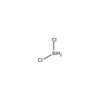
Dichlorosilane; Silicomethylene chloride; Dihydridodichlorosilane
CAUTION: CAN FORM PYROPHORIC REACTION PRODUCTS ON CONTACT WITH WATER OR AMINES
AIR TRANSPORT FORBIDDEN
Vapor pressure, -34 °C: 100 mm
Vapor pressure, 20 °C: 1.62 atm (23.8 psia)
ΔHform: -314 kJ/mol
ΔHvap: 27.2 kJ/mol
Dipole moment: 1.17 debye
Specific heat: 1.122 J/g/°C
Critical temperature: 176 °C
Critical pressure: 46.1 atm
For epitaxial deposition
Undergoes hydrosilylation reactions
Gives improved yields in reduction of imines over that of trichlorosilane
Available as a solution in xylene, SID3368.6
Extensive review of silicon based reducing agents: Larson, G.; Fry, J. L. "Ionic and Organometallic-Catalyzed Organosilane Reductions", Wipf, P., Ed.; Wiley, 2007