Gelest, Inc. DI-t-BUTYLSILYLBIS(TRIFLUOROMETHANESULFONATE), 95% SID3345.0

Description
Additional Properties Hydrolytic Sensitivity 8: reacts rapidly with moisture, water, protic solvents Application Review of synthetic utility.1 Reagent for protection of diols.2 Used to doubly block sialic acid for use in efficient silylation reactions.3 Can protect diols and be regioselectively mono-deprotected.4 Reference 1. Handbook of Reagents for Organic Synthesis, Reagents for Silicon-Mediated Organic Synthesis, Fuchs, P. L. Ed., John Wiley and Sons, Ltd., 2011, p. 209-222. 2. Corey, E. J.; Hopkins, P. B. Tetrahedron Lett. 1982, 23, 4871. 3. Hanshima, S. Eur. J. Org. Chem. 2009, 4215. 4. Yu, M.; Pagenkopf, B. L. J. Org. Chem. 2002, 67, 4553. Safety Packaging Under Nitrogen Bridging Silicon-Based Blocking Agent Used as a protecting group for reactive hydrogens in alcohols, amines, thiols, and carboxylic acids. Organosilanes are hydrogen-like, can be introduced in high yield, and can be removed under selective conditions. They are stable over a wide range of reaction conditions and can be removed in the presence of other functional groups, including other protecting groups. The tolerance of silylated alcohols to chemical transformations summary is presented in Table 1 of the Silicon-Based Blocking Agents brochure. Di-tert-butylsilylbi s(trifluoromethanesu lfonate); Di-t-butylsilylbis(t riflate); DTBS More reactive than SID3205.0 Converts 1,3-diols to cyclic protected 1,3-diols Reacts with 1,3-diols in preference to 1,2-diols Summary of selective deprotection conditions is provided in Table 7 through Table 20 of the Silicon-Based Blocking Agents brochure
Datasheet
Description
Additional Properties Hydrolytic Sensitivity 8: reacts rapidly with moisture, water, protic solvents Application Review of synthetic utility.1 Reagent for protection of diols.2 Used to doubly block sialic acid for use in efficient silylation reactions.3 Can protect diols and be regioselectively mono-deprotected.4 Reference 1. Handbook of Reagents for Organic Synthesis, Reagents for Silicon-Mediated Organic Synthesis, Fuchs, P. L. Ed., John Wiley and Sons, Ltd., 2011, p. 209-222. 2. Corey, E. J.; Hopkins, P. B. Tetrahedron Lett. 1982, 23, 4871. 3. Hanshima, S. Eur. J. Org. Chem. 2009, 4215. 4. Yu, M.; Pagenkopf, B. L. J. Org. Chem. 2002, 67, 4553. Safety Packaging Under Nitrogen Bridging Silicon-Based Blocking Agent Used as a protecting group for reactive hydrogens in alcohols, amines, thiols, and carboxylic acids. Organosilanes are hydrogen-like, can be introduced in high yield, and can be removed under selective conditions. They are stable over a wide range of reaction conditions and can be removed in the presence of other functional groups, including other protecting groups. The tolerance of silylated alcohols to chemical transformations summary is presented in Table 1 of the Silicon-Based Blocking Agents brochure. Di-tert-butylsilylbi s(trifluoromethanesu lfonate); Di-t-butylsilylbis(t riflate); DTBS More reactive than SID3205.0 Converts 1,3-diols to cyclic protected 1,3-diols Reacts with 1,3-diols in preference to 1,2-diols Summary of selective deprotection conditions is provided in Table 7 through Table 20 of the Silicon-Based Blocking Agents brochure
Datasheet

Suppliers

Company
Product
Description
Supplier Links
DI-t-BUTYLSILYLBIS(TRIFLUOROMETHANESULFONATE), 95% - SID3345.0 - Gelest, Inc.
Morrisville, PA, United States
DI-t-BUTYLSILYLBIS(TRIFLUOROMETHANESULFONATE), 95%
SID3345.0
DI-t-BUTYLSILYLBIS(TRIFLUOROMETHANESULFONATE), 95% SID3345.0
Additional Properties Hydrolytic Sensitivity 8: reacts rapidly with moisture, water, protic solvents Application Review of synthetic utility.1 Reagent for protection of diols.2 Used to doubly block sialic acid for use in efficient silylation reactions.3 Can protect diols and be regioselectively mono-deprotected.4 Reference 1. Handbook of Reagents for Organic Synthesis, Reagents for Silicon-Mediated Organic Synthesis, Fuchs, P. L. Ed., John Wiley and Sons, Ltd., 2011, p. 209-222. 2. Corey, E. J.; Hopkins, P. B. Tetrahedron Lett. 1982, 23, 4871. 3. Hanshima, S. Eur. J. Org. Chem. 2009, 4215. 4. Yu, M.; Pagenkopf, B. L. J. Org. Chem. 2002, 67, 4553. Safety Packaging Under Nitrogen Bridging Silicon-Based Blocking Agent Used as a protecting group for reactive hydrogens in alcohols, amines, thiols, and carboxylic acids. Organosilanes are hydrogen-like, can be introduced in high yield, and can be removed under selective conditions. They are stable over a wide range of reaction conditions and can be removed in the presence of other functional groups, including other protecting groups. The tolerance of silylated alcohols to chemical transformations summary is presented in Table 1 of the Silicon-Based Blocking Agents brochure. Di-tert-butylsilylbi s(trifluoromethanesu lfonate); Di-t-butylsilylbis(t riflate); DTBS More reactive than SID3205.0 Converts 1,3-diols to cyclic protected 1,3-diols Reacts with 1,3-diols in preference to 1,2-diols Summary of selective deprotection conditions is provided in Table 7 through Table 20 of the Silicon-Based Blocking Agents brochure

Additional Properties


  • Hydrolytic Sensitivity 8: reacts rapidly with moisture, water, protic solvents
    Application
    Review of synthetic utility.1 Reagent for protection of diols.2 Used to doubly block sialic acid for use in efficient silylation reactions.3 Can protect diols and be regioselectively mono-deprotected.4
    Reference
    1. Handbook of Reagents for Organic Synthesis, Reagents for Silicon-Mediated Organic Synthesis, Fuchs, P. L. Ed., John Wiley and Sons, Ltd., 2011, p. 209-222. 2. Corey, E. J.; Hopkins, P. B. Tetrahedron Lett. 1982, 23, 4871. 3. Hanshima, S. Eur. J. Org. Chem. 2009, 4215. 4. Yu, M.; Pagenkopf, B. L. J. Org. Chem. 2002, 67, 4553.
    Safety
  • Packaging Under Nitrogen
    Bridging Silicon-Based Blocking Agent
    Used as a protecting group for reactive hydrogens in alcohols, amines, thiols, and carboxylic acids. Organosilanes are hydrogen-like, can be introduced in high yield, and can be removed under selective conditions. They are stable over a wide range of reaction conditions and can be removed in the presence of other functional groups, including other protecting groups. The tolerance of silylated alcohols to chemical transformations summary is presented in Table 1 of the Silicon-Based Blocking Agents brochure.
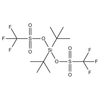
    Di-tert-butylsilylbis(trifluoromethanesulfonate); Di-t-butylsilylbis(triflate); DTBS
  • More reactive than SID3205.0
  • Converts 1,3-diols to cyclic protected 1,3-diols
  • Reacts with 1,3-diols in preference to 1,2-diols
  • Summary of selective deprotection conditions is provided in Table 7 through Table 20 of the Silicon-Based Blocking Agents brochure
Supplier's Site Datasheet

Technical Specifications

  Gelest, Inc.
Product Category Inorganic Chemicals and Compounds
Product Number SID3345.0
Product Name DI-t-BUTYLSILYLBIS(TRIFLUOROMETHANESULFONATE), 95%
Chemical Formula C 1 0 H 1 8 F 6 O 6 S 2 Si
Unlock Full Specs
to access all available technical data

Similar Products

pH Buffer 12.00 - 238279 - Hamilton Company
Specs
Type Other; Buffer
Acids All Inorganic Acids; Hydrochloric Acid (HCl)
Chemical Name Hydrochloric Acid, and tri Potassium Trihydrate
View Details
Specs
Type Other; Transition Metal Compound
Chemical Name Titanium Diboride
State of Matter Powders
View Details
Specs
Bases All Inorganic Bases; Ammonium Hydroxide (Amonia Water)
Chemical Name Ammonium Hydroxide (Aqueous Ammonia)
Chemical Formula NH4OH
View Details
