Additional Properties
Hydrolytic Sensitivity 8: reacts rapidly with moisture, water, protic solvents Application Lithiation leads to polyhedral silazanes.1 Forms silicon nitiride films by CVD at 550-600°C.2 Reference 1. Becker. G. et al. In Organosilicon Chem. III; Auner, N.; Weiss, J., Eds; Wiley-VCH: 1998; p. 346. 2. Gumpher, J. et al. J. Electrochem. Soc. 2004, 151, G353. Safety
Hazard Info oral rat, LD50: 250-500 mg/kg
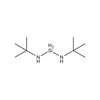
Packaging Under Nitrogen ALD Material Atomic layer deposition (ALD) is a chemically self-limiting deposition technique that is based on the sequential use of a gaseous chemical process. A thin film (as fine as -0.1 Å per cycle) results from repeating the deposition sequence as many times as needed to reach a certain thickness. The major characteristic of the films is the resulting conformality and the controlled deposition manner. Precursor selection is key in ALD processes, namely finding molecules which will have enough reactivity to produce the desired films yet are stable enough to be handled and safely delivered to the reaction chamber. Di(t-butylamino)sila
ne; Bis(tert-butylamino)
silane; N,N'-Di-t-butylsilan
ediamine; BTBAS
Lithiation leads to polyhedral silazanes
Gelest, Inc.
Done
Datasheet
Description
Additional Properties
Hydrolytic Sensitivity 8: reacts rapidly with moisture, water, protic solvents Application Lithiation leads to polyhedral silazanes.1 Forms silicon nitiride films by CVD at 550-600°C.2 Reference 1. Becker. G. et al. In Organosilicon Chem. III; Auner, N.; Weiss, J., Eds; Wiley-VCH: 1998; p. 346. 2. Gumpher, J. et al. J. Electrochem. Soc. 2004, 151, G353. Safety
Hazard Info oral rat, LD50: 250-500 mg/kg
Packaging Under Nitrogen ALD Material Atomic layer deposition (ALD) is a chemically self-limiting deposition technique that is based on the sequential use of a gaseous chemical process. A thin film (as fine as -0.1 Å per cycle) results from repeating the deposition sequence as many times as needed to reach a certain thickness. The major characteristic of the films is the resulting conformality and the controlled deposition manner. Precursor selection is key in ALD processes, namely finding molecules which will have enough reactivity to produce the desired films yet are stable enough to be handled and safely delivered to the reaction chamber. Di(t-butylamino)sila
ne; Bis(tert-butylamino)
silane; N,N'-Di-t-butylsilan
ediamine; BTBAS
Lithiation leads to polyhedral silazanes
Additional Properties
Hydrolytic Sensitivity 8: reacts rapidly with moisture, water, protic solvents Application Lithiation leads to polyhedral silazanes.1 Forms silicon nitiride films by CVD at 550-600°C.2 Reference 1. Becker. G. et al. In Organosilicon Chem. III; Auner, N.; Weiss, J., Eds; Wiley-VCH: 1998; p. 346. 2. Gumpher, J. et al. J. Electrochem. Soc. 2004, 151, G353. Safety
Hazard Info oral rat, LD50: 250-500 mg/kg
Packaging Under Nitrogen ALD Material Atomic layer deposition (ALD) is a chemically self-limiting deposition technique that is based on the sequential use of a gaseous chemical process. A thin film (as fine as -0.1 Å per cycle) results from repeating the deposition sequence as many times as needed to reach a certain thickness. The major characteristic of the films is the resulting conformality and the controlled deposition manner. Precursor selection is key in ALD processes, namely finding molecules which will have enough reactivity to produce the desired films yet are stable enough to be handled and safely delivered to the reaction chamber. Di(t-butylamino)sila
ne; Bis(tert-butylamino)
silane; N,N'-Di-t-butylsilan
ediamine; BTBAS
Lithiation leads to polyhedral silazanes
Additional Properties
Hydrolytic Sensitivity 8: reacts rapidly with moisture, water, protic solvents
Application
Lithiation leads to polyhedral silazanes.1 Forms silicon nitiride films by CVD at 550-600°C.2
Reference
1. Becker. G. et al. In Organosilicon Chem. III; Auner, N.; Weiss, J., Eds; Wiley-VCH: 1998; p. 346. 2. Gumpher, J. et al. J. Electrochem. Soc. 2004, 151, G353.
Safety
Hazard Info oral rat, LD50: 250-500 mg/kg
Packaging Under Nitrogen
ALD Material
Atomic layer deposition (ALD) is a chemically self-limiting deposition technique that is based on the sequential use of a gaseous chemical process. A thin film (as fine as -0.1 Å per cycle) results from repeating the deposition sequence as many times as needed to reach a certain thickness. The major characteristic of the films is the resulting conformality and the controlled deposition manner. Precursor selection is key in ALD processes, namely finding molecules which will have enough reactivity to produce the desired films yet are stable enough to be handled and safely delivered to the reaction chamber.
Di(t-butylamino)silane; Bis(tert-butylamino)silane; N,N'-Di-t-butylsilanediamine; BTBAS