Description
Additional Properties
Hydrolytic Sensitivity 8: reacts rapidly with moisture, water, protic solvents Application Reaction with LiN(iPr)2 and CH2X2 provides 1,1-dimethyl-2-halos
ilacyclopentanes.1 Arylchlorosilyl derivatives used in cross-coupling to biaryls.2 Vinylchlorosilyl derivatives used in cross-coupling to 1,3-butadienes.3 Starting material for spirocyclic organosilanes.4 Reference 1. Matsumoto, K. Tetrahedron 1993, 49, 8487. 2. Denmark, S. E.; Wu, Z. Org. Lett. 1999, 1, 1495. 3. Denmark, S. E.; Choi, J. Y. J. Am. Chem. Soc. 1999, 121, 5821. 4. Déjean, V. et al. Organometallics 2000, 19, 711. Safety
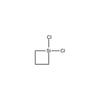
Packaging Under Nitrogen Silane Cross-Coupling Agent The cross-coupling reaction is a highly useful methodology for the formation of carbon-carbon bonds. It involves two reagents, with one typically being a suitable organometallic reagent - the nucleophile - and the other a suitable organic substrate, normally an unsaturated halide, tosylate or similar - the electrophile. Cyclotrimethylenedic
hlorosilane; 1,1-Dichlorosilacycl
obutane
Reaction with LiN(iPr)2 and CH2X2 provides 1,1-dimethyl-2-halos
ilacyclopentanes
Arylchlorosilyl derivatives used in cross-coupling to biaryls
Vinylchlorosilyl derivatives used in cross-coupling to 1,3-butadienes
Starting material for spirocyclic organosilanes
Precursor for aryl-substituted silacyclobutanes useful for aryl cross-coupling reactions
Extensive review of silicon based cross-coupling agents: Denmark, S. E. et al. "Organic Reactions, Volume 75" Denmark, S. E. ed., John Wiley and Sons, 233, 2011


![2-Amino-3-methyl-3H-imidazo[4,5-F]isoquinoline Hydrobromid.. - A616210 - Toronto Research Chemicals, Inc.](https://partimages.globalspec.com/06/2806/1277806_medium.png)

