Description
Additional Properties
Hydrolytic Sensitivity 7: reacts slowly with moisture/water Application Review of synthetic utility.1 Due to steric bulk can be converted to ?-silyl aldehydes,2 which can be converted to olefins with high stereoselectivity.3 Fieser F&F: Vol. 6, p 81; Vol. 12, p 81. Reference 1. Handbook of Reagents for Organic Synthesis, Reagents for Silicon-Mediated Organic Synthesis, Fuchs, P. L. Ed., John Wiley and Sons, Ltd., 2011, p. 135-138. 2. Barbero, A. et al. J. Chem. Soc., Perkin Trans 1 1995, 1525. 3. Barbero, A. et al. Synthesis 2000, 1223. Safety
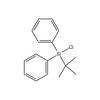
Packaging Under Nitrogen Phenyl-Containing Blocking Agent Used as a protecting group for reactive hydrogens in alcohols, amines, thiols, and carboxylic acids. Organosilanes are hydrogen-like, can be introduced in high yield, and can be removed under selective conditions. They are stable over a wide range of reaction conditions and can be removed in the presence of other functional groups, including other protecting groups. The tolerance of silylated alcohols to chemical transformations summary is presented in Table 1 of the Silicon-Based Blocking Agents brochure. tert-Butyldiphenylch
lorosilane; (1,1-Dimethylethyl)d
iphenylchlorosilane; tert-Butylchlorodiph
enylsilane
Forms more stable ethers than TBS ethers
Used to protect phenols, amines, carboxylic acids, and amides
Summary of selective deprotection conditions is provided in Table 7 through Table 20 of the Silicon-Based Blocking Agents brochure