Gelest, Inc. t-BUTYLDIMETHYLCHLOROSILANE SIB1935.0

Description
Additional Properties Hydrolytic Sensitivity 8: reacts rapidly with moisture, water, protic solvents Fieser F&F: Vol. 4, p 57, p 176; Vol. 5, p 74; Vol. 6, p 78; Vol. 8, p 58; Vol. 9, p 77; Vol. 10, p 62; Vol. 11, p 88; Vol. 12, p 83. Safety Packaging Under Nitrogen Trialkylsilyl Blocking Agent Used as a protecting group for reactive hydrogens in alcohols, amines, thiols, and carboxylic acids. Organosilanes are hydrogen-like, can be introduced in high yield, and can be removed under selective conditions. They are stable over a wide range of reaction conditions and can be removed in the presence of other functional groups, including other protecting groups. The tolerance of silylated alcohols to chemical transformations summary is presented in Table 1 of the Silicon-Based Blocking Agents brochure. Alkyl Silane - Conventional Surface Bonding Aliphatic, fluorinated aliphatic or substituted aromatic hydrocarbon substituents are the hydrophobic entities which enable silanes to induce surface hydrophobicity. The organic substitution of the silane must be non-polar. The hydrophobic effect of the organic substitution can be related to the free energy of transfer of hydrocarbon molecules from an aqueous phase to a homogeneous hydrocarbon phase. A successful hydrophobic coating must eliminate or mitigate hydrogen bonding and shield polar surfaces from interaction with water by creating a non-polar interphase. Although silane and silicone derived coatings are in general the most hydrophobic, they maintain a high degree of permeability to water vapor. This allows coatings to breathe and reduce deterioration at the coating interface associated with entrapped water. Since ions are not transported through non-polar silane and silicone coatings, they offer protection to composite structures ranging from pigmented coatings to rebar reinforced concrete. A selection guide for hydrophobic silanes can be found on pages 22-31 of the Hydrophobicity, Hydrophilicity and Silane Surface Modification brochure. tert-Butyldimethylch lorosilane; TBS-Cl; Chlorodimethyl-t-but ylsilane; tert-Butylchlorodime thylsilane; Chloro(1,1-dimethyle thyl)dimethylsilane Excellent for 1° and 2° alcohols Silylation catalyzed by imidazole Blocking agent widely used in prostaglandin synthesis Stable to many reagents Can be selectively cleaved in presence of acetate, THP and benzyl ethers among others Used for the protection of alcohols, amines, thiols, lactams, and carboxylic acids Clean NMR characteristics of protecting group Silylation reagent - derivatives resistant to Grignards, alkyl lithium compounds, etc Facile removal with flouride ion sources Summary of selective deprotection conditions is provided in Table 7 through Table 20 of the Silicon-Based Blocking Agents brochure
Datasheet
Description
Additional Properties Hydrolytic Sensitivity 8: reacts rapidly with moisture, water, protic solvents Fieser F&F: Vol. 4, p 57, p 176; Vol. 5, p 74; Vol. 6, p 78; Vol. 8, p 58; Vol. 9, p 77; Vol. 10, p 62; Vol. 11, p 88; Vol. 12, p 83. Safety Packaging Under Nitrogen Trialkylsilyl Blocking Agent Used as a protecting group for reactive hydrogens in alcohols, amines, thiols, and carboxylic acids. Organosilanes are hydrogen-like, can be introduced in high yield, and can be removed under selective conditions. They are stable over a wide range of reaction conditions and can be removed in the presence of other functional groups, including other protecting groups. The tolerance of silylated alcohols to chemical transformations summary is presented in Table 1 of the Silicon-Based Blocking Agents brochure. Alkyl Silane - Conventional Surface Bonding Aliphatic, fluorinated aliphatic or substituted aromatic hydrocarbon substituents are the hydrophobic entities which enable silanes to induce surface hydrophobicity. The organic substitution of the silane must be non-polar. The hydrophobic effect of the organic substitution can be related to the free energy of transfer of hydrocarbon molecules from an aqueous phase to a homogeneous hydrocarbon phase. A successful hydrophobic coating must eliminate or mitigate hydrogen bonding and shield polar surfaces from interaction with water by creating a non-polar interphase. Although silane and silicone derived coatings are in general the most hydrophobic, they maintain a high degree of permeability to water vapor. This allows coatings to breathe and reduce deterioration at the coating interface associated with entrapped water. Since ions are not transported through non-polar silane and silicone coatings, they offer protection to composite structures ranging from pigmented coatings to rebar reinforced concrete. A selection guide for hydrophobic silanes can be found on pages 22-31 of the Hydrophobicity, Hydrophilicity and Silane Surface Modification brochure. tert-Butyldimethylch lorosilane; TBS-Cl; Chlorodimethyl-t-but ylsilane; tert-Butylchlorodime thylsilane; Chloro(1,1-dimethyle thyl)dimethylsilane Excellent for 1° and 2° alcohols Silylation catalyzed by imidazole Blocking agent widely used in prostaglandin synthesis Stable to many reagents Can be selectively cleaved in presence of acetate, THP and benzyl ethers among others Used for the protection of alcohols, amines, thiols, lactams, and carboxylic acids Clean NMR characteristics of protecting group Silylation reagent - derivatives resistant to Grignards, alkyl lithium compounds, etc Facile removal with flouride ion sources Summary of selective deprotection conditions is provided in Table 7 through Table 20 of the Silicon-Based Blocking Agents brochure
Datasheet

Suppliers

Company
Product
Description
Supplier Links
t-BUTYLDIMETHYLCHLOROSILANE - SIB1935.0 - Gelest, Inc.
Morrisville, PA, United States
t-BUTYLDIMETHYLCHLOROSILANE
SIB1935.0
t-BUTYLDIMETHYLCHLOROSILANE SIB1935.0
Additional Properties Hydrolytic Sensitivity 8: reacts rapidly with moisture, water, protic solvents Fieser F&F: Vol. 4, p 57, p 176; Vol. 5, p 74; Vol. 6, p 78; Vol. 8, p 58; Vol. 9, p 77; Vol. 10, p 62; Vol. 11, p 88; Vol. 12, p 83. Safety Packaging Under Nitrogen Trialkylsilyl Blocking Agent Used as a protecting group for reactive hydrogens in alcohols, amines, thiols, and carboxylic acids. Organosilanes are hydrogen-like, can be introduced in high yield, and can be removed under selective conditions. They are stable over a wide range of reaction conditions and can be removed in the presence of other functional groups, including other protecting groups. The tolerance of silylated alcohols to chemical transformations summary is presented in Table 1 of the Silicon-Based Blocking Agents brochure. Alkyl Silane - Conventional Surface Bonding Aliphatic, fluorinated aliphatic or substituted aromatic hydrocarbon substituents are the hydrophobic entities which enable silanes to induce surface hydrophobicity. The organic substitution of the silane must be non-polar. The hydrophobic effect of the organic substitution can be related to the free energy of transfer of hydrocarbon molecules from an aqueous phase to a homogeneous hydrocarbon phase. A successful hydrophobic coating must eliminate or mitigate hydrogen bonding and shield polar surfaces from interaction with water by creating a non-polar interphase. Although silane and silicone derived coatings are in general the most hydrophobic, they maintain a high degree of permeability to water vapor. This allows coatings to breathe and reduce deterioration at the coating interface associated with entrapped water. Since ions are not transported through non-polar silane and silicone coatings, they offer protection to composite structures ranging from pigmented coatings to rebar reinforced concrete. A selection guide for hydrophobic silanes can be found on pages 22-31 of the Hydrophobicity, Hydrophilicity and Silane Surface Modification brochure. tert-Butyldimethylch lorosilane; TBS-Cl; Chlorodimethyl-t-but ylsilane; tert-Butylchlorodime thylsilane; Chloro(1,1-dimethyle thyl)dimethylsilane Excellent for 1° and 2° alcohols Silylation catalyzed by imidazole Blocking agent widely used in prostaglandin synthesis Stable to many reagents Can be selectively cleaved in presence of acetate, THP and benzyl ethers among others Used for the protection of alcohols, amines, thiols, lactams, and carboxylic acids Clean NMR characteristics of protecting group Silylation reagent - derivatives resistant to Grignards, alkyl lithium compounds, etc Facile removal with flouride ion sources Summary of selective deprotection conditions is provided in Table 7 through Table 20 of the Silicon-Based Blocking Agents brochure

Additional Properties


  • Hydrolytic Sensitivity 8: reacts rapidly with moisture, water, protic solvents
    Fieser
    F&F: Vol. 4, p 57, p 176; Vol. 5, p 74; Vol. 6, p 78; Vol. 8, p 58; Vol. 9, p 77; Vol. 10, p 62; Vol. 11, p 88; Vol. 12, p 83.
    Safety
  • Packaging Under Nitrogen
    Trialkylsilyl Blocking Agent
    Used as a protecting group for reactive hydrogens in alcohols, amines, thiols, and carboxylic acids. Organosilanes are hydrogen-like, can be introduced in high yield, and can be removed under selective conditions. They are stable over a wide range of reaction conditions and can be removed in the presence of other functional groups, including other protecting groups. The tolerance of silylated alcohols to chemical transformations summary is presented in Table 1 of the Silicon-Based Blocking Agents brochure.
    Alkyl Silane - Conventional Surface Bonding
    Aliphatic, fluorinated aliphatic or substituted aromatic hydrocarbon substituents are the hydrophobic entities which enable silanes to induce surface hydrophobicity. The organic substitution of the silane must be non-polar. The hydrophobic effect of the organic substitution can be related to the free energy of transfer of hydrocarbon molecules from an aqueous phase to a homogeneous hydrocarbon phase. A successful hydrophobic coating must eliminate or mitigate hydrogen bonding and shield polar surfaces from interaction with water by creating a non-polar interphase. Although silane and silicone derived coatings are in general the most hydrophobic, they maintain a high degree of permeability to water vapor. This allows coatings to breathe and reduce deterioration at the coating interface associated with entrapped water. Since ions are not transported through non-polar silane and silicone coatings, they offer protection to composite structures ranging from pigmented coatings to rebar reinforced concrete. A selection guide for hydrophobic silanes can be found on pages 22-31 of the Hydrophobicity, Hydrophilicity and Silane Surface Modification brochure.
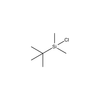
    tert-Butyldimethylchlorosilane; TBS-Cl; Chlorodimethyl-t-butylsilane; tert-Butylchlorodimethylsilane; Chloro(1,1-dimethylethyl)dimethylsilane
  • Excellent for 1° and 2° alcohols
  • Silylation catalyzed by imidazole
  • Blocking agent widely used in prostaglandin synthesis
  • Stable to many reagents
  • Can be selectively cleaved in presence of acetate, THP and benzyl ethers among others
  • Used for the protection of alcohols, amines, thiols, lactams, and carboxylic acids
  • Clean NMR characteristics of protecting group
  • Silylation reagent - derivatives resistant to Grignards, alkyl lithium compounds, etc
  • Facile removal with flouride ion sources
  • Summary of selective deprotection conditions is provided in Table 7 through Table 20 of the Silicon-Based Blocking Agents brochure
Supplier's Site Datasheet

Technical Specifications

  Gelest, Inc.
Product Category Organic Chemicals
Product Number SIB1935.0
Product Name t-BUTYLDIMETHYLCHLOROSILANE
Chemical Formula C 6 H 1 5 ClSi
Unlock Full Specs
to access all available technical data

Similar Products

DMI 1,3 Dimethyl-2-Imidazolidinone -  - Mitsui Chemicals America, Inc.
Mitsui Chemicals America, Inc.
Specs
Trigger Solvent
Chemical Name DMI 1,3 Dimethyl-2-Imidazolidinone
State of Matter Liquid / Solution
View Details
AsahiKlin Precision Cleaning Solvent - AE3100E - AGC Chemicals Americas, Inc.
Specs
Trigger Solvent
Chemical Family All Halogenated; All Ethers; Ethanol
Chemical Name 1,1,2,2- tetra fluoroethyl-2,2,2- trifluoro ethyl ether
View Details
 - 001339 - Matrix Scientific
Matrix Scientific
Specs
Chemical Name 2-Amino-5-(trifluoromethyl)-1,3,4-thiadiazole
Chemical Formula C3H2F3N3S
CAS Number 10444-89-0
View Details
 - Piperazine-2-one - High Force Research Limited
High Force Research Limited
Specs
Chemical Name Piperazine-2-one
Chemical Formula C4H8N2O
CAS Number 5625-67-2
View Details