Additional Properties
Hydrolytic Sensitivity 7: reacts slowly with moisture/water Application Employed in CVD of cobalt, cobalt silicide.1 Hydrosilylation catalyst for carbonyls.2 In combination with Fe(CO)5 forms spherical Fe/Co particles.3 Reagent for mediated epitaxy of cobalt.4 Reference 1. Ivanova, A. et al. J. Electrochem. Soc. 1999, 146, 2139. 2. Chatani, N. et al. Chem. Lett. 2000, 14. 3. Morita, H. et al. J. Photochem. Photobiol., A 2009, 206, 205. 4. Kaloyeros, A. et al. U.S. Patent 6,346,477, 2001. Safety
Packaging Under Nitrogen ALD Material Atomic layer deposition (ALD) is a chemically self-limiting deposition technique that is based on the sequential use of a gaseous chemical process. A thin film (as fine as -0.1 Å per cycle) results from repeating the deposition sequence as many times as needed to reach a certain thickness. The major characteristic of the films is the resulting conformality and the controlled deposition manner. Precursor selection is key in ALD processes, namely finding molecules which will have enough reactivity to produce the desired films yet are stable enough to be handled and safely delivered to the reaction chamber. Cobalt tricarbonyl nitrosyl; Dicobalt octacarbonyl
Red-brown liquid
Ionization energy: 8.3 eV
Vapor pressure, 20 °C" 100 mm
Specific gravity: 1.47
In combination with SiH4 forms CoSi by CVD
Catalyst for conversion of olefins, alkynes and CO to cyclopentenones
Reagent for mediated epitaxy cobalt
Deposition of cobalt for magnetic thin films
In combination with Fe(CO)5 forms spherical Fe/Co particles
Forming electrical contacts on transistor source/drain and gate regions
Optimize processing Co epitaxy growth in integrated silicide circuits
Gelest, Inc.
Done
Datasheet
Description
Additional Properties
Hydrolytic Sensitivity 7: reacts slowly with moisture/water Application Employed in CVD of cobalt, cobalt silicide.1 Hydrosilylation catalyst for carbonyls.2 In combination with Fe(CO)5 forms spherical Fe/Co particles.3 Reagent for mediated epitaxy of cobalt.4 Reference 1. Ivanova, A. et al. J. Electrochem. Soc. 1999, 146, 2139. 2. Chatani, N. et al. Chem. Lett. 2000, 14. 3. Morita, H. et al. J. Photochem. Photobiol., A 2009, 206, 205. 4. Kaloyeros, A. et al. U.S. Patent 6,346,477, 2001. Safety
Packaging Under Nitrogen ALD Material Atomic layer deposition (ALD) is a chemically self-limiting deposition technique that is based on the sequential use of a gaseous chemical process. A thin film (as fine as -0.1 Å per cycle) results from repeating the deposition sequence as many times as needed to reach a certain thickness. The major characteristic of the films is the resulting conformality and the controlled deposition manner. Precursor selection is key in ALD processes, namely finding molecules which will have enough reactivity to produce the desired films yet are stable enough to be handled and safely delivered to the reaction chamber. Cobalt tricarbonyl nitrosyl; Dicobalt octacarbonyl
Red-brown liquid
Ionization energy: 8.3 eV
Vapor pressure, 20 °C" 100 mm
Specific gravity: 1.47
In combination with SiH4 forms CoSi by CVD
Catalyst for conversion of olefins, alkynes and CO to cyclopentenones
Reagent for mediated epitaxy cobalt
Deposition of cobalt for magnetic thin films
In combination with Fe(CO)5 forms spherical Fe/Co particles
Forming electrical contacts on transistor source/drain and gate regions
Optimize processing Co epitaxy growth in integrated silicide circuits
Additional Properties
Hydrolytic Sensitivity 7: reacts slowly with moisture/water Application Employed in CVD of cobalt, cobalt silicide.1 Hydrosilylation catalyst for carbonyls.2 In combination with Fe(CO)5 forms spherical Fe/Co particles.3 Reagent for mediated epitaxy of cobalt.4 Reference 1. Ivanova, A. et al. J. Electrochem. Soc. 1999, 146, 2139. 2. Chatani, N. et al. Chem. Lett. 2000, 14. 3. Morita, H. et al. J. Photochem. Photobiol., A 2009, 206, 205. 4. Kaloyeros, A. et al. U.S. Patent 6,346,477, 2001. Safety
Packaging Under Nitrogen ALD Material Atomic layer deposition (ALD) is a chemically self-limiting deposition technique that is based on the sequential use of a gaseous chemical process. A thin film (as fine as -0.1 Å per cycle) results from repeating the deposition sequence as many times as needed to reach a certain thickness. The major characteristic of the films is the resulting conformality and the controlled deposition manner. Precursor selection is key in ALD processes, namely finding molecules which will have enough reactivity to produce the desired films yet are stable enough to be handled and safely delivered to the reaction chamber. Cobalt tricarbonyl nitrosyl; Dicobalt octacarbonyl
Red-brown liquid
Ionization energy: 8.3 eV
Vapor pressure, 20 °C" 100 mm
Specific gravity: 1.47
In combination with SiH4 forms CoSi by CVD
Catalyst for conversion of olefins, alkynes and CO to cyclopentenones
Reagent for mediated epitaxy cobalt
Deposition of cobalt for magnetic thin films
In combination with Fe(CO)5 forms spherical Fe/Co particles
Forming electrical contacts on transistor source/drain and gate regions
Optimize processing Co epitaxy growth in integrated silicide circuits
Additional Properties
Hydrolytic Sensitivity 7: reacts slowly with moisture/water
Application
Employed in CVD of cobalt, cobalt silicide.1 Hydrosilylation catalyst for carbonyls.2 In combination with Fe(CO)5 forms spherical Fe/Co particles.3 Reagent for mediated epitaxy of cobalt.4
Reference
1. Ivanova, A. et al. J. Electrochem. Soc. 1999, 146, 2139. 2. Chatani, N. et al. Chem. Lett. 2000, 14. 3. Morita, H. et al. J. Photochem. Photobiol., A 2009, 206, 205. 4. Kaloyeros, A. et al. U.S. Patent 6,346,477, 2001.
Safety
Packaging Under Nitrogen
ALD Material
Atomic layer deposition (ALD) is a chemically self-limiting deposition technique that is based on the sequential use of a gaseous chemical process. A thin film (as fine as -0.1 Å per cycle) results from repeating the deposition sequence as many times as needed to reach a certain thickness. The major characteristic of the films is the resulting conformality and the controlled deposition manner. Precursor selection is key in ALD processes, namely finding molecules which will have enough reactivity to produce the desired films yet are stable enough to be handled and safely delivered to the reaction chamber.
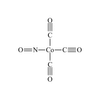
Cobalt tricarbonyl nitrosyl; Dicobalt octacarbonyl
Red-brown liquid
Ionization energy: 8.3 eV
Vapor pressure, 20 °C" 100 mm
Specific gravity: 1.47
In combination with SiH4 forms CoSi by CVD
Catalyst for conversion of olefins, alkynes and CO to cyclopentenones
Reagent for mediated epitaxy cobalt
Deposition of cobalt for magnetic thin films
In combination with Fe(CO)5 forms spherical Fe/Co particles
Forming electrical contacts on transistor source/drain and gate regions
Optimize processing Co epitaxy growth in integrated silicide circuits