Gelest, Inc. COBALT CARBONYL INCO030

Description
Additional Properties Hydrolytic Sensitivity 7: reacts slowly with moisture/water Application In combination with SiH4 forms CoSi by CVD.1 Catalyst for conversion of olefins, alkynes, and CO to cyclopentenones.2 Reference 1. West, G. et al. Appl. Phys. Lett. 1988, 53, 740. 2. Comprehensive Organic Synthesis, Vol. 5 9.1, 1037, 1991 Safety Hazard Info oral rat, LD50: 754 mg/kg Packaging Under Nitrogen Store Below 5 ˚C ALD Material Atomic layer deposition (ALD) is a chemically self-limiting deposition technique that is based on the sequential use of a gaseous chemical process. A thin film (as fine as -0.1 Å per cycle) results from repeating the deposition sequence as many times as needed to reach a certain thickness. The major characteristic of the films is the resulting conformality and the controlled deposition manner. Precursor selection is key in ALD processes, namely finding molecules which will have enough reactivity to produce the desired films yet are stable enough to be handled and safely delivered to the reaction chamber. CVD Material The growth of thin films via chemical vapor deposition (CVD) is an industrially significant process with a wide array of applications, notably in microelectronic device fabrication. A volatilized precursor (such as a silane, organometallic or metal coordination complex) is passed over a heated substrate. Thermal decomposition of the precursor produces a thin-film deposit, and ideally, the ligands associated with the precursor are cleanly lost to the gas phase as reaction products. Compared to other thin-film production techniques, CVD offers several significant advantages, most notably the potential for effecting selective deposition and lower processing temperatures. Many metal CVD depositions are autocatalytic. Growth of such thin films is characterized by an induction period, which is a consequence of the higher barriers that relate to the activation of the precursor on a non-native substrate. CVD is the preferred deposition method for fabricating optical storage, as it is a well-established method with good scalability, reproducibility, and uniformity. It is also capable of high rates and good composition control. Cobalt carbonyl; Octacarbonyldicobalt ; Dicobalt octacarbonyl; Cobalt tetracarbonyl dimer Contains 1-4% hexane for stability In combination with SiH4 forms CoSi by CVD Catalyst for conversion of olefins, alkynes, and CO to cyclopentenones
Datasheet
Description
Additional Properties Hydrolytic Sensitivity 7: reacts slowly with moisture/water Application In combination with SiH4 forms CoSi by CVD.1 Catalyst for conversion of olefins, alkynes, and CO to cyclopentenones.2 Reference 1. West, G. et al. Appl. Phys. Lett. 1988, 53, 740. 2. Comprehensive Organic Synthesis, Vol. 5 9.1, 1037, 1991 Safety Hazard Info oral rat, LD50: 754 mg/kg Packaging Under Nitrogen Store Below 5 ˚C ALD Material Atomic layer deposition (ALD) is a chemically self-limiting deposition technique that is based on the sequential use of a gaseous chemical process. A thin film (as fine as -0.1 Å per cycle) results from repeating the deposition sequence as many times as needed to reach a certain thickness. The major characteristic of the films is the resulting conformality and the controlled deposition manner. Precursor selection is key in ALD processes, namely finding molecules which will have enough reactivity to produce the desired films yet are stable enough to be handled and safely delivered to the reaction chamber. CVD Material The growth of thin films via chemical vapor deposition (CVD) is an industrially significant process with a wide array of applications, notably in microelectronic device fabrication. A volatilized precursor (such as a silane, organometallic or metal coordination complex) is passed over a heated substrate. Thermal decomposition of the precursor produces a thin-film deposit, and ideally, the ligands associated with the precursor are cleanly lost to the gas phase as reaction products. Compared to other thin-film production techniques, CVD offers several significant advantages, most notably the potential for effecting selective deposition and lower processing temperatures. Many metal CVD depositions are autocatalytic. Growth of such thin films is characterized by an induction period, which is a consequence of the higher barriers that relate to the activation of the precursor on a non-native substrate. CVD is the preferred deposition method for fabricating optical storage, as it is a well-established method with good scalability, reproducibility, and uniformity. It is also capable of high rates and good composition control. Cobalt carbonyl; Octacarbonyldicobalt ; Dicobalt octacarbonyl; Cobalt tetracarbonyl dimer Contains 1-4% hexane for stability In combination with SiH4 forms CoSi by CVD Catalyst for conversion of olefins, alkynes, and CO to cyclopentenones
Datasheet

Suppliers

Company
Product
Description
Supplier Links
COBALT CARBONYL - INCO030 - Gelest, Inc.
Morrisville, PA, United States
COBALT CARBONYL
INCO030
COBALT CARBONYL INCO030
Additional Properties Hydrolytic Sensitivity 7: reacts slowly with moisture/water Application In combination with SiH4 forms CoSi by CVD.1 Catalyst for conversion of olefins, alkynes, and CO to cyclopentenones.2 Reference 1. West, G. et al. Appl. Phys. Lett. 1988, 53, 740. 2. Comprehensive Organic Synthesis, Vol. 5 9.1, 1037, 1991 Safety Hazard Info oral rat, LD50: 754 mg/kg Packaging Under Nitrogen Store Below 5 ˚C ALD Material Atomic layer deposition (ALD) is a chemically self-limiting deposition technique that is based on the sequential use of a gaseous chemical process. A thin film (as fine as -0.1 Å per cycle) results from repeating the deposition sequence as many times as needed to reach a certain thickness. The major characteristic of the films is the resulting conformality and the controlled deposition manner. Precursor selection is key in ALD processes, namely finding molecules which will have enough reactivity to produce the desired films yet are stable enough to be handled and safely delivered to the reaction chamber. CVD Material The growth of thin films via chemical vapor deposition (CVD) is an industrially significant process with a wide array of applications, notably in microelectronic device fabrication. A volatilized precursor (such as a silane, organometallic or metal coordination complex) is passed over a heated substrate. Thermal decomposition of the precursor produces a thin-film deposit, and ideally, the ligands associated with the precursor are cleanly lost to the gas phase as reaction products. Compared to other thin-film production techniques, CVD offers several significant advantages, most notably the potential for effecting selective deposition and lower processing temperatures. Many metal CVD depositions are autocatalytic. Growth of such thin films is characterized by an induction period, which is a consequence of the higher barriers that relate to the activation of the precursor on a non-native substrate. CVD is the preferred deposition method for fabricating optical storage, as it is a well-established method with good scalability, reproducibility, and uniformity. It is also capable of high rates and good composition control. Cobalt carbonyl; Octacarbonyldicobalt ; Dicobalt octacarbonyl; Cobalt tetracarbonyl dimer Contains 1-4% hexane for stability In combination with SiH4 forms CoSi by CVD Catalyst for conversion of olefins, alkynes, and CO to cyclopentenones

Additional Properties


  • Hydrolytic Sensitivity 7: reacts slowly with moisture/water
    Application
    In combination with SiH4 forms CoSi by CVD.1 Catalyst for conversion of olefins, alkynes, and CO to cyclopentenones.2
    Reference
    1. West, G. et al. Appl. Phys. Lett. 1988, 53, 740. 2. Comprehensive Organic Synthesis, Vol. 5 9.1, 1037, 1991
    Safety
  • Hazard Info oral rat, LD50: 754 mg/kg
  • Packaging Under Nitrogen
  • Store Below 5 ˚C
    ALD Material
    Atomic layer deposition (ALD) is a chemically self-limiting deposition technique that is based on the sequential use of a gaseous chemical process. A thin film (as fine as -0.1 Å per cycle) results from repeating the deposition sequence as many times as needed to reach a certain thickness. The major characteristic of the films is the resulting conformality and the controlled deposition manner. Precursor selection is key in ALD processes, namely finding molecules which will have enough reactivity to produce the desired films yet are stable enough to be handled and safely delivered to the reaction chamber.
    CVD Material
    The growth of thin films via chemical vapor deposition (CVD) is an industrially significant process with a wide array of applications, notably in microelectronic device fabrication. A volatilized precursor (such as a silane, organometallic or metal coordination complex) is passed over a heated substrate. Thermal decomposition of the precursor produces a thin-film deposit, and ideally, the ligands associated with the precursor are cleanly lost to the gas phase as reaction products. Compared to other thin-film production techniques, CVD offers several significant advantages, most notably the potential for effecting selective deposition and lower processing temperatures. Many metal CVD depositions are autocatalytic. Growth of such thin films is characterized by an induction period, which is a consequence of the higher barriers that relate to the activation of the precursor on a non-native substrate. CVD is the preferred deposition method for fabricating optical storage, as it is a well-established method with good scalability, reproducibility, and uniformity. It is also capable of high rates and good composition control.
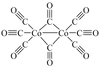
    Cobalt carbonyl; Octacarbonyldicobalt; Dicobalt octacarbonyl; Cobalt tetracarbonyl dimer
  • Contains 1-4% hexane for stability
  • In combination with SiH4 forms CoSi by CVD
  • Catalyst for conversion of olefins, alkynes, and CO to cyclopentenones
Supplier's Site Datasheet

Technical Specifications

  Gelest, Inc.
Product Category Organic Chemicals
Product Number INCO030
Product Name COBALT CARBONYL
Chemical Formula C 8 Co 2 O 8
Unlock Full Specs
to access all available technical data

Similar Products

AsahiKlin Precision Cleaning Solvent - AE3000 - AGC Chemicals Americas, Inc.
Specs
Trigger Solvent
Chemical Family All Halogenated; All Ethers
Chemical Name 1,1,2,2-tetra fluoroethyl-2,2,2-trifluoromethyl ether
View Details
DMI 1,3 Dimethyl-2-Imidazolidinone -  - Mitsui Chemicals America, Inc.
Mitsui Chemicals America, Inc.
Specs
Trigger Solvent
Chemical Name DMI 1,3 Dimethyl-2-Imidazolidinone
State of Matter Liquid / Solution
View Details
Pickering Laboratories, Inc.
View Details
