Safety
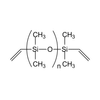
Packaging Under Nitrogen DMS-V51: Vinyl Terminated PDMS, 100,000 cSt (Telechelic Functional Fluid) Vinyl terminated polymers are most often employed in 2-part addition cure silicone elastomers. DMS-V51 Properties
Viscosity: 100,000 cSt
Molecular Weight: 140,000 g/mol
Wt.% Vinyl: 0.03-0.05
Vinyl (eq/kg): 0.016-0.018
Gelest, Inc.
Done
Description
Safety
Packaging Under Nitrogen DMS-V51: Vinyl Terminated PDMS, 100,000 cSt (Telechelic Functional Fluid) Vinyl terminated polymers are most often employed in 2-part addition cure silicone elastomers. DMS-V51 Properties
Viscosity: 100,000 cSt
Molecular Weight: 140,000 g/mol
Wt.% Vinyl: 0.03-0.05
Vinyl (eq/kg): 0.016-0.018
Datasheet
Datasheet Summary Powered by GS/AI
VINYL TERMINATED POLYDIMETHYLSILOXANE, part number DMS-V51, is a liquid polymer with a viscosity of 100,000 cSt and a molecular weight of 140,000 g/mol. It is primarily used as a chemical intermediate and is classified under the organosiloxane family. The product contains 0.03-0.05 wt.% vinyl, with a vinyl equivalent of 0.016-0.018 eq/kg.
The substance is classified as a reproductive toxin (Category 2), indicating it is suspected of damaging fertility or the unborn child. Appropriate safety precautions are necessary when handling, including the use of protective gloves, clothing, and eye protection. The product should be stored in a well-ventilated area, away from heat and incompatible materials such as alkalis and oxidizing agents.
Engineers considering this product should evaluate its suitability for their specific applications, particularly in the formulation of two-part addition cure silicone elastomers.
Datasheet Summary Powered by GS/AI
VINYL TERMINATED POLYDIMETHYLSILOXANE, part number DMS-V51, is a liquid polymer with a viscosity of 100,000 cSt and a molecular weight of 140,000 g/mol. It is primarily used as a chemical intermediate and is classified under the organosiloxane family. The product contains 0.03-0.05 wt.% vinyl, with a vinyl equivalent of 0.016-0.018 eq/kg.
The substance is classified as a reproductive toxin (Category 2), indicating it is suspected of damaging fertility or the unborn child. Appropriate safety precautions are necessary when handling, including the use of protective gloves, clothing, and eye protection. The product should be stored in a well-ventilated area, away from heat and incompatible materials such as alkalis and oxidizing agents.
Engineers considering this product should evaluate its suitability for their specific applications, particularly in the formulation of two-part addition cure silicone elastomers.