The MIC23099 is a high-efficiency, low-noise, dual-output, integrated power-management solution for single-cell alkaline or NiMH battery applications. The synchronous boost output voltage (VOUT1) is enabled first and is powered from the battery. Next the synchronous buck output (VOUT2), which is powered from the boost output voltage, is enabled. This configuration allows VOUT2 to be independent of battery voltage, thereby allowing the buck output voltage to be higher or lower than the battery voltage.To minimize switching artifacts in the audio band, both the converters are design to operate with a minimum switching frequency of 80kHz for the buck and 100kHz for the boost. The high current boost has a maximum switching frequency of 1MHz, minimizing the solution footprint.The MIC23099 incorporates both battery-management functions and fault protection. The low-battery level is indicated by an external LED connected to the LED pin. In addition, a supervisory circuit monitors each output and asserts a power-good (PG) signal when the sequencing is done or de-asserted when a fault condition occurs.
Additional Features
VIN range from 0.85V to 1.6V
VOUT1 (step-up) adjustable from 1.8V to 3.3V
VOUT2 (step-down) adjustable from 1.0V to VOUT1
VOUT1/400mW and VOUT2/30mA from a single cell
Minimizes switching noise in the audio band
Step-up regulator with output disconnect in shutdown
VOUT1, above 90% efficiency for 5mA to 200mA
Anti-ringing control circuit to minimize EMI
Turn-on inrush current limiting and soft-start
Automatic output discharge
Low-battery indicator
Power Good (PG) output
Low output ripple < 10mV
Short-circuit and thermal protection
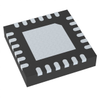
14-pin 2.5mm × 2.5mm × 0.55mm thin QFN (TQFN) package
-40°C to +125°C junction temperature range
The MIC23099 is a high-efficiency, low-noise, dual-output, integrated power-management solution for single-cell alkaline or NiMH battery applications. The synchronous boost output voltage (VOUT1) is enabled first and is powered from the battery. Next the synchronous buck output (VOUT2), which is powered from the boost output voltage, is enabled. This configuration allows VOUT2 to be independent of battery voltage, thereby allowing the buck output voltage to be higher or lower than the battery voltage.To minimize switching artifacts in the audio band, both the converters are design to operate with a minimum switching frequency of 80kHz for the buck and 100kHz for the boost. The high current boost has a maximum switching frequency of 1MHz, minimizing the solution footprint.The MIC23099 incorporates both battery-management functions and fault protection. The low-battery level is indicated by an external LED connected to the LED pin. In addition, a supervisory circuit monitors each output and asserts a power-good (PG) signal when the sequencing is done or de-asserted when a fault condition occurs.
Additional Features
- VIN range from 0.85V to 1.6V
- VOUT1 (step-up) adjustable from 1.8V to 3.3V
- VOUT2 (step-down) adjustable from 1.0V to VOUT1
- VOUT1/400mW and VOUT2/30mA from a single cell
- Minimizes switching noise in the audio band
- Step-up regulator with output disconnect in shutdown
- VOUT1, above 90% efficiency for 5mA to 200mA
- Anti-ringing control circuit to minimize EMI
- Turn-on inrush current limiting and soft-start
- Automatic output discharge
- Low-battery indicator
- Power Good (PG) output
- Low output ripple < 10mV
- Short-circuit and thermal protection
- 14-pin 2.5mm × 2.5mm × 0.55mm thin QFN (TQFN) package
- -40°C to +125°C junction temperature range