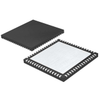
Microchip Technology, Inc. dsPIC33FJ12GP202 en520470

Description
•dsPIC33Fs are designed to execute digital filter algorithms and high-speed precision digital control loops, ideal for applications that need to perform under pressure •General Purpose Digital Signal Controllers (DSCs) with advanced analog and seamless migration options to PIC24F, PIC24H MCUs and dsPIC30F DSCs Additional Features Operating Range Up to 40 MIPS operation (at 3.0-3.6V) Industrial temperature range (-40°C to +85°C) Extended temperature range (-40°C to +125°C) High-Performance dsPIC33F core Modified Harvard architecture C compiler optimized instruction set 16-bit wide data path, 24-bit wide instructions Linear program memory addressing up to 4M instruction words Linear data memory addressing up to 64 Kbytes 83 base instructions, mostly one word/one cycle Sixteen 16-bit general purpose registers Two 40-bit accumulators with rounding and saturation options Flexible and powerful addressing modes: - Indirect - Modulo - Bit-Reversed Software stack 16 x 16 fractional/integer multiply operations 32/16 and 16/16 divide operations Single-cycle MAC with accumulator write back for DSP operations and dual data fetch Up to ±16-bit shifts for up to 40-bit data Interrupt Controller 5-cycle latency Up to 21 available interrupt sources Up to three external interrupts Seven programmable priority levels Four processor exceptions On-Chip Flash and SRAM Flash program memory (12 Kbytes) Data SRAM (1024 bytes) Boot and General Security for Program Flash Digital I/O Peripheral Pin Select Functionality Up to 21 programmable digital I/O pins Wake-up/interrupt-on -change for up to 21 pins Output pins can drive from 3.0V to 3.6V Up to 5V output with open drain configurations on 5V tolerant pins 4 mA sink on all I/O pins System Management Flexible clock options: - External, crystal, resonator, internal RC - Fully Integrated Phase-Locked Loop (PLL) - Extremely low-jitter PLL Power-up Timer Oscillator Start-up Timer/Stabilizer Watchdog Timer with its own RC oscillator Fail-Safe Clock Monitor Power Management On-chip 2.5V voltage regulator Switch between clock sources in real time Idle, Sleep and Doze modes with fast wake-up Timers/Capture/Compa re Up to three 16-bit timers which can pair up to make one 32-bit timer Input Capture (up to four channels): - Capture on up, down, or both edges 16-bit capture input functions, 4-deep FIFO on each capture Output Compare (up to two channels) with Single or Dual 16-bit Compare mode Communication Modules 4-wire SPI: - Framing supports I/O interface to simple codecs, supports 8-bit and 16-bit data and supports all serial clock formats and sampling modes I2C™: - Full Multi-Master Slave mode support, 7-bit and 10-bit addressing, bus collision detection and arbitration, slave address masking and integrated signal conditioning UART: - Provides LIN bus support, IrDA® encoding and decoding in hardware, High-Speed Baud Mode and Hardware Flow Control with CTS and RTS Analog-to-Digital Converters (ADCs) ADC with 10-bit, 1.1 Msps or 12-bit, 500 Ksps conversion Two and four simultaneous samples (10-bit ADC) Up to 10 input channels with auto-scanning Conversion start can be manual or synchronized with one of four trigger sources Conversion possible in Sleep mode ±2 LSb max integral nonlinearity ±1 LSb max differential nonlinearity Packaging 18-pin PDIP/SOIC 28-pin SPDIP/SOIC/SSOP/QFN
Description
•dsPIC33Fs are designed to execute digital filter algorithms and high-speed precision digital control loops, ideal for applications that need to perform under pressure •General Purpose Digital Signal Controllers (DSCs) with advanced analog and seamless migration options to PIC24F, PIC24H MCUs and dsPIC30F DSCs Additional Features Operating Range Up to 40 MIPS operation (at 3.0-3.6V) Industrial temperature range (-40°C to +85°C) Extended temperature range (-40°C to +125°C) High-Performance dsPIC33F core Modified Harvard architecture C compiler optimized instruction set 16-bit wide data path, 24-bit wide instructions Linear program memory addressing up to 4M instruction words Linear data memory addressing up to 64 Kbytes 83 base instructions, mostly one word/one cycle Sixteen 16-bit general purpose registers Two 40-bit accumulators with rounding and saturation options Flexible and powerful addressing modes: - Indirect - Modulo - Bit-Reversed Software stack 16 x 16 fractional/integer multiply operations 32/16 and 16/16 divide operations Single-cycle MAC with accumulator write back for DSP operations and dual data fetch Up to ±16-bit shifts for up to 40-bit data Interrupt Controller 5-cycle latency Up to 21 available interrupt sources Up to three external interrupts Seven programmable priority levels Four processor exceptions On-Chip Flash and SRAM Flash program memory (12 Kbytes) Data SRAM (1024 bytes) Boot and General Security for Program Flash Digital I/O Peripheral Pin Select Functionality Up to 21 programmable digital I/O pins Wake-up/interrupt-on -change for up to 21 pins Output pins can drive from 3.0V to 3.6V Up to 5V output with open drain configurations on 5V tolerant pins 4 mA sink on all I/O pins System Management Flexible clock options: - External, crystal, resonator, internal RC - Fully Integrated Phase-Locked Loop (PLL) - Extremely low-jitter PLL Power-up Timer Oscillator Start-up Timer/Stabilizer Watchdog Timer with its own RC oscillator Fail-Safe Clock Monitor Power Management On-chip 2.5V voltage regulator Switch between clock sources in real time Idle, Sleep and Doze modes with fast wake-up Timers/Capture/Compa re Up to three 16-bit timers which can pair up to make one 32-bit timer Input Capture (up to four channels): - Capture on up, down, or both edges 16-bit capture input functions, 4-deep FIFO on each capture Output Compare (up to two channels) with Single or Dual 16-bit Compare mode Communication Modules 4-wire SPI: - Framing supports I/O interface to simple codecs, supports 8-bit and 16-bit data and supports all serial clock formats and sampling modes I2C™: - Full Multi-Master Slave mode support, 7-bit and 10-bit addressing, bus collision detection and arbitration, slave address masking and integrated signal conditioning UART: - Provides LIN bus support, IrDA® encoding and decoding in hardware, High-Speed Baud Mode and Hardware Flow Control with CTS and RTS Analog-to-Digital Converters (ADCs) ADC with 10-bit, 1.1 Msps or 12-bit, 500 Ksps conversion Two and four simultaneous samples (10-bit ADC) Up to 10 input channels with auto-scanning Conversion start can be manual or synchronized with one of four trigger sources Conversion possible in Sleep mode ±2 LSb max integral nonlinearity ±1 LSb max differential nonlinearity Packaging 18-pin PDIP/SOIC 28-pin SPDIP/SOIC/SSOP/QFN
Datasheet
Datasheet Summary
Powered by GS/AI

The dsPIC33FJ12GP202 is a high-performance 16-bit digital signal controller from Microchip Technology, Inc. It operates at up to 40 MIPS with a voltage range of 3.0 to 3.6V and is available in both industrial (-40¬8C to +85¬8C) and extended (-40¬8C to +125¬8C) temperature ranges. The device features a modified Harvard architecture with a C compiler optimized instruction set, allowing for efficient execution of digital signal processing tasks. This controller includes 12 Kbytes of on-chip Flash program memory and 1024 bytes of SRAM, along with a robust interrupt controller that supports up to 21 interrupt sources and seven programmable priority levels. It offers a variety of digital I/O options, including up to 21 programmable pins with wake-up capabilities and the ability to drive output voltages from 3.0V to 5V. Power management features include an on-chip 2.5V voltage regulator and multiple low-power modes, such as Idle, Sleep, and Doze modes. The device also supports flexible clock options, including an integrated Phase-Locked Loop (PLL) for low-jitter performance. Additionally, it is equipped with multiple timers, capture/compare functionalities, and communication modules such as SPI, I2C, and UART, making it suitable for a wide range of applications in digital control and signal processing.

Datasheet Summary
Powered by GS/AI

The dsPIC33FJ12GP202 is a high-performance 16-bit digital signal controller from Microchip Technology, Inc. It operates at up to 40 MIPS with a voltage range of 3.0 to 3.6V and is available in both industrial (-40¬8C to +85¬8C) and extended (-40¬8C to +125¬8C) temperature ranges. The device features a modified Harvard architecture with a C compiler optimized instruction set, allowing for efficient execution of digital signal processing tasks. This controller includes 12 Kbytes of on-chip Flash program memory and 1024 bytes of SRAM, along with a robust interrupt controller that supports up to 21 interrupt sources and seven programmable priority levels. It offers a variety of digital I/O options, including up to 21 programmable pins with wake-up capabilities and the ability to drive output voltages from 3.0V to 5V. Power management features include an on-chip 2.5V voltage regulator and multiple low-power modes, such as Idle, Sleep, and Doze modes. The device also supports flexible clock options, including an integrated Phase-Locked Loop (PLL) for low-jitter performance. Additionally, it is equipped with multiple timers, capture/compare functionalities, and communication modules such as SPI, I2C, and UART, making it suitable for a wide range of applications in digital control and signal processing.

Suppliers

Company
Product
Description
Supplier Links
dsPIC33FJ12GP202 - en520470 - Microchip Technology, Inc.
Chandler, AZ, United States
dsPIC33FJ12GP202
en520470
dsPIC33FJ12GP202 en520470
•dsPIC33Fs are designed to execute digital filter algorithms and high-speed precision digital control loops, ideal for applications that need to perform under pressure •General Purpose Digital Signal Controllers (DSCs) with advanced analog and seamless migration options to PIC24F, PIC24H MCUs and dsPIC30F DSCs Additional Features Operating Range Up to 40 MIPS operation (at 3.0-3.6V) Industrial temperature range (-40°C to +85°C) Extended temperature range (-40°C to +125°C) High-Performance dsPIC33F core Modified Harvard architecture C compiler optimized instruction set 16-bit wide data path, 24-bit wide instructions Linear program memory addressing up to 4M instruction words Linear data memory addressing up to 64 Kbytes 83 base instructions, mostly one word/one cycle Sixteen 16-bit general purpose registers Two 40-bit accumulators with rounding and saturation options Flexible and powerful addressing modes: - Indirect - Modulo - Bit-Reversed Software stack 16 x 16 fractional/integer multiply operations 32/16 and 16/16 divide operations Single-cycle MAC with accumulator write back for DSP operations and dual data fetch Up to ±16-bit shifts for up to 40-bit data Interrupt Controller 5-cycle latency Up to 21 available interrupt sources Up to three external interrupts Seven programmable priority levels Four processor exceptions On-Chip Flash and SRAM Flash program memory (12 Kbytes) Data SRAM (1024 bytes) Boot and General Security for Program Flash Digital I/O Peripheral Pin Select Functionality Up to 21 programmable digital I/O pins Wake-up/interrupt-on -change for up to 21 pins Output pins can drive from 3.0V to 3.6V Up to 5V output with open drain configurations on 5V tolerant pins 4 mA sink on all I/O pins System Management Flexible clock options: - External, crystal, resonator, internal RC - Fully Integrated Phase-Locked Loop (PLL) - Extremely low-jitter PLL Power-up Timer Oscillator Start-up Timer/Stabilizer Watchdog Timer with its own RC oscillator Fail-Safe Clock Monitor Power Management On-chip 2.5V voltage regulator Switch between clock sources in real time Idle, Sleep and Doze modes with fast wake-up Timers/Capture/Compa re Up to three 16-bit timers which can pair up to make one 32-bit timer Input Capture (up to four channels): - Capture on up, down, or both edges 16-bit capture input functions, 4-deep FIFO on each capture Output Compare (up to two channels) with Single or Dual 16-bit Compare mode Communication Modules 4-wire SPI: - Framing supports I/O interface to simple codecs, supports 8-bit and 16-bit data and supports all serial clock formats and sampling modes I2C™: - Full Multi-Master Slave mode support, 7-bit and 10-bit addressing, bus collision detection and arbitration, slave address masking and integrated signal conditioning UART: - Provides LIN bus support, IrDA® encoding and decoding in hardware, High-Speed Baud Mode and Hardware Flow Control with CTS and RTS Analog-to-Digital Converters (ADCs) ADC with 10-bit, 1.1 Msps or 12-bit, 500 Ksps conversion Two and four simultaneous samples (10-bit ADC) Up to 10 input channels with auto-scanning Conversion start can be manual or synchronized with one of four trigger sources Conversion possible in Sleep mode ±2 LSb max integral nonlinearity ±1 LSb max differential nonlinearity Packaging 18-pin PDIP/SOIC 28-pin SPDIP/SOIC/SSOP/QFN

•dsPIC33Fs are designed to execute digital filter algorithms and high-speed precision digital control loops, ideal for applications that need to perform under pressure •General Purpose Digital Signal Controllers (DSCs) with advanced analog and seamless migration options to PIC24F, PIC24H MCUs and dsPIC30F DSCs

Additional Features

  • Operating Range
    • Up to 40 MIPS operation (at 3.0-3.6V)
    • Industrial temperature range (-40°C to +85°C)
    • Extended temperature range (-40°C to +125°C)
  • High-Performance dsPIC33F core
    • Modified Harvard architecture
    • C compiler optimized instruction set
    • 16-bit wide data path, 24-bit wide instructions
    • Linear program memory addressing up to 4M instruction words
    • Linear data memory addressing up to 64 Kbytes
    • 83 base instructions, mostly one word/one cycle
    • Sixteen 16-bit general purpose registers
    • Two 40-bit accumulators with rounding and saturation options
    • Flexible and powerful addressing modes: - Indirect - Modulo - Bit-Reversed
    • Software stack
    • 16 x 16 fractional/integer multiply operations
    • 32/16 and 16/16 divide operations
    • Single-cycle MAC with accumulator write back for DSP operations and dual data fetch
    • Up to ±16-bit shifts for up to 40-bit data
  • Interrupt Controller
    • 5-cycle latency
    • Up to 21 available interrupt sources
    • Up to three external interrupts
    • Seven programmable priority levels
    • Four processor exceptions
  • On-Chip Flash and SRAM
    • Flash program memory (12 Kbytes)
    • Data SRAM (1024 bytes)
    • Boot and General Security for Program Flash
  • Digital I/O
    • Peripheral Pin Select Functionality
    • Up to 21 programmable digital I/O pins
    • Wake-up/interrupt-on-change for up to 21 pins
    • Output pins can drive from 3.0V to 3.6V
    • Up to 5V output with open drain configurations on 5V tolerant pins
    • 4 mA sink on all I/O pins
  • System Management
    • Flexible clock options: - External, crystal, resonator, internal RC - Fully Integrated Phase-Locked Loop (PLL) - Extremely low-jitter PLL
    • Power-up Timer
    • Oscillator Start-up Timer/Stabilizer
    • Watchdog Timer with its own RC oscillator
    • Fail-Safe Clock Monitor
  • Power Management
    • On-chip 2.5V voltage regulator
    • Switch between clock sources in real time
    • Idle, Sleep and Doze modes with fast wake-up
  • Timers/Capture/Compare
    • Up to three 16-bit timers which can pair up to make one 32-bit timer
    • Input Capture (up to four channels): - Capture on up, down, or both edges
    • 16-bit capture input functions, 4-deep FIFO on each capture
    • Output Compare (up to two channels) with Single or Dual 16-bit Compare mode
  • Communication Modules
    • 4-wire SPI: - Framing supports I/O interface to simple codecs, supports 8-bit and 16-bit data and supports all serial clock formats and sampling modes
    • I2C™: - Full Multi-Master Slave mode support, 7-bit and 10-bit addressing, bus collision detection and arbitration, slave address masking and integrated signal conditioning
    • UART: - Provides LIN bus support, IrDA® encoding and decoding in hardware, High-Speed Baud Mode and Hardware Flow Control with CTS and RTS
  • Analog-to-Digital Converters (ADCs)
    • ADC with 10-bit, 1.1 Msps or 12-bit, 500 Ksps conversion
    • Two and four simultaneous samples (10-bit ADC)
    • Up to 10 input channels with auto-scanning
    • Conversion start can be manual or synchronized with one of four trigger sources
    • Conversion possible in Sleep mode
    • ±2 LSb max integral nonlinearity
    • ±1 LSb max differential nonlinearity
  • Packaging
    • 18-pin PDIP/SOIC
    • 28-pin SPDIP/SOIC/SSOP/QFN
Supplier's Site Datasheet

Technical Specifications

  Microchip Technology, Inc.
Product Category Microcontrollers (MCU)
Product Number en520470
Product Name dsPIC33FJ12GP202
Data Bus 16 Bit
Clock Speed 40 MHz
Features PWM
Bits 16 Bit; 32 Bit
Number 3
Unlock Full Specs
to access all available technical data

Similar Products

Microcontrollers - C167CSLMCAKXUMA2-ND - DigiKey
Infineon Technologies AG
Specs
Data Bus 16 Bit
Clock Speed 25 MHz
Bits Other; A/D 24x10b
View Details
6 suppliers
Microcontrollers - 1769102 - RS Components, Ltd.
RS Components, Ltd.
Specs
Data Bus 32 Bit; 32bit
RAM 32 KB
ROM 128 KB
View Details