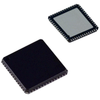
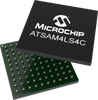
Microchip Technology, Inc. ATSAM4LS4C

Description
A member of the Microchip's SAM4L family of Flash microcontrollers based on the ARM® Cortex®-M4 processor, the ATSAM4LS4C delivers the lowest power in active mode (90uA/MHz) as well as sleep mode (1.5uA) and the shortest wake-up time (down to 1.5us) in a Cortex-M4 device. Along with 256KB of embedded Flash, the device features a USB device, peripheral event system and Sleepwalking intelligent peripherals. Integrated Microchip QTouch technology makes it easy to bring capacitive touch functionality to your hardware. Additional Features Microcontroller Features Core ARM Cortex-M4 running at up to 48 MHz Memory Protection Unit (MPU) DSP Instructions, Thumb®-2 instruction set Memories 256 Kbytes embedded Flash, 0 wait-state capability up to 24MHz 32 Kbytes embedded SRAM System Embedded voltage regulator for single-supply operation Two Power-on-Reset and Two Brown-out Detectors (BOD) Quartz or ceramic resonator oscillators: 0.6 to 30MHz main power with Failure Detection and low power 32.768 kHz for RTC or device clock High-precision 8/12 MHz factory-trimmed internal RC oscillator Slow clock internal RC oscillator as permanent low-power mode device clock High speed 80MHz internal RC oscillator Low power 32kHz internal RC oscillator PLL up to 240MHz for device clock and for USB Digital Frequency Locked Loop (DFLL) with wide input range Up to 16 peripheral DMA (PDCA) channels picoPower® Technology for Ultra-low Power Consumption Active mode down to 90μA/MHz with configurable voltage scaling High performance and efficiency: 28 coremark/mA Wait mode down to 3μA with fast wake-up time (<1.5μs) supporting SleepWalking Full RAM and Logic Retention mode down to 1.5μA with fast wake-up time (<1.5μs) Ultra low power Backup mode with/without RTC down to 1.5/0.9μA Package 100-lead LQFP, 14 x 14 mm, pitch 0.5 mm 100-lead VFBGA, 7x7 mm, pitch 0.65 mm Temperature operating range Industrial (-40° C to +85° C) Peripheral Features USB 2.0 Device: 12 Mbps, up to 8 bidirectional Endpoints and Multi-packet Ping-pong Mode. On-Chip Transceiver One USART with ISO7816, IrDA®, RS-485, SPI, Manchester and LIN Mode Three USART with SPI Mode One PicoUART for extended UART wake-up capabilities in all sleep modes Windowed Watchdog Timer (WDT) Asynchronous Timer (AST) with Real-time Clock Capability, Counter or Calendar Mode Supported Frequency Meter (FREQM) for Accurate Measuring of Clock Frequency Six 16-bit Timer/Counter (TC) Channels with capture, waveform, compare and PWM mode One Master/Slave Serial Peripheral Interface (SPI) with Chip Select Signals Four Master and Two Slave Two-wire Interfaces (TWI), up to 3.4Mbit/s I2C-compatible Capacitive Touch Module (CATB) supporting up to 32 buttons Inter-IC Sound (IISC) Controller, Compliant with Inter-IC Sound (I2S) Specification Peripheral Event System for Direct Peripheral to Peripheral Communication Parallel Capture Module (PARC) Glue Logic Controller (GLOC) I/O 75 I/O lines with external interrupt capability (edge or level sensitivity), debouncing, glitch filtering and slew-rate control Six High-drive I/O Pins Analog Features One 16-channel ADC 300Ksps (ADC) with up to 12 Bits Resolution One DAC 500Ksps (DACC) with up to 10 Bits Resolution Four Analog Comparators (ACIFC) with Optional Window Detection Audio Bitstream DAC (ABDACB) Suitable for Stereo Audio Debugger Development Support Serial Wire/JTAG Debug Port(SWJ-DP) Debug access to all memories and registers in the system, including Cortex-M4 register bank when the core is running, halted, or held in reset. Serial Wire Debug Port (SW-DP) and Serial Wire JTAG Debug Port (SWJ-DP) debug access. Flash Patch and Breakpoint (FPB) unit for implementing breakpoints and code patches. Data Watchpoint and Trace (DWT) unit for implementing watchpoints, data tracing, and system profiling. Instrumentation Trace Macrocell (ITM) for support of printf style debugging. IEEE1149.1 JTAG Boundary-scan on all digital pins. Integrated Software Libraries and Tools ASF-Atmel software Framework – SAM software development framework Integrated in the Atmel Studio IDE with a graphical user interface or available as standalone for GCC, IAR compilers. DMA support, Interrupt handlers Driver support USB, TCP/IP, Wi-Fi and Bluetooth, Numerous USB classes, DHCP and Wi-Fi encryption Stacks RTOS integration, FreeRTOS is a core component
Datasheet
Description
A member of the Microchip's SAM4L family of Flash microcontrollers based on the ARM® Cortex®-M4 processor, the ATSAM4LS4C delivers the lowest power in active mode (90uA/MHz) as well as sleep mode (1.5uA) and the shortest wake-up time (down to 1.5us) in a Cortex-M4 device. Along with 256KB of embedded Flash, the device features a USB device, peripheral event system and Sleepwalking intelligent peripherals. Integrated Microchip QTouch technology makes it easy to bring capacitive touch functionality to your hardware. Additional Features Microcontroller Features Core ARM Cortex-M4 running at up to 48 MHz Memory Protection Unit (MPU) DSP Instructions, Thumb®-2 instruction set Memories 256 Kbytes embedded Flash, 0 wait-state capability up to 24MHz 32 Kbytes embedded SRAM System Embedded voltage regulator for single-supply operation Two Power-on-Reset and Two Brown-out Detectors (BOD) Quartz or ceramic resonator oscillators: 0.6 to 30MHz main power with Failure Detection and low power 32.768 kHz for RTC or device clock High-precision 8/12 MHz factory-trimmed internal RC oscillator Slow clock internal RC oscillator as permanent low-power mode device clock High speed 80MHz internal RC oscillator Low power 32kHz internal RC oscillator PLL up to 240MHz for device clock and for USB Digital Frequency Locked Loop (DFLL) with wide input range Up to 16 peripheral DMA (PDCA) channels picoPower® Technology for Ultra-low Power Consumption Active mode down to 90μA/MHz with configurable voltage scaling High performance and efficiency: 28 coremark/mA Wait mode down to 3μA with fast wake-up time (<1.5μs) supporting SleepWalking Full RAM and Logic Retention mode down to 1.5μA with fast wake-up time (<1.5μs) Ultra low power Backup mode with/without RTC down to 1.5/0.9μA Package 100-lead LQFP, 14 x 14 mm, pitch 0.5 mm 100-lead VFBGA, 7x7 mm, pitch 0.65 mm Temperature operating range Industrial (-40° C to +85° C) Peripheral Features USB 2.0 Device: 12 Mbps, up to 8 bidirectional Endpoints and Multi-packet Ping-pong Mode. On-Chip Transceiver One USART with ISO7816, IrDA®, RS-485, SPI, Manchester and LIN Mode Three USART with SPI Mode One PicoUART for extended UART wake-up capabilities in all sleep modes Windowed Watchdog Timer (WDT) Asynchronous Timer (AST) with Real-time Clock Capability, Counter or Calendar Mode Supported Frequency Meter (FREQM) for Accurate Measuring of Clock Frequency Six 16-bit Timer/Counter (TC) Channels with capture, waveform, compare and PWM mode One Master/Slave Serial Peripheral Interface (SPI) with Chip Select Signals Four Master and Two Slave Two-wire Interfaces (TWI), up to 3.4Mbit/s I2C-compatible Capacitive Touch Module (CATB) supporting up to 32 buttons Inter-IC Sound (IISC) Controller, Compliant with Inter-IC Sound (I2S) Specification Peripheral Event System for Direct Peripheral to Peripheral Communication Parallel Capture Module (PARC) Glue Logic Controller (GLOC) I/O 75 I/O lines with external interrupt capability (edge or level sensitivity), debouncing, glitch filtering and slew-rate control Six High-drive I/O Pins Analog Features One 16-channel ADC 300Ksps (ADC) with up to 12 Bits Resolution One DAC 500Ksps (DACC) with up to 10 Bits Resolution Four Analog Comparators (ACIFC) with Optional Window Detection Audio Bitstream DAC (ABDACB) Suitable for Stereo Audio Debugger Development Support Serial Wire/JTAG Debug Port(SWJ-DP) Debug access to all memories and registers in the system, including Cortex-M4 register bank when the core is running, halted, or held in reset. Serial Wire Debug Port (SW-DP) and Serial Wire JTAG Debug Port (SWJ-DP) debug access. Flash Patch and Breakpoint (FPB) unit for implementing breakpoints and code patches. Data Watchpoint and Trace (DWT) unit for implementing watchpoints, data tracing, and system profiling. Instrumentation Trace Macrocell (ITM) for support of printf style debugging. IEEE1149.1 JTAG Boundary-scan on all digital pins. Integrated Software Libraries and Tools ASF-Atmel software Framework – SAM software development framework Integrated in the Atmel Studio IDE with a graphical user interface or available as standalone for GCC, IAR compilers. DMA support, Interrupt handlers Driver support USB, TCP/IP, Wi-Fi and Bluetooth, Numerous USB classes, DHCP and Wi-Fi encryption Stacks RTOS integration, FreeRTOS is a core component
Datasheet

Suppliers

Company
Product
Description
Supplier Links
 - ATSAM4LS4C - Microchip Technology, Inc.
Chandler, AZ, United States
A member of the Microchip's SAM4L family of Flash microcontrollers based on the ARM® Cortex®-M4 processor, the ATSAM4LS4C delivers the lowest power in active mode (90uA/MHz) as well as sleep mode (1.5uA) and the shortest wake-up time (down to 1.5us) in a Cortex-M4 device. Along with 256KB of embedded Flash, the device features a USB device, peripheral event system and Sleepwalking intelligent peripherals. Integrated Microchip QTouch technology makes it easy to bring capacitive touch functionality to your hardware. Additional Features Microcontroller Features Core ARM Cortex-M4 running at up to 48 MHz Memory Protection Unit (MPU) DSP Instructions, Thumb®-2 instruction set Memories 256 Kbytes embedded Flash, 0 wait-state capability up to 24MHz 32 Kbytes embedded SRAM System Embedded voltage regulator for single-supply operation Two Power-on-Reset and Two Brown-out Detectors (BOD) Quartz or ceramic resonator oscillators: 0.6 to 30MHz main power with Failure Detection and low power 32.768 kHz for RTC or device clock High-precision 8/12 MHz factory-trimmed internal RC oscillator Slow clock internal RC oscillator as permanent low-power mode device clock High speed 80MHz internal RC oscillator Low power 32kHz internal RC oscillator PLL up to 240MHz for device clock and for USB Digital Frequency Locked Loop (DFLL) with wide input range Up to 16 peripheral DMA (PDCA) channels picoPower® Technology for Ultra-low Power Consumption Active mode down to 90μA/MHz with configurable voltage scaling High performance and efficiency: 28 coremark/mA Wait mode down to 3μA with fast wake-up time (<1.5μs) supporting SleepWalking Full RAM and Logic Retention mode down to 1.5μA with fast wake-up time (<1.5μs) Ultra low power Backup mode with/without RTC down to 1.5/0.9μA Package 100-lead LQFP, 14 x 14 mm, pitch 0.5 mm 100-lead VFBGA, 7x7 mm, pitch 0.65 mm Temperature operating range Industrial (-40° C to +85° C) Peripheral Features USB 2.0 Device: 12 Mbps, up to 8 bidirectional Endpoints and Multi-packet Ping-pong Mode. On-Chip Transceiver One USART with ISO7816, IrDA®, RS-485, SPI, Manchester and LIN Mode Three USART with SPI Mode One PicoUART for extended UART wake-up capabilities in all sleep modes Windowed Watchdog Timer (WDT) Asynchronous Timer (AST) with Real-time Clock Capability, Counter or Calendar Mode Supported Frequency Meter (FREQM) for Accurate Measuring of Clock Frequency Six 16-bit Timer/Counter (TC) Channels with capture, waveform, compare and PWM mode One Master/Slave Serial Peripheral Interface (SPI) with Chip Select Signals Four Master and Two Slave Two-wire Interfaces (TWI), up to 3.4Mbit/s I2C-compatible Capacitive Touch Module (CATB) supporting up to 32 buttons Inter-IC Sound (IISC) Controller, Compliant with Inter-IC Sound (I2S) Specification Peripheral Event System for Direct Peripheral to Peripheral Communication Parallel Capture Module (PARC) Glue Logic Controller (GLOC) I/O 75 I/O lines with external interrupt capability (edge or level sensitivity), debouncing, glitch filtering and slew-rate control Six High-drive I/O Pins Analog Features One 16-channel ADC 300Ksps (ADC) with up to 12 Bits Resolution One DAC 500Ksps (DACC) with up to 10 Bits Resolution Four Analog Comparators (ACIFC) with Optional Window Detection Audio Bitstream DAC (ABDACB) Suitable for Stereo Audio Debugger Development Support Serial Wire/JTAG Debug Port(SWJ-DP) Debug access to all memories and registers in the system, including Cortex-M4 register bank when the core is running, halted, or held in reset. Serial Wire Debug Port (SW-DP) and Serial Wire JTAG Debug Port (SWJ-DP) debug access. Flash Patch and Breakpoint (FPB) unit for implementing breakpoints and code patches. Data Watchpoint and Trace (DWT) unit for implementing watchpoints, data tracing, and system profiling. Instrumentation Trace Macrocell (ITM) for support of printf style debugging. IEEE1149.1 JTAG Boundary-scan on all digital pins. Integrated Software Libraries and Tools ASF-Atmel software Framework – SAM software development framework Integrated in the Atmel Studio IDE with a graphical user interface or available as standalone for GCC, IAR compilers. DMA support, Interrupt handlers Driver support USB, TCP/IP, Wi-Fi and Bluetooth, Numerous USB classes, DHCP and Wi-Fi encryption Stacks RTOS integration, FreeRTOS is a core component

A member of the Microchip's SAM4L family of Flash microcontrollers based on the ARM® Cortex®-M4 processor, the ATSAM4LS4C delivers the lowest power in active mode (90uA/MHz) as well as sleep mode (1.5uA) and the shortest wake-up time (down to 1.5us) in a Cortex-M4 device. Along with 256KB of embedded Flash, the device features a USB device, peripheral event system and Sleepwalking intelligent peripherals. Integrated Microchip QTouch technology makes it easy to bring capacitive touch functionality to your hardware.

Additional Features

    Microcontroller Features Core
    • ARM Cortex-M4 running at up to 48 MHz
    • Memory Protection Unit (MPU)
    • DSP Instructions, Thumb®-2 instruction set
    Memories
    • 256 Kbytes embedded Flash, 0 wait-state capability up to 24MHz
    • 32 Kbytes embedded SRAM
    System
    • Embedded voltage regulator for single-supply operation
    • Two Power-on-Reset and Two Brown-out Detectors (BOD)
    • Quartz or ceramic resonator oscillators: 0.6 to 30MHz main power with Failure Detection and low power 32.768 kHz for RTC or device clock
      • High-precision 8/12 MHz factory-trimmed internal RC oscillator
      • Slow clock internal RC oscillator as permanent low-power mode device clock
      • High speed 80MHz internal RC oscillator
      • Low power 32kHz internal RC oscillator
      • PLL up to 240MHz for device clock and for USB
      • Digital Frequency Locked Loop (DFLL) with wide input range
      • Up to 16 peripheral DMA (PDCA) channels
    picoPower® Technology for Ultra-low Power Consumption
    • Active mode down to 90μA/MHz with configurable voltage scaling
    • High performance and efficiency: 28 coremark/mA
    • Wait mode down to 3μA with fast wake-up time (<1.5μs) supporting SleepWalking
    • Full RAM and Logic Retention mode down to 1.5μA with fast wake-up time (<1.5μs)
    • Ultra low power Backup mode with/without RTC down to 1.5/0.9μA
    Package
    • 100-lead LQFP, 14 x 14 mm, pitch 0.5 mm
    • 100-lead VFBGA, 7x7 mm, pitch 0.65 mm
    Temperature operating range
    • Industrial (-40° C to +85° C)
    Peripheral Features
    • USB 2.0 Device: 12 Mbps, up to 8 bidirectional Endpoints and Multi-packet Ping-pong Mode. On-Chip Transceiver
    • One USART with ISO7816, IrDA®, RS-485, SPI, Manchester and LIN Mode
    • Three USART with SPI Mode
    • One PicoUART for extended UART wake-up capabilities in all sleep modes
    • Windowed Watchdog Timer (WDT)
    • Asynchronous Timer (AST) with Real-time Clock Capability, Counter or Calendar Mode Supported
    • Frequency Meter (FREQM) for Accurate Measuring of Clock Frequency
    • Six 16-bit Timer/Counter (TC) Channels with capture, waveform, compare and PWM mode
    • One Master/Slave Serial Peripheral Interface (SPI) with Chip Select Signals
    • Four Master and Two Slave Two-wire Interfaces (TWI), up to 3.4Mbit/s I2C-compatible
    • Capacitive Touch Module (CATB) supporting up to 32 buttons
    • Inter-IC Sound (IISC) Controller, Compliant with Inter-IC Sound (I2S) Specification
    • Peripheral Event System for Direct Peripheral to Peripheral Communication
    • Parallel Capture Module (PARC)
    • Glue Logic Controller (GLOC)
    I/O
    • 75 I/O lines with external interrupt capability (edge or level sensitivity), debouncing, glitch filtering and slew-rate control
    • Six High-drive I/O Pins
    Analog Features
    • One 16-channel ADC 300Ksps (ADC) with up to 12 Bits Resolution
    • One DAC 500Ksps (DACC) with up to 10 Bits Resolution
    • Four Analog Comparators (ACIFC) with Optional Window Detection
    • Audio Bitstream DAC (ABDACB) Suitable for Stereo Audio
    Debugger Development Support
    • Serial Wire/JTAG Debug Port(SWJ-DP)
    • Debug access to all memories and registers in the system, including Cortex-M4 register bank when the core is running, halted, or held in reset.
    • Serial Wire Debug Port (SW-DP) and Serial Wire JTAG Debug Port (SWJ-DP) debug access.
    • Flash Patch and Breakpoint (FPB) unit for implementing breakpoints and code patches.
    • Data Watchpoint and Trace (DWT) unit for implementing watchpoints, data tracing, and system profiling.
    • Instrumentation Trace Macrocell (ITM) for support of printf style debugging.
    • IEEE1149.1 JTAG Boundary-scan on all digital pins.
    Integrated Software Libraries and Tools
    • ASF-Atmel software Framework – SAM software development framework
    • Integrated in the Atmel Studio IDE with a graphical user interface or available as standalone for GCC, IAR compilers.
    • DMA support, Interrupt handlers Driver support
    • USB, TCP/IP, Wi-Fi and Bluetooth, Numerous USB classes, DHCP and Wi-Fi encryption Stacks
    • RTOS integration, FreeRTOS is a core component
Supplier's Site Datasheet

Technical Specifications

  Microchip Technology, Inc.
Product Category Microcontrollers (MCU)
Product Number ATSAM4LS4C
Clock Speed 48 MHz
Bits Other; 12-bit
Number 15
RAM 32 KB
ROM 256 KB
Unlock Full Specs
to access all available technical data

Similar Products

Microcontrollers - 428444 - RS Components, Ltd.
RS Components, Ltd.
Specs
Data Bus 32 Bit; 32bit
Package Type QFP; Other; LQFP
Pin Count 100
View Details
Embedded - Microcontrollers - ACE1502EMX - Lingto Electronic Limited
Specs
Data Bus 8 Bit; 8-Bit
View Details