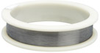
Luma-Metall AB Molybdenum Wire

Description
Of molybdenum we produce molybdenum wire for different applications. The name molybdenum comes from Ancient greek, molybdos. The silvery metal has the sixth highest melting point of all metals, for example tungsten and rhenium has higher melting points. Molybdenum, moly, is a chemical element with the symbol Mo and atomic number 42. The name is from Ancient Greek molybdos and a popular abbreviation for Molybdenum is Moly. This silvery metal has the sixth highest melting point of all metals. For example tungsten and rhenium have higher melting points. Molybdenum’s ability to resist high temperatures without expanding or softening makes it useful in high pressure and high temperature applications. Sometimes molybdenum wire is used instead of tungsten due to its lower density, about half of tungsten. However, the weight to strength ratio for molybdenum wire is high. The electrical conductivity and thermal conductivity for molybdenum wire are about one third of that of copper. Chemically, molybdenum is not very reactive. It is resistant to air and water at ordinary temperature. At 400-500 °C, the metal is oxidized and at temperatures above about 700 °C, the attack is rapid. Luma molybdenum wire (moly wire) is available in a variety of finishes. For example the elongation can be elevated to more than 15%. Molybdenum wire is also, in comparison to tungsten, more ductile. Luma molybdenum wire is available in the dimension range 0.010 – 0.5 mm (0.00039 – 0.0196′). Examples of applications; Antennas, Electronic tubes, Spark erosion, Lightning and Mesh
Description
Of molybdenum we produce molybdenum wire for different applications. The name molybdenum comes from Ancient greek, molybdos. The silvery metal has the sixth highest melting point of all metals, for example tungsten and rhenium has higher melting points. Molybdenum, moly, is a chemical element with the symbol Mo and atomic number 42. The name is from Ancient Greek molybdos and a popular abbreviation for Molybdenum is Moly. This silvery metal has the sixth highest melting point of all metals. For example tungsten and rhenium have higher melting points. Molybdenum’s ability to resist high temperatures without expanding or softening makes it useful in high pressure and high temperature applications. Sometimes molybdenum wire is used instead of tungsten due to its lower density, about half of tungsten. However, the weight to strength ratio for molybdenum wire is high. The electrical conductivity and thermal conductivity for molybdenum wire are about one third of that of copper. Chemically, molybdenum is not very reactive. It is resistant to air and water at ordinary temperature. At 400-500 °C, the metal is oxidized and at temperatures above about 700 °C, the attack is rapid. Luma molybdenum wire (moly wire) is available in a variety of finishes. For example the elongation can be elevated to more than 15%. Molybdenum wire is also, in comparison to tungsten, more ductile. Luma molybdenum wire is available in the dimension range 0.010 – 0.5 mm (0.00039 – 0.0196′). Examples of applications; Antennas, Electronic tubes, Spark erosion, Lightning and Mesh

Suppliers

Company
Product
Description
Supplier Links
Molybdenum Wire -  - Luma-Metall AB
Kalmar, Sweden
Molybdenum Wire
Molybdenum Wire
Of molybdenum we produce molybdenum wire for different applications. The name molybdenum comes from Ancient greek, molybdos. The silvery metal has the sixth highest melting point of all metals, for example tungsten and rhenium has higher melting points. Molybdenum, moly, is a chemical element with the symbol Mo and atomic number 42. The name is from Ancient Greek molybdos and a popular abbreviation for Molybdenum is Moly. This silvery metal has the sixth highest melting point of all metals. For example tungsten and rhenium have higher melting points. Molybdenum’s ability to resist high temperatures without expanding or softening makes it useful in high pressure and high temperature applications. Sometimes molybdenum wire is used instead of tungsten due to its lower density, about half of tungsten. However, the weight to strength ratio for molybdenum wire is high. The electrical conductivity and thermal conductivity for molybdenum wire are about one third of that of copper. Chemically, molybdenum is not very reactive. It is resistant to air and water at ordinary temperature. At 400-500 °C, the metal is oxidized and at temperatures above about 700 °C, the attack is rapid. Luma molybdenum wire (moly wire) is available in a variety of finishes. For example the elongation can be elevated to more than 15%. Molybdenum wire is also, in comparison to tungsten, more ductile. Luma molybdenum wire is available in the dimension range 0.010 – 0.5 mm (0.00039 – 0.0196′). Examples of applications; Antennas, Electronic tubes, Spark erosion, Lightning and Mesh

Of molybdenum we produce molybdenum wire for different applications. The name molybdenum comes from Ancient greek, molybdos. The silvery metal has the sixth highest melting point of all metals, for example tungsten and rhenium has higher melting points.

Molybdenum, moly, is a chemical element with the symbol Mo and atomic number 42. The name is from Ancient Greek molybdos and a popular abbreviation for Molybdenum is Moly.

This silvery metal has the sixth highest melting point of all metals. For example tungsten and rhenium have higher melting points.

Molybdenum’s ability to resist high temperatures without expanding or softening makes it useful in high pressure and high temperature applications.

Sometimes molybdenum wire is used instead of tungsten due to its lower density, about half of tungsten. However, the weight to strength ratio for molybdenum wire is high.

The electrical conductivity and thermal conductivity for molybdenum wire are about one third of that of copper.

Chemically, molybdenum is not very reactive. It is resistant to air and water at ordinary temperature. At 400-500 °C, the metal is oxidized and at temperatures above about 700 °C, the attack is rapid.

Luma molybdenum wire (moly wire) is available in a variety of finishes. For example the elongation can be elevated to more than 15%. Molybdenum wire is also, in comparison to tungsten, more ductile.

Luma molybdenum wire is available in the dimension range 0.010 – 0.5 mm (0.00039 – 0.0196″).

Examples of applications; Antennas, Electronic tubes, Spark erosion, Lightning and Mesh

Supplier's Site

Technical Specifications

  Luma-Metall AB
Product Category Metal Shapes and Stock
Product Name Molybdenum Wire
Type Molybdenum; Refractory / Reactive
Shape / Form Wire
Processing, Temper & Finish Wrought; Polished; Annealed; Electrolytically Cleaned, Electrolytically Etched
Applications Electronics or semiconductors; Antennas, Electronic Tubes, Spark Erosion, Connectors, Mesh, Lighting
Unlock Full Specs
to access all available technical data

Similar Products

Precision Thin Nickel Irons & Soft Magnetics -  - Arnold Magnetic Technologies
Specs
Type Nickel
Shape / Form Sheet; Semi-finished, Mill Stock or Near Net Shapes; Strip; Foil
Features Soft Magnetic Alloy
View Details
Hypodermic Tubing -  - Eagle Stainless Tube & Fabrication, Inc.
Eagle Stainless Tube & Fabrication, Inc.
Specs
Type Stainless; T304, T316
Shape / Form Hollow Stock (Tube, Pipe, Column); Semi-finished, Mill Stock or Near Net Shapes
Features Corrosion Resistant; Specialty
View Details
Sheet Lead -  - MarsMetal
MarsMetal
Specs
Type LowMelting; Lead
Shape / Form Sheet; Semi-finished, Mill Stock or Near Net Shapes
Applications BuildingConstruction; Nuclear
View Details
 - Super Duplex 2507 - Bar - High Performance Alloys, Inc.
High Performance Alloys, Inc.
Specs
Type Stainless; Alloy
Shape / Form Profile or Structural Shape; Round Bar or Rod Stock; Semi-finished, Mill Stock or Near Net Shapes
Features Duplex; Superalloy
View Details