Linde North America, Inc. Dry Ingredient Chilling System

Description
The Linde Flour Dry Ingredient Chilling System is designed to chill flour during conveying in the pneumatic conveying line, adding the precise amount of cryogen needed to obtain a consistent flour temperature from batch to batch Dry ingredient chilling was developed to assist processors’ needs to better control final dough temperatures. Accurate and even dough temperatures play a major role in determining the final quality of baked goods. Chilling of powdered and granulated products such as flour or sugar can be handled via batch or continuous systems with chilling systems designed for use with either liquid nitrogen or CO2. Proper protect chilling systems allow the bakery processor to: Prevent constant reformulation due to varying temperature ingredients being added to the mixture Control dough density to eliminate variation of final dough weights after dividing Eliminate dough waste due to sticky dough (caused by ice usage in mixers) Batch systems utilize bottom injection or top injection of CO2 and nitrogen in mixers, while continuous systems like the DIC system can be found on pneumatic conveying systems. Pneumatic conveying systems can be of the vacuum or pressure type and use air to convey the powder from a bulk storage vessel to the processing point, which can be a mixer or hopper. The key benefit of an inline system is the reduction of end product temperature fluctuation at the mixer. Other benefits include reduction in product waste, improved automation, reduction of operator interface and error. Typical products cooled via inline systems include flour, sugar, and dry mixes.

Datasheet
Description
The Linde Flour Dry Ingredient Chilling System is designed to chill flour during conveying in the pneumatic conveying line, adding the precise amount of cryogen needed to obtain a consistent flour temperature from batch to batch Dry ingredient chilling was developed to assist processors’ needs to better control final dough temperatures. Accurate and even dough temperatures play a major role in determining the final quality of baked goods. Chilling of powdered and granulated products such as flour or sugar can be handled via batch or continuous systems with chilling systems designed for use with either liquid nitrogen or CO2. Proper protect chilling systems allow the bakery processor to: Prevent constant reformulation due to varying temperature ingredients being added to the mixture Control dough density to eliminate variation of final dough weights after dividing Eliminate dough waste due to sticky dough (caused by ice usage in mixers) Batch systems utilize bottom injection or top injection of CO2 and nitrogen in mixers, while continuous systems like the DIC system can be found on pneumatic conveying systems. Pneumatic conveying systems can be of the vacuum or pressure type and use air to convey the powder from a bulk storage vessel to the processing point, which can be a mixer or hopper. The key benefit of an inline system is the reduction of end product temperature fluctuation at the mixer. Other benefits include reduction in product waste, improved automation, reduction of operator interface and error. Typical products cooled via inline systems include flour, sugar, and dry mixes.
Datasheet

Suppliers

Company
Product
Description
Supplier Links
Dry Ingredient Chilling System -  - Linde North America, Inc.
Bridgewater, NJ, USA
Dry Ingredient Chilling System
The Linde Flour Dry Ingredient Chilling System is designed to chill flour during conveying in the pneumatic conveying line, adding the precise amount of cryogen needed to obtain a consistent flour temperature from batch to batch Dry ingredient chilling was developed to assist processors’ needs to better control final dough temperatures. Accurate and even dough temperatures play a major role in determining the final quality of baked goods. Chilling of powdered and granulated products such as flour or sugar can be handled via batch or continuous systems with chilling systems designed for use with either liquid nitrogen or CO2. Proper protect chilling systems allow the bakery processor to: Prevent constant reformulation due to varying temperature ingredients being added to the mixture Control dough density to eliminate variation of final dough weights after dividing Eliminate dough waste due to sticky dough (caused by ice usage in mixers) Batch systems utilize bottom injection or top injection of CO2 and nitrogen in mixers, while continuous systems like the DIC system can be found on pneumatic conveying systems. Pneumatic conveying systems can be of the vacuum or pressure type and use air to convey the powder from a bulk storage vessel to the processing point, which can be a mixer or hopper. The key benefit of an inline system is the reduction of end product temperature fluctuation at the mixer. Other benefits include reduction in product waste, improved automation, reduction of operator interface and error. Typical products cooled via inline systems include flour, sugar, and dry mixes.
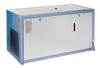
The Linde Flour Dry Ingredient Chilling System is designed to chill flour during conveying in the pneumatic conveying line, adding the precise amount of cryogen needed to obtain a consistent flour temperature from batch to batch

Dry ingredient chilling was developed to assist processors’ needs to better control final dough temperatures. Accurate and even dough temperatures play a major role in determining the final quality of baked goods. Chilling of powdered and granulated products such as flour or sugar can be handled via batch or continuous systems with chilling systems designed for use with either liquid nitrogen or CO2.

Proper protect chilling systems allow the bakery processor to:

  • Prevent constant reformulation due to varying temperature ingredients being added to the mixture
  • Control dough density to eliminate variation of final dough weights after dividing
  • Eliminate dough waste due to sticky dough (caused by ice usage in mixers)

Batch systems utilize bottom injection or top injection of CO2 and nitrogen in mixers, while continuous systems like the DIC system can be found on pneumatic conveying systems.

Pneumatic conveying systems can be of the vacuum or pressure type and use air to convey the powder from a bulk storage vessel to the processing point, which can be a mixer or hopper. The key benefit of an inline system is the reduction of end product temperature fluctuation at the mixer. Other benefits include reduction in product waste, improved automation, reduction of operator interface and error.

Typical products cooled via inline systems include flour, sugar, and dry mixes.

Supplier's Site Datasheet

Technical Specifications

  Linde North America, Inc.
Product Category Chillers (industrial)
Product Name Dry Ingredient Chilling System
Application Industrial; Process
Unlock Full Specs
to access all available technical data

Similar Products

Cooling Systems - Air-Cooled Chillers - Ambrell Induction Heating Solutions
Ambrell Induction Heating Solutions
Specs
Application Industrial
Condenser Cooling Air-Cooled
Cooling Capacity 1.0 to 440.0 kW (1.34 to 590 BHP)
View Details
Recirculating Chillers -  - Lake Shore Cryotronics, Inc.
Lake Shore Cryotronics, Inc.
Specs
Application Industrial
Power Source 208-230/60/1; Other; 400V 3-Phase
Other Features Casters
View Details
FKS-KWS - fks-kws - BARTEC
Specs
Application HVAC; Process
Power Source Other;

110 VAC to 690 VAC
50/60 Hz
(depending on model)

Cooling Capacity 6.5 kW (8.71 BHP)
View Details
Electrical - Climate Control - Chillers - CCE6601 - Hammond Manufacturing Company Inc.
Hammond Manufacturing Company Inc.
Specs
Application Industrial
View Details
