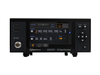
Philips Healthcare Pulse Generator PM5191

Description
The PM5191 is a Pulse Generator from Philips. A pulse generator is a piece of electronic test equipment that engineers use to generate rectangular pulses. An electromagnetic pulse generator is best for digital, not analog, circuits. Engineers can inject pulses into a piece of equipment under test as a stimulus as they test the device, using pulses to confirm the equipment’s proper operation. Additional Features: Frequency range: 0.1 mHz-2 MHz depending on function and wave form Setting range Sine wave: 0.1 mHz-2.147 MHz Square wave: 0.1 mHz-2.147 MHz Triangular wave: 0.1 mHz-200 kHz Positive sawtooth: 0.1 mHz-20 kHz Negative sawtooth: 0.1 mHz-20 kHz Setting Numerical keys Decimal point key Dimension key Hz/kHz Step function Measuring Unit: Hz, kHz; Selectable with key Hz/kHz. When controlling via IEC/IEEE bus frequency values can only be entered in Hz Indication: 8 Digits, 7-segment display; decimal point free selectable Max resolution: 0.1 mHz Setting error: ±1 x 10¯6 Temperature coefficient: <0.02 ppm/K Long term drift: <0.3 ppm within 7 hours Aging: < 1 ppm/year Phase noise: <-80 dBc/Hz; 1 kHz from carrier Phase jitter rms: <3 mrad Signal-noise ratio (SNR): ≥55 dBc Signal output: BNC-connector OUTPUT at the front plate Impedance: 50ω Amplitude setting: numerical keys, decimal point key, step function Indication: 2 1/2 digits; 7-segment display Measuring unit V: amplitude pp or rms, dc-voltage dBm: ac-level, indication of the measuring unit with LED's in the keys The Philips PM 5191 is a cost-effective multifunctional combination of programmable frequency synthesizer and function generator. The microprocessor control enables simple and rapid operation. The actual set up of the generator is automatically stored in a non volatile register, after power off and on again these parameters can then be used for a new instrument setting. The PM 5191 frequency range covers 10 decades, from 0.1 mHz to 2 MHz. Working with this high precision instrument is as simple as possible due to the 5 different wave forms that are directly selectable. That includes standard functions like sine, square wave, sawtooth and ramps. High precision and stability are essential factors in this instrument. With a crystal oscillator that serves as a reference standard for all generated frequencies, a high standard of accuracy is achieved. Together with outstanding long-term stability, ensuring that today's signals can always be reproduced precisely. Frequency resolution is 8 digits, so that full advantage can be taken of the instruments high precision, for example in the identification and measurement of phenomena occurring at precisely defined frequencies. Full IEEE/IEC bus compatibility adds an important extra dimension to PM 5191 versatility. All functions are remotely selectable, and all settings and status data can be transmitted to a remote controller and re-called whenever required. Completing its impressive specification, the PM 5191 combines powerful user features with operation that could not be simpler. The front panel is divided into clear, separate keypad areas, and two LED displays show together with the key LEDs frequency, output level, status and the modulation function.

Suppliers

Company
Product
Description
Supplier Links
Pulse Generator - PM5191 - ValueTronics International, Inc.
Elgin, IL, USA
Pulse Generator
PM5191
Pulse Generator PM5191
The PM5191 is a Pulse Generator from Philips. A pulse generator is a piece of electronic test equipment that engineers use to generate rectangular pulses. An electromagnetic pulse generator is best for digital, not analog, circuits. Engineers can inject pulses into a piece of equipment under test as a stimulus as they test the device, using pulses to confirm the equipment’s proper operation. Additional Features: Frequency range: 0.1 mHz-2 MHz depending on function and wave form Setting range Sine wave: 0.1 mHz-2.147 MHz Square wave: 0.1 mHz-2.147 MHz Triangular wave: 0.1 mHz-200 kHz Positive sawtooth: 0.1 mHz-20 kHz Negative sawtooth: 0.1 mHz-20 kHz Setting Numerical keys Decimal point key Dimension key Hz/kHz Step function Measuring Unit: Hz, kHz; Selectable with key Hz/kHz. When controlling via IEC/IEEE bus frequency values can only be entered in Hz Indication: 8 Digits, 7-segment display; decimal point free selectable Max resolution: 0.1 mHz Setting error: ±1 x 10¯6 Temperature coefficient: <0.02 ppm/K Long term drift: <0.3 ppm within 7 hours Aging: < 1 ppm/year Phase noise: <-80 dBc/Hz; 1 kHz from carrier Phase jitter rms: <3 mrad Signal-noise ratio (SNR): ≥55 dBc Signal output: BNC-connector OUTPUT at the front plate Impedance: 50ω Amplitude setting: numerical keys, decimal point key, step function Indication: 2 1/2 digits; 7-segment display Measuring unit V: amplitude pp or rms, dc-voltage dBm: ac-level, indication of the measuring unit with LED's in the keys The Philips PM 5191 is a cost-effective multifunctional combination of programmable frequency synthesizer and function generator. The microprocessor control enables simple and rapid operation. The actual set up of the generator is automatically stored in a non volatile register, after power off and on again these parameters can then be used for a new instrument setting. The PM 5191 frequency range covers 10 decades, from 0.1 mHz to 2 MHz. Working with this high precision instrument is as simple as possible due to the 5 different wave forms that are directly selectable. That includes standard functions like sine, square wave, sawtooth and ramps. High precision and stability are essential factors in this instrument. With a crystal oscillator that serves as a reference standard for all generated frequencies, a high standard of accuracy is achieved. Together with outstanding long-term stability, ensuring that today's signals can always be reproduced precisely. Frequency resolution is 8 digits, so that full advantage can be taken of the instruments high precision, for example in the identification and measurement of phenomena occurring at precisely defined frequencies. Full IEEE/IEC bus compatibility adds an important extra dimension to PM 5191 versatility. All functions are remotely selectable, and all settings and status data can be transmitted to a remote controller and re-called whenever required. Completing its impressive specification, the PM 5191 combines powerful user features with operation that could not be simpler. The front panel is divided into clear, separate keypad areas, and two LED displays show together with the key LEDs frequency, output level, status and the modulation function.
The PM5191 is a Pulse Generator from Philips. A pulse generator is a piece of electronic test equipment that engineers use to generate rectangular pulses. An electromagnetic pulse generator is best for digital, not analog, circuits. Engineers can inject pulses into a piece of equipment under test as a stimulus as they test the device, using pulses to confirm the equipment’s proper operation.

Additional Features:

  • Frequency range: 0.1 mHz-2 MHz depending on function and wave form

Setting range

  • Sine wave: 0.1 mHz-2.147 MHz
  • Square wave: 0.1 mHz-2.147 MHz
  • Triangular wave: 0.1 mHz-200 kHz
  • Positive sawtooth: 0.1 mHz-20 kHz
  • Negative sawtooth: 0.1 mHz-20 kHz

Setting

  • Numerical keys
  • Decimal point key
  • Dimension key Hz/kHz
  • Step function
  • Measuring Unit: Hz, kHz; Selectable with key Hz/kHz. When controlling via IEC/IEEE bus frequency values can only be entered in Hz
  • Indication: 8 Digits, 7-segment display; decimal point free selectable
  • Max resolution: 0.1 mHz
  • Setting error: ±1 x 10¯6
  • Temperature coefficient: <0.02 ppm/K
  • Long term drift: <0.3 ppm within 7 hours
  • Aging: < 1 ppm/year
  • Phase noise: <-80 dBc/Hz; 1 kHz from carrier
  • Phase jitter rms: <3 mrad
  • Signal-noise ratio (SNR): ≥55 dBc
  • Signal output: BNC-connector OUTPUT at the front plate
  • Impedance: 50Ω
  • Amplitude setting: numerical keys, decimal point key, step function
  • Indication: 2 1/2 digits; 7-segment display

Measuring unit

  • V: amplitude pp or rms, dc-voltage
  • dBm: ac-level, indication of the measuring unit with LED's in the keys

The Philips PM 5191 is a cost-effective multifunctional combination of programmable frequency synthesizer and function generator. The microprocessor control enables simple and rapid operation. The actual set up of the generator is automatically stored in a non volatile register, after power off and on again these parameters can then be used for a new instrument setting.

The PM 5191 frequency range covers 10 decades, from 0.1 mHz to 2 MHz. Working with this high precision instrument is as simple as possible due to the 5 different wave forms that are directly selectable. That includes standard functions like sine, square wave, sawtooth and ramps.

High precision and stability are essential factors in this instrument. With a crystal oscillator that serves as a reference standard for all generated frequencies, a high standard of accuracy is achieved. Together with outstanding long-term stability, ensuring that today's signals can always be reproduced precisely.

Frequency resolution is 8 digits, so that full advantage can be taken of the instruments high precision, for example in the identification and measurement of phenomena occurring at precisely defined frequencies.

Full IEEE/IEC bus compatibility adds an important extra dimension to PM 5191 versatility. All functions are remotely selectable, and all settings and status data can be transmitted to a remote controller and re-called whenever required.

Completing its impressive specification, the PM 5191 combines powerful user features with operation that could not be simpler. The front panel is divided into clear, separate keypad areas, and two LED displays show together with the key LEDs frequency, output level, status and the modulation function.

Supplier's Site

Technical Specifications

  ValueTronics International, Inc.
Product Category Signal Generators
Product Number PM5191
Product Name Pulse Generator
Device Type Generator
Unlock Full Specs
to access all available technical data

Similar Products

Pulse generator - VLG-4-1/8 - Festo Corporation
Specs
Device Type Generator
Generator Type Pulse
View Details
Compact Signal Generators - SGX1006 - Maury Microwave
Specs
Device Type Generator
Switching Speed 0.3500 ms
Minimum 10 MHz
View Details
10MHz to 9 GHz Signal Generator (-55 dBm to +21 dBm) - SSG-9G-RC - Mini-Circuits
Specs
Device Type Generator
Generator Type Pulse; Sweep
Operating Temperature 32 to 122 F (0 to 50 C)
View Details