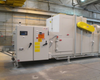
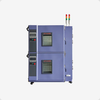
A Tempering Oven will reduce the metal hardness.
The purpose of a Tempering Oven is to reduce the hardness of any steel or alloy formed product.
Tempering is a heat treatment technique applied to ferrous alloys, such as steel or cast iron, to achieve greater toughness by decreasing the hardness of the alloy. The reduction in hardness is usually accompanied by an increase in ductility, thereby decreasing the brittleness of the metal.
Tempering is usually performed after hardening or quenching. Quenching is the rapid cooling of the metal conversion to the hardest state to develop martensite, a brittle but extremely strong formation. Tempering is accomplished by controlling the heat of the quenched work-piece to a temperature below its “lower critical temperature”.
Approaching each project as a partnership, the goal of our Engineering Staff is to share the customer’s vision to produce the best Tempering Oven solution for the thermal processing application.
Each Industrial Oven project undergoes a comprehensive evaluation of every production requirement. The assessment includes areas such as production goals, part configuration and construction, part mass, temperature profile, and facility location or elevation.
Each Tempering Oven is tested for performance, accuracy, safety systems, air management and temperature uniformity.
The equipment conforms, in accordance with customer requirements, to the following standards: NFPA, IRI, FM, OSHA, JIC, NEC, UL, and CE.
Providing a distinct competitive advantage, International Thermal Systems offers a number of patent protected heat processing solutions.
Our Technical Service Department provides international support for ALL makes and models of thermal processing equipment.
The Tempering Oven will carry an 18-month extended manufacturer’s warranty from the date of shipment.
Tempering Oven Features include:
Economical operation is achieved with superior thermal process engineering practices that apply state-of-the-art insulation material, airflow management, and custom programming.
Recirculation fans with high efficiency motors to reduce energy consumption.
Recirculation ductwork designs provide precise airflow to specific areas of the product resulting in smaller foot print ovens thus reducing utility and factory space costs.
High-efficiency (gas or electric) heat sources to reduce energy costs.
Robust structural oven frames and component supports.
Application specific insulation materials are selected to provide optimum insulating characteristics and long term energy savings.
Design considerations for easy access to process areas and oven components.
Private labeled and purchased components meet UL, UR, and CE standards.
Programmable controllers with HMI (Human Machine Interface) displays allow for user friendly operation and machine diagnostics.
NEMA style control panels.
Factory tested to ensure on time delivery and field start up.
24/7 factory direct technical service and spare parts group.
Available Options
Inert atmosphere ovens and furnaces.
Can construction oven and furnace bodies.
Exhaust air to air heat recovery systems.
Thermal and regenerative oxidizers.
Industrial computers with Ethernet for remote diagnostic and communication capabilities.
UL or CE certified control panels or complete systems.
PE certifications to meet a variety of client or government specific requirements.
Advance thermal, vibratory, and dB testing with certification.
In-house laboratory featuring a custom test oven and other related thermal equipment.
Factory direct installation services.
Conduct an energy efficiency analysis on the existing thermal processing equipment.
Upgrade for all makes and models of thermal processing equipment to meet today’s process, energy, and government standards.
Typical Heat Processing Application(s)
Gears
Glass
Knives
Shafts
And so many more.
Industry Applications
Aerospace
Automotive
Power Transmission Equipment
Recreational Vehicles
Temperature Ranges up to 1800°F (982°C)
Power Source Options
Main Power Supplies 208 to 690 Volt AC, 50 and 60 HZ
Control Voltage 24 Volt DC or 120/220 Volt AC
Heat Sources
Electric
LPG
Natural Gas
Fuel Oil
Steam
Other Fuel Mixtures
Material Handling Options
Belts: Flat Wire, Balanced Weave or Mesh
Chains: Horizontal, Slat and Vertical Tray
Construction Specifications
Heavy gauge Aluminized Steel
304, 316 Stainless Steel or other Nickel Alloys for temperature and corrosion resistance
High-Density energy-saving insulation
Panel or can type construction available
Access to the interior of the oven, fan, and heating chamber
A Tempering Oven will reduce the metal hardness.
The purpose of a Tempering Oven is to reduce the hardness of any steel or alloy formed product.
Tempering is a heat treatment technique applied to ferrous alloys, such as steel or cast iron, to achieve greater toughness by decreasing the hardness of the alloy. The reduction in hardness is usually accompanied by an increase in ductility, thereby decreasing the brittleness of the metal.
Tempering is usually performed after hardening or quenching. Quenching is the rapid cooling of the metal conversion to the hardest state to develop martensite, a brittle but extremely strong formation. Tempering is accomplished by controlling the heat of the quenched work-piece to a temperature below its “lower critical temperature”.
Approaching each project as a partnership, the goal of our Engineering Staff is to share the customer’s vision to produce the best Tempering Oven solution for the thermal processing application.
Each Industrial Oven project undergoes a comprehensive evaluation of every production requirement. The assessment includes areas such as production goals, part configuration and construction, part mass, temperature profile, and facility location or elevation.
Each Tempering Oven is tested for performance, accuracy, safety systems, air management and temperature uniformity.
The equipment conforms, in accordance with customer requirements, to the following standards: NFPA, IRI, FM, OSHA, JIC, NEC, UL, and CE.
Providing a distinct competitive advantage, International Thermal Systems offers a number of patent protected heat processing solutions.
Our Technical Service Department provides international support for ALL makes and models of thermal processing equipment.
The Tempering Oven will carry an 18-month extended manufacturer’s warranty from the date of shipment.
Tempering Oven Features include:
- Economical operation is achieved with superior thermal process engineering practices that apply state-of-the-art insulation material, airflow management, and custom programming.
- Recirculation fans with high efficiency motors to reduce energy consumption.
- Recirculation ductwork designs provide precise airflow to specific areas of the product resulting in smaller foot print ovens thus reducing utility and factory space costs.
- High-efficiency (gas or electric) heat sources to reduce energy costs.
- Robust structural oven frames and component supports.
- Application specific insulation materials are selected to provide optimum insulating characteristics and long term energy savings.
- Design considerations for easy access to process areas and oven components.
- Private labeled and purchased components meet UL, UR, and CE standards.
- Programmable controllers with HMI (Human Machine Interface) displays allow for user friendly operation and machine diagnostics.
- NEMA style control panels.
- Factory tested to ensure on time delivery and field start up.
- 24/7 factory direct technical service and spare parts group.
Available Options
- Inert atmosphere ovens and furnaces.
- Can construction oven and furnace bodies.
- Exhaust air to air heat recovery systems.
- Thermal and regenerative oxidizers.
- Industrial computers with Ethernet for remote diagnostic and communication capabilities.
- UL or CE certified control panels or complete systems.
- PE certifications to meet a variety of client or government specific requirements.
- Advance thermal, vibratory, and dB testing with certification.
- In-house laboratory featuring a custom test oven and other related thermal equipment.
- Factory direct installation services.
- Conduct an energy efficiency analysis on the existing thermal processing equipment.
- Upgrade for all makes and models of thermal processing equipment to meet today’s process, energy, and government standards.
Typical Heat Processing Application(s)
- Gears
- Glass
- Knives
- Shafts
- And so many more.
Industry Applications
- Aerospace
- Automotive
- Power Transmission Equipment
- Recreational Vehicles
Temperature Ranges up to 1800°F (982°C)
Power Source Options
- Main Power Supplies 208 to 690 Volt AC, 50 and 60 HZ
- Control Voltage 24 Volt DC or 120/220 Volt AC
Heat Sources
- Electric
- LPG
- Natural Gas
- Fuel Oil
- Steam
- Other Fuel Mixtures
Material Handling Options
- Belts: Flat Wire, Balanced Weave or Mesh
- Chains: Horizontal, Slat and Vertical Tray
Construction Specifications
- Heavy gauge Aluminized Steel
- 304, 316 Stainless Steel or other Nickel Alloys for temperature and corrosion resistance
- High-Density energy-saving insulation
- Panel or can type construction available
- Access to the interior of the oven, fan, and heating chamber