Instrumented Sensor Technology Helmet Impact Recording System HIRTS-1

Description
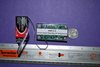
Compact self, contained 2" x 1" x 0.5", 40 gram 3-axis accelerometer & recorder Records peak shocks, total energy, duration, date, time Ranges from 100 g to 2,000 g. Standard range +/-300g Threshold triggered 2,500 event memory Wireless data interface Electronics epoxy encanpsulated Available for rental or purchase Applications Athletic helmet testing Crash testing Drop testing Athletic event measurement Military helmet testing Space constrained shock testing The HIRTS-1 is a compact, self-contained recording device which measures and records shock and impact to helmets or other space constrained fixtures. The device is planted or installed to an inside surface of the helmet. The device contains three accelerometer sensors which accurately measure the accelerations (forces) during helmet impacts, in 3-directions. Therefore the device can measure and record impacts from any direction, and at any time. During an impact event the device measures and records the peak, or maximum, acceleration (force) of the event, in each of three axes (x, y, and z) along with the exact date and time of occurrence. In addition, the device measures and records the “change in velocity” (proportional to energy) associated with the impact acceleration event in each of three axes (x, y, and z). The HIRTS device can continue to take these measurements for multiple times (up to thousands) and for up to several days of self contained operation. After a recording session (controlled test, practice or game) is complete the device is connected to a computer via wireless infrared in order to retrieve the recorded data. The data is displayed in a spreadsheet-like table listing all recorded events, by number, date, time, peak-g force values, and delta-V energy values. This data can then be used to assess the severity of helmet impacts sustained by the athlete, and potentially used to determine concussion severity for impacts that are unusually high in amplitude and energy. The device can also serve as a tool to identify impacts that may be of concussion severity but that may not have been reported as such by the athlete himself to his coaching staff.
Description
Compact self, contained 2" x 1" x 0.5", 40 gram 3-axis accelerometer & recorder Records peak shocks, total energy, duration, date, time Ranges from 100 g to 2,000 g. Standard range +/-300g Threshold triggered 2,500 event memory Wireless data interface Electronics epoxy encanpsulated Available for rental or purchase Applications Athletic helmet testing Crash testing Drop testing Athletic event measurement Military helmet testing Space constrained shock testing The HIRTS-1 is a compact, self-contained recording device which measures and records shock and impact to helmets or other space constrained fixtures. The device is planted or installed to an inside surface of the helmet. The device contains three accelerometer sensors which accurately measure the accelerations (forces) during helmet impacts, in 3-directions. Therefore the device can measure and record impacts from any direction, and at any time. During an impact event the device measures and records the peak, or maximum, acceleration (force) of the event, in each of three axes (x, y, and z) along with the exact date and time of occurrence. In addition, the device measures and records the “change in velocity” (proportional to energy) associated with the impact acceleration event in each of three axes (x, y, and z). The HIRTS device can continue to take these measurements for multiple times (up to thousands) and for up to several days of self contained operation. After a recording session (controlled test, practice or game) is complete the device is connected to a computer via wireless infrared in order to retrieve the recorded data. The data is displayed in a spreadsheet-like table listing all recorded events, by number, date, time, peak-g force values, and delta-V energy values. This data can then be used to assess the severity of helmet impacts sustained by the athlete, and potentially used to determine concussion severity for impacts that are unusually high in amplitude and energy. The device can also serve as a tool to identify impacts that may be of concussion severity but that may not have been reported as such by the athlete himself to his coaching staff.

Suppliers

Company
Product
Description
Supplier Links
Helmet Impact Recording System - HIRTS-1 - Instrumented Sensor Technology
Okemos, MI, USA
Helmet Impact Recording System
HIRTS-1
Helmet Impact Recording System HIRTS-1
Compact self, contained 2" x 1" x 0.5", 40 gram 3-axis accelerometer & recorder Records peak shocks, total energy, duration, date, time Ranges from 100 g to 2,000 g. Standard range +/-300g Threshold triggered 2,500 event memory Wireless data interface Electronics epoxy encanpsulated Available for rental or purchase Applications Athletic helmet testing Crash testing Drop testing Athletic event measurement Military helmet testing Space constrained shock testing The HIRTS-1 is a compact, self-contained recording device which measures and records shock and impact to helmets or other space constrained fixtures. The device is planted or installed to an inside surface of the helmet. The device contains three accelerometer sensors which accurately measure the accelerations (forces) during helmet impacts, in 3-directions. Therefore the device can measure and record impacts from any direction, and at any time. During an impact event the device measures and records the peak, or maximum, acceleration (force) of the event, in each of three axes (x, y, and z) along with the exact date and time of occurrence. In addition, the device measures and records the “change in velocity” (proportional to energy) associated with the impact acceleration event in each of three axes (x, y, and z). The HIRTS device can continue to take these measurements for multiple times (up to thousands) and for up to several days of self contained operation. After a recording session (controlled test, practice or game) is complete the device is connected to a computer via wireless infrared in order to retrieve the recorded data. The data is displayed in a spreadsheet-like table listing all recorded events, by number, date, time, peak-g force values, and delta-V energy values. This data can then be used to assess the severity of helmet impacts sustained by the athlete, and potentially used to determine concussion severity for impacts that are unusually high in amplitude and energy. The device can also serve as a tool to identify impacts that may be of concussion severity but that may not have been reported as such by the athlete himself to his coaching staff.

  • Compact self, contained
  • 2" x 1" x 0.5", 40 gram
  • 3-axis accelerometer & recorder
  • Records peak shocks, total energy, duration, date, time
  • Ranges from 100 g to 2,000 g.
  • Standard range +/-300g
  • Threshold triggered
  • 2,500 event memory
  • Wireless data interface
  • Electronics epoxy encanpsulated
  • Available for rental or purchase

Applications

  • Athletic helmet testing
  • Crash testing
  • Drop testing
  • Athletic event measurement
  • Military helmet testing
  • Space constrained shock testing

The HIRTS-1 is a compact, self-contained recording device which measures and records shock and impact to helmets or other space constrained fixtures. The device is planted or installed to an inside surface of the helmet. The device contains three accelerometer sensors which accurately measure the accelerations (forces) during helmet impacts, in 3-directions. Therefore the device can measure and record impacts from any direction, and at any time. During an impact event the device measures and records the peak, or maximum, acceleration (force) of the event, in each of three axes (x, y, and z) along with the exact date and time of occurrence. In addition, the device measures and records the “change in velocity” (proportional to energy) associated with the impact acceleration event in each of three axes (x, y, and z). The HIRTS device can continue to take these measurements for multiple times (up to thousands) and for up to several days of self contained operation. After a recording session (controlled test, practice or game) is complete the device is connected to a computer via wireless infrared in order to retrieve the recorded data. The data is displayed in a spreadsheet-like table listing all recorded events, by number, date, time, peak-g force values, and delta-V energy values. This data can then be used to assess the severity of helmet impacts sustained by the athlete, and potentially used to determine concussion severity for impacts that are unusually high in amplitude and energy. The device can also serve as a tool to identify impacts that may be of concussion severity but that may not have been reported as such by the athlete himself to his coaching staff.

Supplier's Site

Technical Specifications

  Instrumented Sensor Technology
Product Category Vibration Measurement Instruments and Vibration Analyzers
Product Number HIRTS-1
Product Name Helmet Impact Recording System
Device Type Recorder / Totalizer
Unlock Full Specs
to access all available technical data

Similar Products

Vibration transmitter - VTV121 - ifm efector inc.
Specs
Device Type Transmitter
Linear Velocity 0.0 to 1.97 in/sec (0.0 to 3 m/min)
Frequency Range 10 to 1000 Hz
View Details
5 suppliers
Vibration Meters - 2543500 - RS Components, Ltd.
RS Components, Ltd.
Specs
Sensor Input Acceleration; Acceleration, Velocity, Displacement
View Details
Embedded Accelerometers - 3022-050-P - TE Connectivity
Specs
Acceleration 50 g
Frequency Range 0.0 to 4000 Hz
Sensor Technology MEMS
View Details
Vibration Analyzer Laser Shaft Alignment Tool - PCE-TU 3 - PCE Instruments / PCE Americas Inc.
Specs
Device Type Instrument / Meter
Accuracy 1.00 +/-% FS
Operating Temperature 14 to 131 F (-10 to 55 C)
View Details