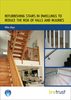
IHS BRE Press Refurbishing Stairs In Dwellings To Reduce The Risk of Falls and Injuries FB53

Description
Learn how to reduce the risks associated with falls on domestic stairs and steps. This report considers the aspects of poor stair design that can be repaired or replaced in order to mitigate most of these risks. Author: Mike Roys Publish Date: 3/20/2013 ISBN: 978-1-84806-299-3 Abstract: More than 350,000 injuries and 550 deaths in the UK every year are caused by falls on domestic stairs and steps. Reducing the risks associated with the most hazardous stairs is relatively inexpensive, with a typical payback period of six years (based on savings for the health services). This report considers the aspects of poor stair design that can be repaired or replaced in order to mitigate most of this risk. These include: handrail design, lighting, guarding, step covering, access and landings, step dimensions, step inconsistencies and non-straight stairs. A stair assessment checklist provides a simple process for assessing domestic stairs, and includes some practical advice on such measures as installing handrails and making repairs. Three case studies illustrate some very poor stairs, and the short payback periods associated with their repair. In some dwellings, the risk of harm from falling on the stairs is high, mainly due to small going size, dimensional variability, a lack of useable handrails and poor visibility. Simple measures can reduce this risk to a level that is comparable to the average for stairs expected within properties of a similar age. These include adding handrails, adding guarding, improving lighting and major repairs or maintenance. Such measures can be very inexpensive to implement and can have a very short payback period in terms of benefit to the National Health Service.
Request a Quote
Description
Learn how to reduce the risks associated with falls on domestic stairs and steps. This report considers the aspects of poor stair design that can be repaired or replaced in order to mitigate most of these risks. Author: Mike Roys Publish Date: 3/20/2013 ISBN: 978-1-84806-299-3 Abstract: More than 350,000 injuries and 550 deaths in the UK every year are caused by falls on domestic stairs and steps. Reducing the risks associated with the most hazardous stairs is relatively inexpensive, with a typical payback period of six years (based on savings for the health services). This report considers the aspects of poor stair design that can be repaired or replaced in order to mitigate most of this risk. These include: handrail design, lighting, guarding, step covering, access and landings, step dimensions, step inconsistencies and non-straight stairs. A stair assessment checklist provides a simple process for assessing domestic stairs, and includes some practical advice on such measures as installing handrails and making repairs. Three case studies illustrate some very poor stairs, and the short payback periods associated with their repair. In some dwellings, the risk of harm from falling on the stairs is high, mainly due to small going size, dimensional variability, a lack of useable handrails and poor visibility. Simple measures can reduce this risk to a level that is comparable to the average for stairs expected within properties of a similar age. These include adding handrails, adding guarding, improving lighting and major repairs or maintenance. Such measures can be very inexpensive to implement and can have a very short payback period in terms of benefit to the National Health Service.
Request a Quote

Suppliers

Company
Product
Description
Supplier Links
Refurbishing Stairs In Dwellings To Reduce The Risk of Falls and Injuries - FB53 - IHS BRE Press
Watford, United Kingdom
Refurbishing Stairs In Dwellings To Reduce The Risk of Falls and Injuries
FB53
Refurbishing Stairs In Dwellings To Reduce The Risk of Falls and Injuries FB53
Learn how to reduce the risks associated with falls on domestic stairs and steps. This report considers the aspects of poor stair design that can be repaired or replaced in order to mitigate most of these risks. Author: Mike Roys Publish Date: 3/20/2013 ISBN: 978-1-84806-299-3 Abstract: More than 350,000 injuries and 550 deaths in the UK every year are caused by falls on domestic stairs and steps. Reducing the risks associated with the most hazardous stairs is relatively inexpensive, with a typical payback period of six years (based on savings for the health services). This report considers the aspects of poor stair design that can be repaired or replaced in order to mitigate most of this risk. These include: handrail design, lighting, guarding, step covering, access and landings, step dimensions, step inconsistencies and non-straight stairs. A stair assessment checklist provides a simple process for assessing domestic stairs, and includes some practical advice on such measures as installing handrails and making repairs. Three case studies illustrate some very poor stairs, and the short payback periods associated with their repair. In some dwellings, the risk of harm from falling on the stairs is high, mainly due to small going size, dimensional variability, a lack of useable handrails and poor visibility. Simple measures can reduce this risk to a level that is comparable to the average for stairs expected within properties of a similar age. These include adding handrails, adding guarding, improving lighting and major repairs or maintenance. Such measures can be very inexpensive to implement and can have a very short payback period in terms of benefit to the National Health Service.

Learn how to reduce the risks associated with falls on domestic stairs and steps. This report considers the aspects of poor stair design that can be repaired or replaced in order to mitigate most of these risks.

Author: Mike Roys

Publish Date: 3/20/2013

ISBN: 978-1-84806-299-3

Abstract:

More than 350,000 injuries and 550 deaths in the UK every year are caused by falls on domestic stairs and steps. Reducing the risks associated with the most hazardous stairs is relatively inexpensive, with a typical payback period of six years (based on savings for the health services).
This report considers the aspects of poor stair design that can be repaired or replaced in order to mitigate most of this risk. These include: handrail design, lighting, guarding, step covering, access and landings, step dimensions, step inconsistencies and non-straight stairs. A stair assessment checklist provides a simple process for assessing domestic stairs, and includes some practical advice on such measures as installing handrails and making repairs. Three case studies illustrate some very poor stairs, and the short payback periods associated with their repair.
In some dwellings, the risk of harm from falling on the stairs is high, mainly due to small going size, dimensional variability, a lack of useable handrails and poor visibility. Simple measures can reduce this risk to a level that is comparable to the average for stairs expected within properties of a similar age. These include adding handrails, adding guarding, improving lighting and major repairs or maintenance. Such measures can be very inexpensive to implement and can have a very short payback period in terms of benefit to the National Health Service.

Buy Now
REFURBISHING STAIRS IN DWELLINGS TO REDUCE THE RISK OF FALLS AND INJURIES - FB53 - Accuris
Englewood, CO, United States
REFURBISHING STAIRS IN DWELLINGS TO REDUCE THE RISK OF FALLS AND INJURIES
FB53
REFURBISHING STAIRS IN DWELLINGS TO REDUCE THE RISK OF FALLS AND INJURIES FB53
REFURBISHING STAIRS IN DWELLINGS TO REDUCE THE RISK OF FALLS AND INJURIES

REFURBISHING STAIRS IN DWELLINGS TO REDUCE THE RISK OF FALLS AND INJURIES

Buy Now

Technical Specifications

  IHS BRE Press Accuris
Product Category Technical Books Standards and Technical Documents
Product Number FB53 FB53
Product Name Refurbishing Stairs In Dwellings To Reduce The Risk of Falls and Injuries REFURBISHING STAIRS IN DWELLINGS TO REDUCE THE RISK OF FALLS AND INJURIES
Unlock Full Specs
to access all available technical data

Similar Products
