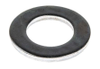
Spring washers are discs that can be axially loaded and are concave in the axial direction. Polysorb disc springs require less space than other spring types. They are especially suitable for designs that do not require a high spring length.
When to use Polysorb disc springs
Compensation for axial clearances and manufacturing tolerances
Vibration dampening
Noise dampening
Anti-magnetic
Electrical and thermal insulation
When no corrosion problems should arise
No lubrication necessary
Lightweight
Low profile dimensions
Maintenance-free
When not to use them
When constant spring forces are necessary over wide temperature ranges
When high spring forces are required
The spring length of the disc spring is relatively small. In practice, a number of disc springs are combined. Disc springs that are alternately stacked increase the spring length proportionally to the amount of springs. The total spring force is as large as the force of one single disc spring. In order to increase the force, the disc springs can be parallel stacked to form a spring packet.
Chemical resistance
Polysorb disc springs are acid-resistant against diluted lyes and very weak acids, as well as against fuels and all types of lubricants. The small moisture absorption permits the use in wet or moist environments.
Spring washers are discs that can be axially loaded and are concave in the axial direction. Polysorb disc springs require less space than other spring types. They are especially suitable for designs that do not require a high spring length.
When to use Polysorb disc springs
- Compensation for axial clearances and manufacturing tolerances
- Vibration dampening
- Noise dampening
- Anti-magnetic
- Electrical and thermal insulation
- When no corrosion problems should arise
- No lubrication necessary
- Lightweight
- Low profile dimensions
- Maintenance-free
When not to use them
- When constant spring forces are necessary over wide temperature ranges
- When high spring forces are required
The spring length of the disc spring is relatively small. In practice, a number of disc springs are combined. Disc springs that are alternately stacked increase the spring length proportionally to the amount of springs. The total spring force is as large as the force of one single disc spring. In order to increase the force, the disc springs can be parallel stacked to form a spring packet.
Chemical resistance
Polysorb disc springs are acid-resistant against diluted lyes and very weak acids, as well as against fuels and all types of lubricants. The small moisture absorption permits the use in wet or moist environments.