GL’s Call Data Records (CDR) is the software-based call-processing part of the GL’s TDM Call Capture and Analysis (CCA, PacketScan™, PPP Analyzer) solution. The CDR output centers around each ‘call’ and for each call it reports comprehensive information occurring on T1 and E1 lines and IP networks, including,
voice capture for both directions
supported codecs data rates are - a-law, µ-law, 16-bit PCM (Intel), 16-bit PCM (Motorola), MS Wave, G.726 (40 Kbps, 32 Kbps, 24 Kbps, and 16 Kbps), and 14-bit 16 KHz G.722 (64 kbps)
complete signaling information for each direction for CAS, ISDN, MFC-R2, SS7, SIP, MLPPP and more
all alarms and errors occurring during the call including BPV, Frame Errors, CRC errors, LOS, and more
detailed voiceband event information occurring during the call including dual tones (DTMF, MF, MFC-R2), fax tones, modem signals, and more
detailed analysis of the voiceband call including noise level, speech level, speech activity factor, echo measurements, and more
categorization of the call as voice, fax, modem, or data
Companion programs that allow easy search for any "unique feature, aspect, or parameter" of calls - even among hundreds of thousands of calls.
The generated measurements along with the recorded voice files of a particular call are combined in a custom Excel® Addin allowing the users to do custom filtering based on any measurements (ASL, AF, % Digits, %Voice, Mid-call-digits,...) or signaling messages (ISDN signaling, CAS Signaling, Release Codes, Call Duration, Call Events,...). Call Data Records application compiles the output of PacketScan™, PPP Analyzer, or CCA (Call Capture and Analysis) application and (optionally) VBA (Voice Band Analyzer) application and generates the following 2 types of reports –
Call Summary Report - This report contains a single summary line for each call, giving information such as the inbound and outbound ports, channel number, time of seizure and release, and other summary information.
Call Detail Report - This report contains call summary data, as well as the progression of supervisory and in-band events during the call and an overall summary of in-band measures for each direction.
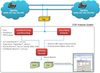
Call Capture & Analysis (CCA): This application monitors hundreds of call in real-time, captures bidirectional channel data and records it into PCM signal files, including logging of detailed analysis of selected voice band streams into *.csv files. Capture may be triggered according to various protocols such as signaling bits, ISDN, SS7, CAS, SIP, MLPPP etc. CCA also records signaling and alarm events, as well as producing a summary record for each call. The files containing the event and call summary records are collectively referred to as Call Record Files. Each CCA instance can monitor a single T1 or E1 trunk. Multiple CCA instances may be run concurrently to monitor multiple trunks. Here, CCA is discussed mainly in the context of Call Data Records generation. The CCA allows to log capture events in CSV or binary files and to feed these results into Call Data Records (CDR) application to provide an overall summary of the call as well as the event-by-event account of each call.
Multiple Call Capture and Analysis: GL’s Multi CCA application is similar to CCA, where in it is used to monitor hundreds of calls, capture the bidirectional data, signaling and traffic, simultaneously from multiple T1/E1 lines, based on the user-defined trigger configurations. Once the capture trigger type is selected, users can control and run multiple capture instances on different T1/E1 ports from a single GUI.
PacketScan™: The analyzer in real-time is used to capture and monitor live IP, VoIP, and IP based video traffic. It can be used as a stand-alone tool as well as a probe in a distributed system using a central database such as Oracle as implemented in GL’s NetSurveyorWeb™ application. Besides the SIP (H.323, MGCP, and Megaco) messaging and RTP impairment reports, additional functions include reporting of Mean Opinion Score (MOS) / R-factor scores matched to the call as part of the Call Detail Record (CDR). It also has a powerful Trigger Action feature that can be used to select and save calls (audio or PCAP) based on parameters in the CDR. Also included is the ability to save the actual RTP of the call. The analyzer can also be configured and set to automatically start monitoring traffic with the filters, trigger actions and parameters previously saved. This also includes automatically connecting to a remote database for NetSurveyorWeb™ applications.
Voice Band Analyzer (VBA): This application operates in near-real-time, processing the signal files recorded by CCA. VBA may be configured to detect in-band events such as sporadic echo, digit tones, in-band impairments, and the like. It also produces summary measurements of the captured signals, including active speech levels, noise level, percent time active, DC offset and the like. VBA records its output into two files, the first containing overall channel measurements, and the second containing event records. A single VBA instance will analyze any number of files. This is an optional component. Here, VBA is discussed mainly in the context of Call Data Records generation.Like VBA, a single CDR instance will compile any number of files into Call Data Records.
GL’s Call Data Records (CDR) is the software-based call-processing part of the GL’s TDM Call Capture and Analysis (CCA, PacketScan™, PPP Analyzer) solution. The CDR output centers around each ‘call’ and for each call it reports comprehensive information occurring on T1 and E1 lines and IP networks, including,
- voice capture for both directions
- supported codecs data rates are - a-law, µ-law, 16-bit PCM (Intel), 16-bit PCM (Motorola), MS Wave, G.726 (40 Kbps, 32 Kbps, 24 Kbps, and 16 Kbps), and 14-bit 16 KHz G.722 (64 kbps)
- complete signaling information for each direction for CAS, ISDN, MFC-R2, SS7, SIP, MLPPP and more
- all alarms and errors occurring during the call including BPV, Frame Errors, CRC errors, LOS, and more
- detailed voiceband event information occurring during the call including dual tones (DTMF, MF, MFC-R2), fax tones, modem signals, and more
- detailed analysis of the voiceband call including noise level, speech level, speech activity factor, echo measurements, and more
- categorization of the call as voice, fax, modem, or data
- Companion programs that allow easy search for any "unique feature, aspect, or parameter" of calls - even among hundreds of thousands of calls.
The generated measurements along with the recorded voice files of a particular call are combined in a custom Excel® Addin allowing the users to do custom filtering based on any measurements (ASL, AF, % Digits, %Voice, Mid-call-digits,...) or signaling messages (ISDN signaling, CAS Signaling, Release Codes, Call Duration, Call Events,...). Call Data Records application compiles the output of PacketScan™, PPP Analyzer, or CCA (Call Capture and Analysis) application and (optionally) VBA (Voice Band Analyzer) application and generates the following 2 types of reports –
- Call Summary Report - This report contains a single summary line for each call, giving information such as the inbound and outbound ports, channel number, time of seizure and release, and other summary information.
- Call Detail Report - This report contains call summary data, as well as the progression of supervisory and in-band events during the call and an overall summary of in-band measures for each direction.
- Call Capture & Analysis (CCA): This application monitors hundreds of call in real-time, captures bidirectional channel data and records it into PCM signal files, including logging of detailed analysis of selected voice band streams into *.csv files. Capture may be triggered according to various protocols such as signaling bits, ISDN, SS7, CAS, SIP, MLPPP etc. CCA also records signaling and alarm events, as well as producing a summary record for each call. The files containing the event and call summary records are collectively referred to as Call Record Files. Each CCA instance can monitor a single T1 or E1 trunk. Multiple CCA instances may be run concurrently to monitor multiple trunks. Here, CCA is discussed mainly in the context of Call Data Records generation. The CCA allows to log capture events in CSV or binary files and to feed these results into Call Data Records (CDR) application to provide an overall summary of the call as well as the event-by-event account of each call.
- Multiple Call Capture and Analysis: GL’s Multi CCA application is similar to CCA, where in it is used to monitor hundreds of calls, capture the bidirectional data, signaling and traffic, simultaneously from multiple T1/E1 lines, based on the user-defined trigger configurations. Once the capture trigger type is selected, users can control and run multiple capture instances on different T1/E1 ports from a single GUI.
- PacketScan™: The analyzer in real-time is used to capture and monitor live IP, VoIP, and IP based video traffic. It can be used as a stand-alone tool as well as a probe in a distributed system using a central database such as Oracle as implemented in GL’s NetSurveyorWeb™ application. Besides the SIP (H.323, MGCP, and Megaco) messaging and RTP impairment reports, additional functions include reporting of Mean Opinion Score (MOS) / R-factor scores matched to the call as part of the Call Detail Record (CDR). It also has a powerful Trigger Action feature that can be used to select and save calls (audio or PCAP) based on parameters in the CDR. Also included is the ability to save the actual RTP of the call. The analyzer can also be configured and set to automatically start monitoring traffic with the filters, trigger actions and parameters previously saved. This also includes automatically connecting to a remote database for NetSurveyorWeb™ applications.
- Voice Band Analyzer (VBA): This application operates in near-real-time, processing the signal files recorded by CCA. VBA may be configured to detect in-band events such as sporadic echo, digit tones, in-band impairments, and the like. It also produces summary measurements of the captured signals, including active speech levels, noise level, percent time active, DC offset and the like. VBA records its output into two files, the first containing overall channel measurements, and the second containing event records. A single VBA instance will analyze any number of files. This is an optional component. Here, VBA is discussed mainly in the context of Call Data Records generation.Like VBA, a single CDR instance will compile any number of files into Call Data Records.