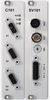
The Q.series EC C101 combines powerful System-on-a-Chip computing with the flexibility of EtherCAT communication. This unique design greatly simplifies the implementation of reliable high-speed multi-axis servo control solutions. It has never been so easy to create an integrated control and measurement solution using the Q.series EC C101 control module in combination with the Q.series EC measurement modules.
Now you can benefit from market-leading servo control performance, combined with a common, highly integrable platform for control and measurement!
Key Features
Individual control modes for force, displacement and auxiliary
Three stage servo valve control
Command optimization through prefiltering
Piston area compensation, dither
Boundary control for active hard stop and breakout force limits
Ki enabled with pressure
Fail-safe and programmable shut down behavior
Multiple tuning parameter sets to allow for best possible control performance for each scenario.
Structural decoupling
Feedforward disturbance compensation to eliminate cross-coupling induced errors, increasing test speed.
Bumpless control mode switching Instant mode switching between force, displacement or auxiliary control.
The Q.series EC C101 combines powerful System-on-a-Chip computing with the flexibility of EtherCAT communication. This unique design greatly simplifies the implementation of reliable high-speed multi-axis servo control solutions. It has never been so easy to create an integrated control and measurement solution using the Q.series EC C101 control module in combination with the Q.series EC measurement modules.
Now you can benefit from market-leading servo control performance, combined with a common, highly integrable platform for control and measurement!
Key Features
- Individual control modes for force, displacement and auxiliary
- Three stage servo valve control
- Command optimization through prefiltering
- Piston area compensation, dither
- Boundary control for active hard stop and breakout force limits
- Ki enabled with pressure
- Fail-safe and programmable shut down behavior
- Multiple tuning parameter sets
to allow for best possible control performance for each scenario.
- Structural decoupling
- Feedforward disturbance compensation to eliminate cross-coupling induced errors, increasing test speed.
- Bumpless control mode switching
Instant mode switching between force, displacement or auxiliary control.