Electro Optical Components, Inc. Wedge Depolarizer

Description
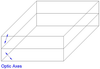
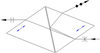
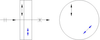
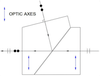
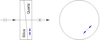
The wedge depolarizer is the alternative form which should be used for monochromatic light sources. Again, a thick plate is manufactured in which the optical axis is in the plane of the plate. In use, the optical axis is aligned at 45° to the axis of the incoming polarized light and the thickness of the plate is varied in the plane of the incoming light (a wedge), thus producing a variable birefringence across the aperture of the plate. A second plate of index matching but non-birefringent material is added to the first plate to provide a compensation of the wedge angle, thus minimizing deviation of the beam but maintaining the depolarization. The most common combination is to use crystal quartz and fused silica, usually optically contacted together to enable applications into the ultra-violet. Quartz-Silica Wedge Depolarizer Leysop can provide these components in whatever diameter, thickness, number of sections you require (we have manufactured 22 section Lyot depolarizers for one especially critical application) and with or without AR coatings, as you prefer. Components can be provided mounted in protective rings or supplied bare. Please email us for your specific requirements.
Request a Quote
Description
The wedge depolarizer is the alternative form which should be used for monochromatic light sources. Again, a thick plate is manufactured in which the optical axis is in the plane of the plate. In use, the optical axis is aligned at 45° to the axis of the incoming polarized light and the thickness of the plate is varied in the plane of the incoming light (a wedge), thus producing a variable birefringence across the aperture of the plate. A second plate of index matching but non-birefringent material is added to the first plate to provide a compensation of the wedge angle, thus minimizing deviation of the beam but maintaining the depolarization. The most common combination is to use crystal quartz and fused silica, usually optically contacted together to enable applications into the ultra-violet. Quartz-Silica Wedge Depolarizer Leysop can provide these components in whatever diameter, thickness, number of sections you require (we have manufactured 22 section Lyot depolarizers for one especially critical application) and with or without AR coatings, as you prefer. Components can be provided mounted in protective rings or supplied bare. Please email us for your specific requirements.
Request a Quote

Suppliers

Company
Product
Description
Supplier Links
Wedge Depolarizer -  - Electro Optical Components, Inc.
Santa Rosa, CA, USA
Wedge Depolarizer
Wedge Depolarizer
The wedge depolarizer is the alternative form which should be used for monochromatic light sources. Again, a thick plate is manufactured in which the optical axis is in the plane of the plate. In use, the optical axis is aligned at 45° to the axis of the incoming polarized light and the thickness of the plate is varied in the plane of the incoming light (a wedge), thus producing a variable birefringence across the aperture of the plate. A second plate of index matching but non-birefringent material is added to the first plate to provide a compensation of the wedge angle, thus minimizing deviation of the beam but maintaining the depolarization. The most common combination is to use crystal quartz and fused silica, usually optically contacted together to enable applications into the ultra-violet. Quartz-Silica Wedge Depolarizer Leysop can provide these components in whatever diameter, thickness, number of sections you require (we have manufactured 22 section Lyot depolarizers for one especially critical application) and with or without AR coatings, as you prefer. Components can be provided mounted in protective rings or supplied bare. Please email us for your specific requirements.

The wedge depolarizer is the alternative form which should be used for monochromatic light sources. Again, a thick plate is manufactured in which the optical axis is in the plane of the plate. In use, the optical axis is aligned at 45° to the axis of the incoming polarized light and the thickness of the plate is varied in the plane of the incoming light (a wedge), thus producing a variable birefringence across the aperture of the plate. A second plate of index matching but non-birefringent material is added to the first plate to provide a compensation of the wedge angle, thus minimizing deviation of the beam but maintaining the depolarization. The most common combination is to use crystal quartz and fused silica, usually optically contacted together to enable applications into the ultra-violet.

Quartz-Silica Wedge Depolarizer
Leysop can provide these components in whatever diameter, thickness, number of sections you require (we have manufactured 22 section Lyot depolarizers for one especially critical application) and with or without AR coatings, as you prefer. Components can be provided mounted in protective rings or supplied bare. Please email us for your specific requirements.

Supplier's Site

Technical Specifications

  Electro Optical Components, Inc.
Product Category Optical Polarizers
Product Name Wedge Depolarizer
Optical Polarizer Depolarizer
Unlock Full Specs
to access all available technical data

Similar Products

Dual Wavelength Plates -  - Electro Optical Components, Inc.
Electro Optical Components, Inc.
Specs
Optical Polarizer Waveplate / Retardation Plate
Polarizer Application Infrared; Visible
Wavelength Range 532 nm (5320 Å)
View Details
Savart Plates -  - Electro Optical Components, Inc.
Electro Optical Components, Inc.
Specs
Optical Polarizer Waveplate / Retardation Plate
Clear Aperture 10 to 50 mm (0.3937 to 1.97 inch)
View Details
Glan-Taylor Polarizing Beam Combiner -  - Electro Optical Components, Inc.
Electro Optical Components, Inc.
Specs
Optical Polarizer Calcite Polarizer
View Details
Glan-Taylor Polarizer With Brewster Angled Faces -  - Electro Optical Components, Inc.
Specs
Optical Polarizer Calcite Polarizer
Clear Aperture 8 to 12 mm (0.3150 to 0.4724 inch)
View Details