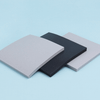
Elasto Proxy Inc. Acoustic Foam Insulation

Description
Acoustic insulation is usually made of polyethylene or polyester foams that allow sound waves to bounce off. These lightweight, sound-dampening materials may also include a sound-absorbing barrier. Most acoustic insulation has an open cellular structure that permits the passage of air, a good insulator. Closed cell acoustic foams are used mainly in underwater applications rather than land vehicles. Thermal insulation is designed to absorb heat from a vehicle's engine compartment and deflect heat away from the cab. Silicone, a durable synthetic resin, is often used because it resists high temperatures and provides acoustic insulation from high-decibel diesel engines. Self-extinguishing firestocks and custom composite insulation are also available. Thermal and acoustic insulation can be made of composite materials and formed into application-specific shapes and thicknesses. For example, thermal-proof panels made of ceramic fiber, polyurethane foam, and microcellular or silicone foam can provide heat shielding as high 1200° C in locomotives. By laminating multiple layers of insulating materials together, suppliers can build sandwich-like panels that are suitable for all applications. Truckers also appreciate the benefits of high-quality insulation. Whether for long-haul trucking, construction site work, or local runs in a garbage truck, sound insulation is important. As with thermal insulation, sound insulating products can be color-matched to the vehicle. In commercial trucks, for example, a vinyl exterior may be applied to enhance the cab's appearance.

Description
Acoustic insulation is usually made of polyethylene or polyester foams that allow sound waves to bounce off. These lightweight, sound-dampening materials may also include a sound-absorbing barrier. Most acoustic insulation has an open cellular structure that permits the passage of air, a good insulator. Closed cell acoustic foams are used mainly in underwater applications rather than land vehicles. Thermal insulation is designed to absorb heat from a vehicle's engine compartment and deflect heat away from the cab. Silicone, a durable synthetic resin, is often used because it resists high temperatures and provides acoustic insulation from high-decibel diesel engines. Self-extinguishing firestocks and custom composite insulation are also available. Thermal and acoustic insulation can be made of composite materials and formed into application-specific shapes and thicknesses. For example, thermal-proof panels made of ceramic fiber, polyurethane foam, and microcellular or silicone foam can provide heat shielding as high 1200° C in locomotives. By laminating multiple layers of insulating materials together, suppliers can build sandwich-like panels that are suitable for all applications. Truckers also appreciate the benefits of high-quality insulation. Whether for long-haul trucking, construction site work, or local runs in a garbage truck, sound insulation is important. As with thermal insulation, sound insulating products can be color-matched to the vehicle. In commercial trucks, for example, a vinyl exterior may be applied to enhance the cab's appearance.

Suppliers

Company
Product
Description
Supplier Links
Acoustic Foam Insulation -  - Elasto Proxy Inc.
Boisbriand, Quebec, Canada
Acoustic Foam Insulation
Acoustic insulation is usually made of polyethylene or polyester foams that allow sound waves to bounce off. These lightweight, sound-dampening materials may also include a sound-absorbing barrier. Most acoustic insulation has an open cellular structure that permits the passage of air, a good insulator. Closed cell acoustic foams are used mainly in underwater applications rather than land vehicles. Thermal insulation is designed to absorb heat from a vehicle's engine compartment and deflect heat away from the cab. Silicone, a durable synthetic resin, is often used because it resists high temperatures and provides acoustic insulation from high-decibel diesel engines. Self-extinguishing firestocks and custom composite insulation are also available. Thermal and acoustic insulation can be made of composite materials and formed into application-specific shapes and thicknesses. For example, thermal-proof panels made of ceramic fiber, polyurethane foam, and microcellular or silicone foam can provide heat shielding as high 1200° C in locomotives. By laminating multiple layers of insulating materials together, suppliers can build sandwich-like panels that are suitable for all applications. Truckers also appreciate the benefits of high-quality insulation. Whether for long-haul trucking, construction site work, or local runs in a garbage truck, sound insulation is important. As with thermal insulation, sound insulating products can be color-matched to the vehicle. In commercial trucks, for example, a vinyl exterior may be applied to enhance the cab's appearance.

Acoustic insulation is usually made of polyethylene or polyester foams that allow sound waves to bounce off. These lightweight, sound-dampening materials may also include a sound-absorbing barrier. Most acoustic insulation has an open cellular structure that permits the passage of air, a good insulator. Closed cell acoustic foams are used mainly in underwater applications rather than land vehicles.

Thermal insulation is designed to absorb heat from a vehicle's engine compartment and deflect heat away from the cab. Silicone, a durable synthetic resin, is often used because it resists high temperatures and provides acoustic insulation from high-decibel diesel engines. Self-extinguishing firestocks and custom composite insulation are also available.

Thermal and acoustic insulation can be made of composite materials and formed into application-specific shapes and thicknesses. For example, thermal-proof panels made of ceramic fiber, polyurethane foam, and microcellular or silicone foam can provide heat shielding as high 1200° C in locomotives. By laminating multiple layers of insulating materials together, suppliers can build sandwich-like panels that are suitable for all applications.

Truckers also appreciate the benefits of high-quality insulation. Whether for long-haul trucking, construction site work, or local runs in a garbage truck, sound insulation is important. As with thermal insulation, sound insulating products can be color-matched to the vehicle. In commercial trucks, for example, a vinyl exterior may be applied to enhance the cab's appearance.

Supplier's Site

Technical Specifications

  Elasto Proxy Inc.
Product Category Foams and Foam Materials
Product Name Acoustic Foam Insulation
Type OpenCell (optional feature); ClosedCell (optional feature); Foam
Unlock Full Specs
to access all available technical data

Similar Products

Silicone Foam for Electronics and EV Battery Packs - SilSo-Lite-21025 - CHT USA Inc.
Specs
Type ClosedCell; Foam
Material / Composition Polymer / Plastic; Thermally cured; Silicone
Applications Aerospace; Automotive / Transportation
View Details
Thermal Insulation - 2035131 - RS Components, Ltd.
Specs
Type Foam
Form / Shape Sheet
Material / Composition Non-ceramic millboard
View Details
Low Loss Dielectric Materials -  - Dexmet® Corporation, a part of PPG’s engineered materials division
Dexmet® Corporation, a part of PPG’s engineered materials division
Specs
Type ClosedCell (optional feature); Flexible (optional feature); Rigid (optional feature); Foam
Form / Shape Stock Shape / Machining Grade; Film / Sheet
Material / Composition Polymer / Plastic
View Details
Shock-absorbing silicone foam for the automotive industry - SA700-200 - Dongguan Sheen Electronic Technology Co., Ltd.
Specs
Type Foam
Material / Composition Silicone
Applications Shock or Vibration Dampening
View Details