ECOPTIK (CHANGCHUN) LTD Camera UV Filter

Description
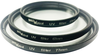
UV mirror has a long history. In the era when the camera was still a CCD sensor, UV mirror was needed to eliminate the interference of ultraviolet rays on CCD to ensure the quality of the picture! But now that the camera sensors are all CMOS, there is no need to use UV mirrors to improve image quality. UV mirrors happen to be colorless and transparent. Now they are mostly used as protective mirrors. I have to say that this is also a good The role of protective lenses! UV filter can filter out the ultraviolet rays in the sun, so it is also called ultraviolet filter. A UV lens is actually an ultraviolet filter. Because too much ultraviolet light will affect the image quality, it is one of the must-haves for traditional photographers, but for the owners of digital video cameras and digital cameras. Said, because it is a CCD photosensitive element imaging, not as sensitive to ultraviolet light as traditional film, so the UV mirror at this time is actually just a piece of flat glass, mainly to protect the lens, it can be said that its protective effect is far greater For filtering. UV filters are usually colorless and transparent, but because of the addition of anti-reflection coatings, they will appear purple or purple-red when viewed from certain angles. Many people buy UV lenses to protect their delicate lens coatings. In fact, this is just a subsidiary function of it. The main function of the UV mirror is to absorb ultraviolet light with a wavelength below 400 nanometers, and it has no filtering effect on other visible/invisible light. The reason why it can filter ultraviolet rays is because the lens contains lead, so the UV lens is heavier than other lenses of the same size and thickness. UV filter is suitable for shooting in the seaside, mountain, snow field and open area, etc. It can reduce the blue tint caused by ultraviolet rays. At the same time, for digital cameras, it can also eliminate the interference of ultraviolet rays on CCD, which helps to improve the effect of clarity and color reproduction.
Description
UV mirror has a long history. In the era when the camera was still a CCD sensor, UV mirror was needed to eliminate the interference of ultraviolet rays on CCD to ensure the quality of the picture! But now that the camera sensors are all CMOS, there is no need to use UV mirrors to improve image quality. UV mirrors happen to be colorless and transparent. Now they are mostly used as protective mirrors. I have to say that this is also a good The role of protective lenses! UV filter can filter out the ultraviolet rays in the sun, so it is also called ultraviolet filter. A UV lens is actually an ultraviolet filter. Because too much ultraviolet light will affect the image quality, it is one of the must-haves for traditional photographers, but for the owners of digital video cameras and digital cameras. Said, because it is a CCD photosensitive element imaging, not as sensitive to ultraviolet light as traditional film, so the UV mirror at this time is actually just a piece of flat glass, mainly to protect the lens, it can be said that its protective effect is far greater For filtering. UV filters are usually colorless and transparent, but because of the addition of anti-reflection coatings, they will appear purple or purple-red when viewed from certain angles. Many people buy UV lenses to protect their delicate lens coatings. In fact, this is just a subsidiary function of it. The main function of the UV mirror is to absorb ultraviolet light with a wavelength below 400 nanometers, and it has no filtering effect on other visible/invisible light. The reason why it can filter ultraviolet rays is because the lens contains lead, so the UV lens is heavier than other lenses of the same size and thickness. UV filter is suitable for shooting in the seaside, mountain, snow field and open area, etc. It can reduce the blue tint caused by ultraviolet rays. At the same time, for digital cameras, it can also eliminate the interference of ultraviolet rays on CCD, which helps to improve the effect of clarity and color reproduction.

Suppliers

Company
Product
Description
Supplier Links
Camera UV Filter -  - ECOPTIK (CHANGCHUN) LTD
Changchun, China
Camera UV Filter
Camera UV Filter
UV mirror has a long history. In the era when the camera was still a CCD sensor, UV mirror was needed to eliminate the interference of ultraviolet rays on CCD to ensure the quality of the picture! But now that the camera sensors are all CMOS, there is no need to use UV mirrors to improve image quality. UV mirrors happen to be colorless and transparent. Now they are mostly used as protective mirrors. I have to say that this is also a good The role of protective lenses! UV filter can filter out the ultraviolet rays in the sun, so it is also called ultraviolet filter. A UV lens is actually an ultraviolet filter. Because too much ultraviolet light will affect the image quality, it is one of the must-haves for traditional photographers, but for the owners of digital video cameras and digital cameras. Said, because it is a CCD photosensitive element imaging, not as sensitive to ultraviolet light as traditional film, so the UV mirror at this time is actually just a piece of flat glass, mainly to protect the lens, it can be said that its protective effect is far greater For filtering. UV filters are usually colorless and transparent, but because of the addition of anti-reflection coatings, they will appear purple or purple-red when viewed from certain angles. Many people buy UV lenses to protect their delicate lens coatings. In fact, this is just a subsidiary function of it. The main function of the UV mirror is to absorb ultraviolet light with a wavelength below 400 nanometers, and it has no filtering effect on other visible/invisible light. The reason why it can filter ultraviolet rays is because the lens contains lead, so the UV lens is heavier than other lenses of the same size and thickness. UV filter is suitable for shooting in the seaside, mountain, snow field and open area, etc. It can reduce the blue tint caused by ultraviolet rays. At the same time, for digital cameras, it can also eliminate the interference of ultraviolet rays on CCD, which helps to improve the effect of clarity and color reproduction.

UV mirror has a long history. In the era when the camera was still a CCD sensor, UV mirror was needed to eliminate the interference of ultraviolet rays on CCD to ensure the quality of the picture! But now that the camera sensors are all CMOS, there is no need to use UV mirrors to improve image quality. UV mirrors happen to be colorless and transparent. Now they are mostly used as protective mirrors. I have to say that this is also a good The role of protective lenses! UV filter can filter out the ultraviolet rays in the sun, so it is also called ultraviolet filter. A UV lens is actually an ultraviolet filter. Because too much ultraviolet light will affect the image quality, it is one of the must-haves for traditional photographers, but for the owners of digital video cameras and digital cameras. Said, because it is a CCD photosensitive element imaging, not as sensitive to ultraviolet light as traditional film, so the UV mirror at this time is actually just a piece of flat glass, mainly to protect the lens, it can be said that its protective effect is far greater For filtering. UV filters are usually colorless and transparent, but because of the addition of anti-reflection coatings, they will appear purple or purple-red when viewed from certain angles. Many people buy UV lenses to protect their delicate lens coatings. In fact, this is just a subsidiary function of it. The main function of the UV mirror is to absorb ultraviolet light with a wavelength below 400 nanometers, and it has no filtering effect on other visible/invisible light. The reason why it can filter ultraviolet rays is because the lens contains lead, so the UV lens is heavier than other lenses of the same size and thickness. UV filter is suitable for shooting in the seaside, mountain, snow field and open area, etc. It can reduce the blue tint caused by ultraviolet rays. At the same time, for digital cameras, it can also eliminate the interference of ultraviolet rays on CCD, which helps to improve the effect of clarity and color reproduction.

Supplier's Site

Technical Specifications

  ECOPTIK (CHANGCHUN) LTD
Product Category Optical Lens Assemblies
Product Name Camera UV Filter
Type Specialty / Other
Unlock Full Specs
to access all available technical data

Similar Products

Assembled Window for Laser Level Meter -  - Suzhou Jiujon Optics Co., Ltd
Suzhou Jiujon Optics Co., Ltd
Specs
Type Specialty / Other
View Details
Laser Beam Expanders -  - Navitar, Inc.
Specs
Type Beam Expander
View Details
TECBL Series Blue-Violet Laser Module - TECBL-440 - World Star Tech
Specs
Type Collimator
Wavelength 450 nm (4500 Å)
Diameter / Width 25.4 mm (1 inch)
View Details
Fiber-optic Collimator, Adjustable, 600 - 1000 nm, FC/APC - F-H10-NIR-APC - Newport MKS
Specs
Type Collimator
Wavelength 600 to 1000 nm (6000 to 10000 Å)
Aperture 10 mm (0.3937 inch)
View Details