Dontech Incorporated Dontech Circular Polarizers DCP-44 Series

Description
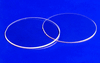
Circular polarizers (CPs) are used to enhance the readability of emissive displays by suppressing internal reflections (by up to 99%) and improving the display’s contrast. Circular polarizers are typically produced by the lamination of several different materials including a linear polarizer (LP), a 1/4 wave retarder (QW), and often a front surface hard coating (see Fig. 1). Because they are reasonably thin (0.5 mm) and somewhat fragile, circular polarizers are often combined with rigid non-birefringent optical substrates (e.g., acrylic, glass) to improve their physical properties. When properly designed, they provide a very effective glare reduction for various optical systems including displays, touch screens, cameras, and sensors. Particularly in high ambient light environments, circular polarizers benefit electronic displays such as: • Electro Luminescent (EL) • Field Emissive Displays (FED) • Light Emitting Diodes (LED) • Organic Light Emitting Diodes (OLED) • Liquid Crystal Displays (LCD)* • Plasma Displays *Circular polarizers are only typically used on LCDs when also using resistive touch screens. They must be properly oriented as the display’s output is linearly polarized. A properly oriented linear polarizer (LP) in an LCD application is a more effective means of improving contrast when a touch screen is not employed. Dontech Circular Polarizers Dontech's standard circular polarizer is a 44% neutral density gray (i.e., having a total luminous transmittance of 44%, relatively neutral across the visual spectrum). These can be embedded in rigid substrates such as PMMA and glass. The LP component is iodine doped polyvinyl alcohol (PVA) type based LP. Dontech also offers a non-PVA (i.e., dyed LP) which will improve the environmental performance but will lower the polarizing efficiency. Dontech’s CPs can be further enhanced by laminating the neutral density gray polarizer to a color selective filter which has been optically matched to the applications requirements (e.g., display output). For instance, with an electroluminescent display, the circular polarizer may be combined with an amber long pass filter (typically color # A610). See Figure #2 for Dontech standard acrylic colored CPs. To assure maximum performance, it is essential that the linear polarizer within the circular polarized material be properly aligned with respect to the particular display and for the intended viewing of the display.
Description
Circular polarizers (CPs) are used to enhance the readability of emissive displays by suppressing internal reflections (by up to 99%) and improving the display’s contrast. Circular polarizers are typically produced by the lamination of several different materials including a linear polarizer (LP), a 1/4 wave retarder (QW), and often a front surface hard coating (see Fig. 1). Because they are reasonably thin (0.5 mm) and somewhat fragile, circular polarizers are often combined with rigid non-birefringent optical substrates (e.g., acrylic, glass) to improve their physical properties. When properly designed, they provide a very effective glare reduction for various optical systems including displays, touch screens, cameras, and sensors. Particularly in high ambient light environments, circular polarizers benefit electronic displays such as: • Electro Luminescent (EL) • Field Emissive Displays (FED) • Light Emitting Diodes (LED) • Organic Light Emitting Diodes (OLED) • Liquid Crystal Displays (LCD)* • Plasma Displays *Circular polarizers are only typically used on LCDs when also using resistive touch screens. They must be properly oriented as the display’s output is linearly polarized. A properly oriented linear polarizer (LP) in an LCD application is a more effective means of improving contrast when a touch screen is not employed. Dontech Circular Polarizers Dontech's standard circular polarizer is a 44% neutral density gray (i.e., having a total luminous transmittance of 44%, relatively neutral across the visual spectrum). These can be embedded in rigid substrates such as PMMA and glass. The LP component is iodine doped polyvinyl alcohol (PVA) type based LP. Dontech also offers a non-PVA (i.e., dyed LP) which will improve the environmental performance but will lower the polarizing efficiency. Dontech’s CPs can be further enhanced by laminating the neutral density gray polarizer to a color selective filter which has been optically matched to the applications requirements (e.g., display output). For instance, with an electroluminescent display, the circular polarizer may be combined with an amber long pass filter (typically color # A610). See Figure #2 for Dontech standard acrylic colored CPs. To assure maximum performance, it is essential that the linear polarizer within the circular polarized material be properly aligned with respect to the particular display and for the intended viewing of the display.

Suppliers

Company
Product
Description
Supplier Links
Circular polarizers (CPs) are used to enhance the readability of emissive displays by suppressing internal reflections (by up to 99%) and improving the display’s contrast. Circular polarizers are typically produced by the lamination of several different materials including a linear polarizer (LP), a 1/4 wave retarder (QW), and often a front surface hard coating (see Fig. 1). Because they are reasonably thin (0.5 mm) and somewhat fragile, circular polarizers are often combined with rigid non-birefringent optical substrates (e.g., acrylic, glass) to improve their physical properties. When properly designed, they provide a very effective glare reduction for various optical systems including displays, touch screens, cameras, and sensors. Particularly in high ambient light environments, circular polarizers benefit electronic displays such as: • Electro Luminescent (EL) • Field Emissive Displays (FED) • Light Emitting Diodes (LED) • Organic Light Emitting Diodes (OLED) • Liquid Crystal Displays (LCD)* • Plasma Displays *Circular polarizers are only typically used on LCDs when also using resistive touch screens. They must be properly oriented as the display’s output is linearly polarized. A properly oriented linear polarizer (LP) in an LCD application is a more effective means of improving contrast when a touch screen is not employed. Dontech Circular Polarizers Dontech's standard circular polarizer is a 44% neutral density gray (i.e., having a total luminous transmittance of 44%, relatively neutral across the visual spectrum). These can be embedded in rigid substrates such as PMMA and glass. The LP component is iodine doped polyvinyl alcohol (PVA) type based LP. Dontech also offers a non-PVA (i.e., dyed LP) which will improve the environmental performance but will lower the polarizing efficiency. Dontech’s CPs can be further enhanced by laminating the neutral density gray polarizer to a color selective filter which has been optically matched to the applications requirements (e.g., display output). For instance, with an electroluminescent display, the circular polarizer may be combined with an amber long pass filter (typically color # A610). See Figure #2 for Dontech standard acrylic colored CPs. To assure maximum performance, it is essential that the linear polarizer within the circular polarized material be properly aligned with respect to the particular display and for the intended viewing of the display.

Circular polarizers (CPs) are used to enhance the readability of emissive displays by suppressing internal reflections (by up to 99%) and improving the display’s contrast.
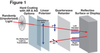
Circular polarizers are typically produced by the lamination of several different materials including a linear polarizer (LP), a 1/4 wave retarder (QW), and often a front surface hard coating (see Fig. 1). Because they are reasonably thin (0.5 mm) and somewhat fragile, circular polarizers are often combined with rigid non-birefringent optical substrates (e.g., acrylic, glass) to improve their physical properties. When properly designed, they provide a very effective glare reduction for various optical systems including displays, touch screens, cameras, and sensors. Particularly in high ambient light environments, circular polarizers benefit electronic displays such as:

Electro Luminescent (EL)
Field Emissive Displays (FED)
Light Emitting Diodes (LED)
Organic Light Emitting Diodes (OLED)
Liquid Crystal Displays (LCD)*
Plasma Displays

*Circular polarizers are only typically used on LCDs when also using resistive touch screens. They must be properly oriented as the display’s output is linearly polarized. A properly oriented linear polarizer (LP) in an LCD application is a more effective means of improving contrast when a touch screen is not employed.

Dontech Circular Polarizers
Dontech's standard circular polarizer is a 44% neutral density gray (i.e., having a total luminous transmittance of 44%, relatively neutral across the visual spectrum). These can be embedded in rigid substrates such as PMMA and glass. The LP component is iodine doped polyvinyl alcohol (PVA) type based LP. Dontech also offers a non-PVA (i.e., dyed LP) which will improve the environmental performance but will lower the polarizing efficiency.

Dontech’s CPs can be further enhanced by laminating the neutral density gray polarizer to a color selective filter which has been optically matched to the applications requirements (e.g., display output). For instance, with an electroluminescent display, the circular polarizer may be combined with an amber long pass filter (typically color # A610). See Figure #2 for Dontech standard acrylic colored CPs. To assure maximum performance, it is essential that the linear polarizer within the circular polarized material be properly aligned with respect to the particular display and for the intended viewing of the display.

Supplier's Site

Technical Specifications

  Dontech Incorporated
Product Category Optical Polarizers
Product Number Dontech Circular Polarizers DCP-44 Series
Optical Polarizer Circular Polarizer
Unlock Full Specs
to access all available technical data

Similar Products

Zero-Order Waveplate, Quarter-Wave, Polymer, 12.7 mm Diameter, 1300 nm - 05RP34-1300 - Newport MKS
Specs
Optical Polarizer Waveplate / Retardation Plate
Polarizer Features Anti-Reflection Coating
Surface Quality 40-20 Scratch / Dig
View Details
Zero Order Waveplates -  - CeNing Optics Co., Ltd.
CeNing Optics Co., Ltd.
Specs
Optical Polarizer Waveplate / Retardation Plate
Polarizer Features Anti-Reflection Coating
Surface Quality 20-10 Scratch / Dig
View Details
Waveplate -  - CRYSTECH, Inc.
CRYSTECH, Inc.
Specs
Optical Polarizer Waveplate / Retardation Plate
Surface Quality 20-10 Scratch / Dig
Surface Flatness λ/8
View Details