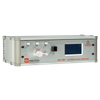
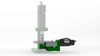
Fluke Calibration Thermocouple Calibration Furnace with Isothermal Block 9118A-ITB-256

Description
Product Highlights Seven key features set the 9118A apart from other high-temperature calibration furnaces: 1. Wide temperature range spanning most high-temperature applications Standards and guidelines such as AMS 2750 and EURAMET cg-8 require that a thermocouple be calibrated over the full temperature range in which it is used. The 9118A temperature range of 300 °C to 1200 °C covers most high-temperature applications. 2. Flexible configuration for calibrating a wide range of thermocouple types The 9118A furnace can be operated with or without an isothermal block, which increases calibration workload that can be performed with a single furnace: Tube furnace configuration (without isothermal block): Base-metal thermocouples are often sheathed in formable materials such as braided fiberglass or PTFE. During calibration, they are bundled around a reference thermometer, held together with fiberglass cord or tape, and inserted into a tube furnace. Isothermal block configuration: Metal- or ceramic-sheathed thermocouples are generally constructed with noble-metal thermoelements and therefore have higher calibration accuracy requirements. The isothermal block, which accommodates up to four 6.35 millimeter probes, improves heat transfer and temperature stability. This better equalizes the temperature between the reference probe and the UUT, which lowers measurement uncertainty compared to calibration without a block. The furnace configuration can be quickly changed by selecting the calibration parameters stored in the controller for the desired configuration and inserting or removing the alumina ceramic isothermal block. 3. Best-in-class temperature stability and uniformity for calibration accuracy Axial and radial uniformity, as well as constant temperature stability over time, are key factors that contribute to accurate thermocouple calibrations. To minimize axial temperature gradients, three actively controlled heater zones compensate for temperature differentials between the central zone and the front and rear zones. Type-S thermocouples, which are less susceptible to drift than other types, are used for zone control and cutout. Axial temperature uniformity when using the isothermal block is ± 0.2 °C over a 60 mm (2.4 in) zone from full immersion at 1200 °C. Radial (hole-to-hole) uniformity is ± 0.25 °C at 1200 °C when using the isothermal block, and ± 0.5 °C over a 14 mm (0.6 in) diameter at the center of the furnace tube without a block. When using the isothermal block, temperature stability is ± 0.1 °C or better over the full temperature range of the furnace. No other calibration furnace in its class comes close to this level of performance for both modes of operation. 4. Automated setpoint control for improved lab productivity A proprietary programmable controller, available in nine languages (English, Chinese, French, German, Japanese, Korean, Portuguese, Spanish, and Russian), enables technicians to automate setpoint temperature control for up to eight setpoint temperatures, the temperature ramp rate, and the time duration the furnace controls at each setpoint. Automation and data collection can be further enhanced when the Fluke 1586A Super-DAQ is connected to the 9118A furnace through the RS-232 interface. The Super-DAQ can be programmed to control the furnace's setpoint temperatures and collect data for all sensors under test once the furnace has stabilized to within parameters defined by the user. After data has been collected at the first programmed temperature, the Super-DAQ will advance the furnace to the remaining programmed temperatures, collecting data at each setpoint. Once the test has been configured and started, the technician can walk away to work on other activities. 5. Non-metallic block helps minimize thermocouple contamination Calibration furnaces with metallic blocks can contaminate thermocouples, causing their accuracy to drift over time. To minimize the risk of contamination, the furnace well and isothermal block of the 9118A are constructed of non-metallic, ceramic alumina. This eliminates the need to protect the thermocouples under test with costly ceramic sleeving—reducing cost of ownership. 6. Deep immersion depth to support most thermocouple calibrations Industry standards such as AMS2750 recommend calibrating thermocouples at their normal working depth of insertion. The 9118A immersion depth is 365 mm (14.4 in) when using the isothermal block and 350 mm (13.8 in) to the central point of the furnace without a block. This immersion depth is adequate for most of thermocouple calibrations. The 40 mm x 700 mm (1.6 in x 27.6 in) open-ended furnace tube can also be useful when calibrating multi-junction thermocouples or when sample testing spools of thermocouple wire. 7. Dynamic heater control and cutouts for reliability and safety The 9118A controls the heater power level below 100% to prevent the heater elements from overheating—improvin g heater reliability and lifetime. Redundant over-temperature cutouts are built into the 9118A to ensure safe operation of the furnace. These include over-temperature, chassis thermostat, fan fault, control thermocouple fault, and user programmable cutouts.
Description
Product Highlights Seven key features set the 9118A apart from other high-temperature calibration furnaces: 1. Wide temperature range spanning most high-temperature applications Standards and guidelines such as AMS 2750 and EURAMET cg-8 require that a thermocouple be calibrated over the full temperature range in which it is used. The 9118A temperature range of 300 °C to 1200 °C covers most high-temperature applications. 2. Flexible configuration for calibrating a wide range of thermocouple types The 9118A furnace can be operated with or without an isothermal block, which increases calibration workload that can be performed with a single furnace: Tube furnace configuration (without isothermal block): Base-metal thermocouples are often sheathed in formable materials such as braided fiberglass or PTFE. During calibration, they are bundled around a reference thermometer, held together with fiberglass cord or tape, and inserted into a tube furnace. Isothermal block configuration: Metal- or ceramic-sheathed thermocouples are generally constructed with noble-metal thermoelements and therefore have higher calibration accuracy requirements. The isothermal block, which accommodates up to four 6.35 millimeter probes, improves heat transfer and temperature stability. This better equalizes the temperature between the reference probe and the UUT, which lowers measurement uncertainty compared to calibration without a block. The furnace configuration can be quickly changed by selecting the calibration parameters stored in the controller for the desired configuration and inserting or removing the alumina ceramic isothermal block. 3. Best-in-class temperature stability and uniformity for calibration accuracy Axial and radial uniformity, as well as constant temperature stability over time, are key factors that contribute to accurate thermocouple calibrations. To minimize axial temperature gradients, three actively controlled heater zones compensate for temperature differentials between the central zone and the front and rear zones. Type-S thermocouples, which are less susceptible to drift than other types, are used for zone control and cutout. Axial temperature uniformity when using the isothermal block is ± 0.2 °C over a 60 mm (2.4 in) zone from full immersion at 1200 °C. Radial (hole-to-hole) uniformity is ± 0.25 °C at 1200 °C when using the isothermal block, and ± 0.5 °C over a 14 mm (0.6 in) diameter at the center of the furnace tube without a block. When using the isothermal block, temperature stability is ± 0.1 °C or better over the full temperature range of the furnace. No other calibration furnace in its class comes close to this level of performance for both modes of operation. 4. Automated setpoint control for improved lab productivity A proprietary programmable controller, available in nine languages (English, Chinese, French, German, Japanese, Korean, Portuguese, Spanish, and Russian), enables technicians to automate setpoint temperature control for up to eight setpoint temperatures, the temperature ramp rate, and the time duration the furnace controls at each setpoint. Automation and data collection can be further enhanced when the Fluke 1586A Super-DAQ is connected to the 9118A furnace through the RS-232 interface. The Super-DAQ can be programmed to control the furnace's setpoint temperatures and collect data for all sensors under test once the furnace has stabilized to within parameters defined by the user. After data has been collected at the first programmed temperature, the Super-DAQ will advance the furnace to the remaining programmed temperatures, collecting data at each setpoint. Once the test has been configured and started, the technician can walk away to work on other activities. 5. Non-metallic block helps minimize thermocouple contamination Calibration furnaces with metallic blocks can contaminate thermocouples, causing their accuracy to drift over time. To minimize the risk of contamination, the furnace well and isothermal block of the 9118A are constructed of non-metallic, ceramic alumina. This eliminates the need to protect the thermocouples under test with costly ceramic sleeving—reducing cost of ownership. 6. Deep immersion depth to support most thermocouple calibrations Industry standards such as AMS2750 recommend calibrating thermocouples at their normal working depth of insertion. The 9118A immersion depth is 365 mm (14.4 in) when using the isothermal block and 350 mm (13.8 in) to the central point of the furnace without a block. This immersion depth is adequate for most of thermocouple calibrations. The 40 mm x 700 mm (1.6 in x 27.6 in) open-ended furnace tube can also be useful when calibrating multi-junction thermocouples or when sample testing spools of thermocouple wire. 7. Dynamic heater control and cutouts for reliability and safety The 9118A controls the heater power level below 100% to prevent the heater elements from overheating—improvin g heater reliability and lifetime. Redundant over-temperature cutouts are built into the 9118A to ensure safe operation of the furnace. These include over-temperature, chassis thermostat, fan fault, control thermocouple fault, and user programmable cutouts.


Suppliers

Company
Product
Description
Supplier Links
Rochester, NY, USA
Thermocouple Calibration Furnace with Isothermal Block
9118A-ITB
Thermocouple Calibration Furnace with Isothermal Block 9118A-ITB
Product Highlights Seven key features set the 9118A apart from other high-temperature calibration furnaces: 1. Wide temperature range spanning most high-temperature applications Standards and guidelines such as AMS 2750 and EURAMET cg-8 require that a thermocouple be calibrated over the full temperature range in which it is used. The 9118A temperature range of 300 °C to 1200 °C covers most high-temperature applications. 2. Flexible configuration for calibrating a wide range of thermocouple types The 9118A furnace can be operated with or without an isothermal block, which increases calibration workload that can be performed with a single furnace: Tube furnace configuration (without isothermal block): Base-metal thermocouples are often sheathed in formable materials such as braided fiberglass or PTFE. During calibration, they are bundled around a reference thermometer, held together with fiberglass cord or tape, and inserted into a tube furnace. Isothermal block configuration: Metal- or ceramic-sheathed thermocouples are generally constructed with noble-metal thermoelements and therefore have higher calibration accuracy requirements. The isothermal block, which accommodates up to four 6.35 millimeter probes, improves heat transfer and temperature stability. This better equalizes the temperature between the reference probe and the UUT, which lowers measurement uncertainty compared to calibration without a block. The furnace configuration can be quickly changed by selecting the calibration parameters stored in the controller for the desired configuration and inserting or removing the alumina ceramic isothermal block. 3. Best-in-class temperature stability and uniformity for calibration accuracy Axial and radial uniformity, as well as constant temperature stability over time, are key factors that contribute to accurate thermocouple calibrations. To minimize axial temperature gradients, three actively controlled heater zones compensate for temperature differentials between the central zone and the front and rear zones. Type-S thermocouples, which are less susceptible to drift than other types, are used for zone control and cutout. Axial temperature uniformity when using the isothermal block is ± 0.2 °C over a 60 mm (2.4 in) zone from full immersion at 1200 °C. Radial (hole-to-hole) uniformity is ± 0.25 °C at 1200 °C when using the isothermal block, and ± 0.5 °C over a 14 mm (0.6 in) diameter at the center of the furnace tube without a block. When using the isothermal block, temperature stability is ± 0.1 °C or better over the full temperature range of the furnace. No other calibration furnace in its class comes close to this level of performance for both modes of operation. 4. Automated setpoint control for improved lab productivity A proprietary programmable controller, available in nine languages (English, Chinese, French, German, Japanese, Korean, Portuguese, Spanish, and Russian), enables technicians to automate setpoint temperature control for up to eight setpoint temperatures, the temperature ramp rate, and the time duration the furnace controls at each setpoint. Automation and data collection can be further enhanced when the Fluke 1586A Super-DAQ is connected to the 9118A furnace through the RS-232 interface. The Super-DAQ can be programmed to control the furnace's setpoint temperatures and collect data for all sensors under test once the furnace has stabilized to within parameters defined by the user. After data has been collected at the first programmed temperature, the Super-DAQ will advance the furnace to the remaining programmed temperatures, collecting data at each setpoint. Once the test has been configured and started, the technician can walk away to work on other activities. 5. Non-metallic block helps minimize thermocouple contamination Calibration furnaces with metallic blocks can contaminate thermocouples, causing their accuracy to drift over time. To minimize the risk of contamination, the furnace well and isothermal block of the 9118A are constructed of non-metallic, ceramic alumina. This eliminates the need to protect the thermocouples under test with costly ceramic sleeving—reducing cost of ownership. 6. Deep immersion depth to support most thermocouple calibrations Industry standards such as AMS2750 recommend calibrating thermocouples at their normal working depth of insertion. The 9118A immersion depth is 365 mm (14.4 in) when using the isothermal block and 350 mm (13.8 in) to the central point of the furnace without a block. This immersion depth is adequate for most of thermocouple calibrations. The 40 mm x 700 mm (1.6 in x 27.6 in) open-ended furnace tube can also be useful when calibrating multi-junction thermocouples or when sample testing spools of thermocouple wire. 7. Dynamic heater control and cutouts for reliability and safety The 9118A controls the heater power level below 100% to prevent the heater elements from overheating—improvin g heater reliability and lifetime. Redundant over-temperature cutouts are built into the 9118A to ensure safe operation of the furnace. These include over-temperature, chassis thermostat, fan fault, control thermocouple fault, and user programmable cutouts.

Product Highlights

Seven key features set the 9118A apart from other high-temperature calibration furnaces:

1. Wide temperature range spanning most high-temperature applications

Standards and guidelines such as AMS 2750 and EURAMET cg-8 require that a thermocouple be calibrated over the full temperature range in which it is used. The 9118A temperature range of 300 °C to 1200 °C covers most high-temperature applications.

2. Flexible configuration for calibrating a wide range of thermocouple types

The 9118A furnace can be operated with or without an isothermal block, which increases calibration workload that can be performed with a single furnace:

  • Tube furnace configuration (without isothermal block): Base-metal thermocouples are often sheathed in formable materials such as braided fiberglass or PTFE. During calibration, they are bundled around a reference thermometer, held together with fiberglass cord or tape, and inserted into a tube furnace.
  • Isothermal block configuration: Metal- or ceramic-sheathed thermocouples are generally constructed with noble-metal thermoelements and therefore have higher calibration accuracy requirements. The isothermal block, which accommodates up to four 6.35 millimeter probes, improves heat transfer and temperature stability. This better equalizes the temperature between the reference probe and the UUT, which lowers measurement uncertainty compared to calibration without a block.

The furnace configuration can be quickly changed by selecting the calibration parameters stored in the controller for the desired configuration and inserting or removing the alumina ceramic isothermal block.

3. Best-in-class temperature stability and uniformity for calibration accuracy

Axial and radial uniformity, as well as constant temperature stability over time, are key factors that contribute to accurate thermocouple calibrations.

To minimize axial temperature gradients, three actively controlled heater zones compensate for temperature differentials between the central zone and the front and rear zones. Type-S thermocouples, which are less susceptible to drift than other types, are used for zone control and cutout. Axial temperature uniformity when using the isothermal block is ± 0.2 °C over a 60 mm (2.4 in) zone from full immersion at 1200 °C.

Radial (hole-to-hole) uniformity is ± 0.25 °C at 1200 °C when using the isothermal block, and ± 0.5 °C over a 14 mm (0.6 in) diameter at the center of the furnace tube without a block.

When using the isothermal block, temperature stability is ± 0.1 °C or better over the full temperature range of the furnace.

No other calibration furnace in its class comes close to this level of performance for both modes of operation.

4. Automated setpoint control for improved lab productivity

A proprietary programmable controller, available in nine languages (English, Chinese, French, German, Japanese, Korean, Portuguese, Spanish, and Russian), enables technicians to automate setpoint temperature control for up to eight setpoint temperatures, the temperature ramp rate, and the time duration the furnace controls at each setpoint.

Automation and data collection can be further enhanced when the Fluke 1586A Super-DAQ is connected to the 9118A furnace through the RS-232 interface. The Super-DAQ can be programmed to control the furnace's setpoint temperatures and collect data for all sensors under test once the furnace has stabilized to within parameters defined by the user. After data has been collected at the first programmed temperature, the Super-DAQ will advance the furnace to the remaining programmed temperatures, collecting data at each setpoint. Once the test has been configured and started, the technician can walk away to work on other activities.

5. Non-metallic block helps minimize thermocouple contamination

Calibration furnaces with metallic blocks can contaminate thermocouples, causing their accuracy to drift over time. To minimize the risk of contamination, the furnace well and isothermal block of the 9118A are constructed of non-metallic, ceramic alumina. This eliminates the need to protect the thermocouples under test with costly ceramic sleeving—reducing cost of ownership.

6. Deep immersion depth to support most thermocouple calibrations

Industry standards such as AMS2750 recommend calibrating thermocouples at their normal working depth of insertion. The 9118A immersion depth is 365 mm (14.4 in) when using the isothermal block and 350 mm (13.8 in) to the central point of the furnace without a block. This immersion depth is adequate for most of thermocouple calibrations. The 40 mm x 700 mm (1.6 in x 27.6 in) open-ended furnace tube can also be useful when calibrating multi-junction thermocouples or when sample testing spools of thermocouple wire.

7. Dynamic heater control and cutouts for reliability and safety

The 9118A controls the heater power level below 100% to prevent the heater elements from overheating—improving heater reliability and lifetime. Redundant over-temperature cutouts are built into the 9118A to ensure safe operation of the furnace. These include over-temperature, chassis thermostat, fan fault, control thermocouple fault, and user programmable cutouts.
Supplier's Site

Technical Specifications

  Transcat, Inc.
Product Category Calibration Instruments
Product Number 9118A-ITB
Product Name Thermocouple Calibration Furnace with Isothermal Block
Environmental Properties Thermocouple
Unlock Full Specs
to access all available technical data

Similar Products

Test Lamp - TL105 - MSA Safety
Specs
Calibrator Style Handheld; Portable
Operating Temp 5 to 122 F (-15 to 50 C)
View Details
Continuous Emissions Monitoring Calibration System - Series 2020 CEMCS - Environics, Inc.
Specs
Calibrator Style Portable (optional feature); Fixed
AC Voltage Range 110 to 220 volts
Description (Voltage) 110 to 240 VAC, 50/60 Hz
View Details
Temperature Calibration Source - Landcal - LAND
Specs
Calibrator Style Fixed
Environmental Properties Thermocouple
Digital Interface Serial Interface
View Details
Specs
Calibrator Style Fixed; Battery Powered
Environmental Properties Flow
Other Properties 33 H x 24.6 W x 12 D
View Details