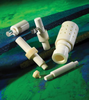
CoorsTek Ceramic Spin Flangers Can Tooling

Description
CoorsTek spin flangers provide dramatically reduced “angle hair” production (white lacquer stripped from the inside of the can) Durable Ceramic Can Tooling Components Designed to Keep Your Line Up and Running The leading manufacturer of ceramic can tooling materials, CoorsTek is internationally recognized as a leader in the development and use of ceramic technology. In fact, CoorsTek and Coors Brewing jointly invented the two-piece aluminum beverage can in 1959. Manufactured in state-of-the-art facilities, our advanced ceramic canning tool components increase yields, improve quality, and extend machine life in can making plants worldwide.
Datasheet
Description
CoorsTek spin flangers provide dramatically reduced “angle hair” production (white lacquer stripped from the inside of the can) Durable Ceramic Can Tooling Components Designed to Keep Your Line Up and Running The leading manufacturer of ceramic can tooling materials, CoorsTek is internationally recognized as a leader in the development and use of ceramic technology. In fact, CoorsTek and Coors Brewing jointly invented the two-piece aluminum beverage can in 1959. Manufactured in state-of-the-art facilities, our advanced ceramic canning tool components increase yields, improve quality, and extend machine life in can making plants worldwide.
Datasheet

Suppliers

Company
Product
Description
Supplier Links
Ceramic Spin Flangers Can Tooling -  - CoorsTek
Golden, CO, USA
Ceramic Spin Flangers Can Tooling
CoorsTek spin flangers provide dramatically reduced “angle hair” production (white lacquer stripped from the inside of the can) Durable Ceramic Can Tooling Components Designed to Keep Your Line Up and Running The leading manufacturer of ceramic can tooling materials, CoorsTek is internationally recognized as a leader in the development and use of ceramic technology. In fact, CoorsTek and Coors Brewing jointly invented the two-piece aluminum beverage can in 1959. Manufactured in state-of-the-art facilities, our advanced ceramic canning tool components increase yields, improve quality, and extend machine life in can making plants worldwide.

CoorsTek spin flangers provide dramatically reduced “angle hair” production (white lacquer stripped from the inside of the can)

Durable Ceramic Can Tooling Components Designed to Keep Your Line Up and Running

The leading manufacturer of ceramic can tooling materials, CoorsTek is internationally recognized as a leader in the development and use of ceramic technology. In fact, CoorsTek and Coors Brewing jointly invented the two-piece aluminum beverage can in 1959. Manufactured in state-of-the-art facilities, our advanced ceramic canning tool components increase yields, improve quality, and extend machine life in can making plants worldwide.

Supplier's Site Datasheet

Technical Specifications

  CoorsTek
Product Category Industrial Ceramic Materials
Product Name Ceramic Spin Flangers Can Tooling
Shape / Form Custom Shape
Applications Wear resistant parts or tooling
Thermal Conductivity 2.2 to 27 W/m-K (1.27 to 15.6 BTU-ft/hr-ft²-F)
CTE 8.3 to 10.3 µm/m-C (4.61 to 5.72 µin/in-F)
Unlock Full Specs
to access all available technical data

Similar Products

Ceramic Hot Knife Tip -  - Xiamen Innovacera Advanced Materials Co., Ltd.
Xiamen Innovacera Advanced Materials Co., Ltd.
Specs
Material Type Zirconia; SpecialtyMaterial
Applications Electronics or semiconductors
Performance Features Rapid Heating, Compatibility
View Details
ESD Safe Tweezer -  - Suntech Applied Materials (Hefei) Co.,Ltd
Suntech Applied Materials (Hefei) Co.,Ltd
View Details
SR600-A-B Graphite Film - graphite-interface-material01 - Dongguan Sheen Electronic Technology Co., Ltd.
Dongguan Sheen Electronic Technology Co., Ltd.
Specs
Thickness 0.0024 inch (0.0600 mm)
View Details
Aluminum-Based Silicon Carbide Structural Parts -  - Fountyl Technologies Pte. Ltd.
Specs
Material Type Carbide Material; Silicon Carbide
Thermal Conductivity 163 to 255 W/m-K (94.18 to 147 BTU-ft/hr-ft²-F)
CTE 4.5 to 16 µm/m-C (2.5 to 8.89 µin/in-F)
View Details