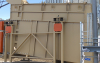
Carrier Vibrating Equipment, Inc. Vibrating Screeners

Description
Carrier vibrating screeners are designed to screen, scalp, dewater, or separate materials using a wide variety of screening media. Ideal for dry or wet screening, Carrier’s vibratory screeners can handle up to 1500 tons per hour, with many deck design options that deliver maximum efficiency. Our vibratory screeners can be manufactured to meet your needs, with customizable construction and configuration. Vibratory screener design options: Designed to accommodate up to five separate decks on a single vibratory screener unit. Available in single, double or triple deck designs. Grease or oil lubrication bearing system options. Tuned, two-mass, natural frequency and brute force designs. Available in widths from 6 inches to 10 feet and lengths up to 200 feet. Available with side, end, intermediate, straight, or bias discharges. High temperature vibratory screener designs available for handling materials up to 2000 deg. F. Choice of vibratory screener construction from carbon steel to metal alloys. Options include removable dust-tight covers, overhead drive arrangement, liners, explosion-proof designs, etc. Available in fixed or adjustable rate designs. Supported from below or suspended from above on soft steel coil or rubber isolation springs to reduce dynamic reactions to surrounding structures. Features and benefits of Carrier vibratory screeners: Ideally suited for wet or dry screening. Capacities range up to 1,500 tons per hour. Designed for the highest possible screening efficiency. Circular motion for increased screener efficiency – our vibratory screener units feature a two-bearing design. Easy installation, low maintenance and minimum downtime. Economical in initial cost and operation. Carrier vibratory screeners are also available with elliptical motion drives that can solve difficult screening problems. This motion provides a high rate of travel at the feed end, providing a thin material bed and rapid stratification which separates the fines quickly. At the discharge end, the material flow is retarded, giving near-size particles additional time to pass the screen. Capacities range up to 500 tons per hour.
Description
Carrier vibrating screeners are designed to screen, scalp, dewater, or separate materials using a wide variety of screening media. Ideal for dry or wet screening, Carrier’s vibratory screeners can handle up to 1500 tons per hour, with many deck design options that deliver maximum efficiency. Our vibratory screeners can be manufactured to meet your needs, with customizable construction and configuration. Vibratory screener design options: Designed to accommodate up to five separate decks on a single vibratory screener unit. Available in single, double or triple deck designs. Grease or oil lubrication bearing system options. Tuned, two-mass, natural frequency and brute force designs. Available in widths from 6 inches to 10 feet and lengths up to 200 feet. Available with side, end, intermediate, straight, or bias discharges. High temperature vibratory screener designs available for handling materials up to 2000 deg. F. Choice of vibratory screener construction from carbon steel to metal alloys. Options include removable dust-tight covers, overhead drive arrangement, liners, explosion-proof designs, etc. Available in fixed or adjustable rate designs. Supported from below or suspended from above on soft steel coil or rubber isolation springs to reduce dynamic reactions to surrounding structures. Features and benefits of Carrier vibratory screeners: Ideally suited for wet or dry screening. Capacities range up to 1,500 tons per hour. Designed for the highest possible screening efficiency. Circular motion for increased screener efficiency – our vibratory screener units feature a two-bearing design. Easy installation, low maintenance and minimum downtime. Economical in initial cost and operation. Carrier vibratory screeners are also available with elliptical motion drives that can solve difficult screening problems. This motion provides a high rate of travel at the feed end, providing a thin material bed and rapid stratification which separates the fines quickly. At the discharge end, the material flow is retarded, giving near-size particles additional time to pass the screen. Capacities range up to 500 tons per hour.

Suppliers

Company
Product
Description
Supplier Links
Vibrating Screeners -  - Carrier Vibrating Equipment, Inc.
Louisville, KY, USA
Vibrating Screeners
Vibrating Screeners
Carrier vibrating screeners are designed to screen, scalp, dewater, or separate materials using a wide variety of screening media. Ideal for dry or wet screening, Carrier’s vibratory screeners can handle up to 1500 tons per hour, with many deck design options that deliver maximum efficiency. Our vibratory screeners can be manufactured to meet your needs, with customizable construction and configuration. Vibratory screener design options: Designed to accommodate up to five separate decks on a single vibratory screener unit. Available in single, double or triple deck designs. Grease or oil lubrication bearing system options. Tuned, two-mass, natural frequency and brute force designs. Available in widths from 6 inches to 10 feet and lengths up to 200 feet. Available with side, end, intermediate, straight, or bias discharges. High temperature vibratory screener designs available for handling materials up to 2000 deg. F. Choice of vibratory screener construction from carbon steel to metal alloys. Options include removable dust-tight covers, overhead drive arrangement, liners, explosion-proof designs, etc. Available in fixed or adjustable rate designs. Supported from below or suspended from above on soft steel coil or rubber isolation springs to reduce dynamic reactions to surrounding structures. Features and benefits of Carrier vibratory screeners: Ideally suited for wet or dry screening. Capacities range up to 1,500 tons per hour. Designed for the highest possible screening efficiency. Circular motion for increased screener efficiency – our vibratory screener units feature a two-bearing design. Easy installation, low maintenance and minimum downtime. Economical in initial cost and operation. Carrier vibratory screeners are also available with elliptical motion drives that can solve difficult screening problems. This motion provides a high rate of travel at the feed end, providing a thin material bed and rapid stratification which separates the fines quickly. At the discharge end, the material flow is retarded, giving near-size particles additional time to pass the screen. Capacities range up to 500 tons per hour.

Carrier vibrating screeners are designed to screen, scalp, dewater, or separate materials using a wide variety of screening media.

Ideal for dry or wet screening, Carrier’s vibratory screeners can handle up to 1500 tons per hour, with many deck design options that deliver maximum efficiency. Our vibratory screeners can be manufactured to meet your needs, with customizable construction and configuration.

Vibratory screener design options:

  • Designed to accommodate up to five separate decks on a single vibratory screener unit.
  • Available in single, double or triple deck designs.
  • Grease or oil lubrication bearing system options.
  • Tuned, two-mass, natural frequency and brute force designs.
  • Available in widths from 6 inches to 10 feet and lengths up to 200 feet.
  • Available with side, end, intermediate, straight, or bias discharges.
  • High temperature vibratory screener designs available for handling materials up to 2000 deg. F.
  • Choice of vibratory screener construction from carbon steel to metal alloys.
  • Options include removable dust-tight covers, overhead drive arrangement, liners, explosion-proof designs, etc.
  • Available in fixed or adjustable rate designs.
  • Supported from below or suspended from above on soft steel coil or rubber isolation springs to reduce dynamic reactions to surrounding structures.

Features and benefits of Carrier vibratory screeners:

  • Ideally suited for wet or dry screening.
  • Capacities range up to 1,500 tons per hour.
  • Designed for the highest possible screening efficiency.
  • Circular motion for increased screener efficiency – our vibratory screener units feature a two-bearing design.
  • Easy installation, low maintenance and minimum downtime.
  • Economical in initial cost and operation.
  • Carrier vibratory screeners are also available with elliptical motion drives that can solve difficult screening problems. This motion provides a high rate of travel at the feed end, providing a thin material bed and rapid stratification which separates the fines quickly. At the discharge end, the material flow is retarded, giving near-size particles additional time to pass the screen. Capacities range up to 500 tons per hour.
Supplier's Site

Technical Specifications

  Carrier Vibrating Equipment, Inc.
Product Category Separators, Classifiers, and Screeners
Product Name Vibrating Screeners
Equipment Type Screener - Rectangular Deck
Unlock Full Specs
to access all available technical data

Similar Products

22 Inch (in) Inlet and Discharge Size Vooner Inlet Separator (VIS) - VIS-22 - Vooner FloGard LLC
Specs
Equipment Type Other
Applications Chemicals / Fertilizers; Food Processing / Grain; Mining / Ores / Minerals; Wood / Pulp and Paper
Capacity / Throughput 132 lbs/hr (600 kg/hr)
View Details
High-Speed Vibrating Screens -  - Triple/S Dynamics, Inc.
Triple/S Dynamics, Inc.
Specs
Equipment Type Screener - Rectangular Deck
Screen Action/ Cleaning Vibratory / Shaking Action
Operation Dewatering / Washing / Desliming (optional feature); Fines Removal / Dedusting (optional feature); Grading (optional feature)
View Details
Grit Classifier - SCHLOSS™ - Smith & Loveless, Inc.
Smith & Loveless, Inc.
Specs
Equipment Type Rake / Spiral / Bowl Classifiers
Applications Mining / Ores / Minerals; Other; Bulk Handling
View Details
Dry Stoner - TS 180 - Bratney Companies
Bratney Companies
Specs
Equipment Type Concentrating Table / Density Separator
Applications Dry / Free Flowing Materials; Food Processing / Grain
Capacity / Throughput 6000 to 20000 lbs/hr (27211 to 90703 kg/hr)
View Details