Belmont Metals, Inc. Navy G Bronze 4884A

Description
Brass and Bronze Featuring Silicon Bronze Everdur, Silicon Brass, Special H Silicon Brass, Art Casters Brass, White Bronze, and many other different Brass alloys meeting CDA specifications Brass is an alloy containing Zinc as the principal alloying element with or without other designated alloys such as Tin, Aluminum, Nickel, and Lead . By Comparison Bronze is principally an alloy of Copper and Tin. Bronze does not necessarily contain Tin, and a variety of alloys of Copper, including alloys with Iron, Phosphorus, Lead, Aluminum, Manganese, and Silicon are commonly termed Bronze. It is hard and tough, and it was so significant in antiquity that the Bronze Age was named after the metal. Applications: Brass is used for decoration for its bright gold-like appearance; for applications where low friction is required such as locks, gears, bearings, doorknobs, ammunition casing and valves. It is also used for plumbing and electrical applications; and extensively in brass musical instruments such as horns and bells for its acoustic properties. Bronze is the most popular metal for cast metal sculptures. Bronze alloys have the unusual and desirable property of expanding slightly just before they set, thus filling the finest details of the mold. Then as the bronze cools, it shrinks a little making it easier to separate from the mold. Forms: 20 Lb. Ingot, 5 Lb. ingot, Shot ( Polished or Unpolished ), 1/2” Polished Cubes, 2” Cut Bars
Description
Brass and Bronze Featuring Silicon Bronze Everdur, Silicon Brass, Special H Silicon Brass, Art Casters Brass, White Bronze, and many other different Brass alloys meeting CDA specifications Brass is an alloy containing Zinc as the principal alloying element with or without other designated alloys such as Tin, Aluminum, Nickel, and Lead . By Comparison Bronze is principally an alloy of Copper and Tin. Bronze does not necessarily contain Tin, and a variety of alloys of Copper, including alloys with Iron, Phosphorus, Lead, Aluminum, Manganese, and Silicon are commonly termed Bronze. It is hard and tough, and it was so significant in antiquity that the Bronze Age was named after the metal. Applications: Brass is used for decoration for its bright gold-like appearance; for applications where low friction is required such as locks, gears, bearings, doorknobs, ammunition casing and valves. It is also used for plumbing and electrical applications; and extensively in brass musical instruments such as horns and bells for its acoustic properties. Bronze is the most popular metal for cast metal sculptures. Bronze alloys have the unusual and desirable property of expanding slightly just before they set, thus filling the finest details of the mold. Then as the bronze cools, it shrinks a little making it easier to separate from the mold. Forms: 20 Lb. Ingot, 5 Lb. ingot, Shot ( Polished or Unpolished ), 1/2” Polished Cubes, 2” Cut Bars

Suppliers

Company
Product
Description
Supplier Links
Navy G Bronze - 4884A - Belmont Metals, Inc.
Brooklyn, NY, USA
Navy G Bronze
4884A
Navy G Bronze 4884A
Brass and Bronze Featuring Silicon Bronze Everdur, Silicon Brass, Special H Silicon Brass, Art Casters Brass, White Bronze, and many other different Brass alloys meeting CDA specifications Brass is an alloy containing Zinc as the principal alloying element with or without other designated alloys such as Tin, Aluminum, Nickel, and Lead . By Comparison Bronze is principally an alloy of Copper and Tin. Bronze does not necessarily contain Tin, and a variety of alloys of Copper, including alloys with Iron, Phosphorus, Lead, Aluminum, Manganese, and Silicon are commonly termed Bronze. It is hard and tough, and it was so significant in antiquity that the Bronze Age was named after the metal. Applications: Brass is used for decoration for its bright gold-like appearance; for applications where low friction is required such as locks, gears, bearings, doorknobs, ammunition casing and valves. It is also used for plumbing and electrical applications; and extensively in brass musical instruments such as horns and bells for its acoustic properties. Bronze is the most popular metal for cast metal sculptures. Bronze alloys have the unusual and desirable property of expanding slightly just before they set, thus filling the finest details of the mold. Then as the bronze cools, it shrinks a little making it easier to separate from the mold. Forms: 20 Lb. Ingot, 5 Lb. ingot, Shot ( Polished or Unpolished ), 1/2” Polished Cubes, 2” Cut Bars

Brass and Bronze

Featuring Silicon Bronze Everdur, Silicon Brass, Special H Silicon Brass, Art Casters Brass, White Bronze, and many other different Brass alloys meeting CDA specifications

Brass is an alloy containing Zinc as the principal alloying element with or without other designated alloys such as Tin, Aluminum, Nickel, and Lead . By Comparison Bronze is principally an alloy of Copper and Tin. Bronze does not necessarily contain Tin, and a variety of alloys of Copper, including alloys with Iron, Phosphorus, Lead, Aluminum, Manganese, and Silicon are commonly termed Bronze. It is hard and tough, and it was so significant in antiquity that the Bronze Age was named after the metal.

Applications:

Brass is used for decoration for its bright gold-like appearance; for applications where low friction is required such as locks, gears, bearings, doorknobs, ammunition casing and valves. It is also used for plumbing and electrical applications; and extensively in brass musical instruments such as horns and bells for its acoustic properties.

Bronze is the most popular metal for cast metal sculptures. Bronze alloys have the unusual and desirable property of expanding slightly just before they set, thus filling the finest details of the mold. Then as the bronze cools, it shrinks a little making it easier to separate from the mold.

Forms:

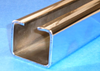
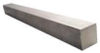
20 Lb. Ingot, 5 Lb. ingot, Shot ( Polished or Unpolished ), 1/2” Polished Cubes, 2” Cut Bars

Supplier's Site

Technical Specifications

  Belmont Metals, Inc.
Product Category Metal Shapes and Stock
Product Number 4884A
Product Name Navy G Bronze
Type Copper
Unlock Full Specs
to access all available technical data

Similar Products

Resistance Alloy - Alloy 127 - Isabellenhutte USA
Specs
Type Copper; Alloy; Miscellaneous Nonferrous Metal or Alloy
Features Corrosion Resistant
Processing, Temper & Finish Annealed; Enameled
View Details
Precision Thin Nickel Irons & Soft Magnetics -  - Arnold Magnetic Technologies
Specs
Type Nickel
Shape / Form Sheet; Semi-finished, Mill Stock or Near Net Shapes; Strip; Foil
Features Soft Magnetic Alloy
View Details
 - Nickel 201 - Wire - High Performance Alloys, Inc.
High Performance Alloys, Inc.
Specs
Type Nickel; Pure, Unalloyed or Very Low Alloy Additions; Miscellaneous Nonferrous Metal or Alloy
Shape / Form Profile or Structural Shape; Round Bar or Rod Stock; Semi-finished, Mill Stock or Near Net Shapes; Wire
Features Corrosion Resistant
View Details
Tungsten Heavy Alloy -  - MarsMetal
Specs
Type Refractory / Reactive; Tungsten
Processing, Temper & Finish Continuous, Centrifugal or Other Casting Process (optional feature)
Applications Aerospace or Aircraft Quality (optional feature); Automotive or Vehicular (optional feature); Armor / Ballistic Protection (optional feature); Nuclear (optional feature)
View Details