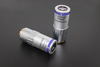
Avantier Inc. Microscope Objective Lens

Description
A microscope objective lens produces a real, magnified image of an object placed within the field of view. Before it is observed the image is then magnified again by the ocular lens, also known as the eyepiece. Avantier is a premier manufacturer of high performance microscope objective lenses, and we produce a wide range of quality microscope objectives for applications ranging from research to industry to forensics and medical diagnostics. We carry may types of objectives in stock, including apochromat objectives, achromatic objectives, and semi apochromat objectives. We can also produce custom objectives designed to work as desired in your target spectral range. Significance of the Microscope Objective Lens While a microscope is built of many parts, the cornerstone is in many ways the objective lens. The resolving power and total magnification power of the microscope as well as the quality of the final image all depend on the objective lens used. Objectives are designed to magnify an object by a certain coefficient; from 4x (a scanning objective) to 40x (a high power objective) up to 100x for an oil immersion lens. For ultimate flexibility, a microscope is often equipped with up to four objectives on a rotating nosepiece or turret. If an objective lens has infinity-correction the magnification is equal to the reference focal length divided by the focal length of the objective. The ultimate magnification power of a microscope can be calculated by multiplying the magnification power of the eyepiece by that of the objective lens. If an object is viewed through a 10x eyepiece and a 4x objective, the image produced will have been magnified 40x.
Request a Quote
Description
A microscope objective lens produces a real, magnified image of an object placed within the field of view. Before it is observed the image is then magnified again by the ocular lens, also known as the eyepiece. Avantier is a premier manufacturer of high performance microscope objective lenses, and we produce a wide range of quality microscope objectives for applications ranging from research to industry to forensics and medical diagnostics. We carry may types of objectives in stock, including apochromat objectives, achromatic objectives, and semi apochromat objectives. We can also produce custom objectives designed to work as desired in your target spectral range. Significance of the Microscope Objective Lens While a microscope is built of many parts, the cornerstone is in many ways the objective lens. The resolving power and total magnification power of the microscope as well as the quality of the final image all depend on the objective lens used. Objectives are designed to magnify an object by a certain coefficient; from 4x (a scanning objective) to 40x (a high power objective) up to 100x for an oil immersion lens. For ultimate flexibility, a microscope is often equipped with up to four objectives on a rotating nosepiece or turret. If an objective lens has infinity-correction the magnification is equal to the reference focal length divided by the focal length of the objective. The ultimate magnification power of a microscope can be calculated by multiplying the magnification power of the eyepiece by that of the objective lens. If an object is viewed through a 10x eyepiece and a 4x objective, the image produced will have been magnified 40x.
Request a Quote

Suppliers

Company
Product
Description
Supplier Links
Microscope Objective Lens -  - Avantier Inc.
North Plainfield, NJ, United States
Microscope Objective Lens
A microscope objective lens produces a real, magnified image of an object placed within the field of view. Before it is observed the image is then magnified again by the ocular lens, also known as the eyepiece. Avantier is a premier manufacturer of high performance microscope objective lenses, and we produce a wide range of quality microscope objectives for applications ranging from research to industry to forensics and medical diagnostics. We carry may types of objectives in stock, including apochromat objectives, achromatic objectives, and semi apochromat objectives. We can also produce custom objectives designed to work as desired in your target spectral range. Significance of the Microscope Objective Lens While a microscope is built of many parts, the cornerstone is in many ways the objective lens. The resolving power and total magnification power of the microscope as well as the quality of the final image all depend on the objective lens used. Objectives are designed to magnify an object by a certain coefficient; from 4x (a scanning objective) to 40x (a high power objective) up to 100x for an oil immersion lens. For ultimate flexibility, a microscope is often equipped with up to four objectives on a rotating nosepiece or turret. If an objective lens has infinity-correction the magnification is equal to the reference focal length divided by the focal length of the objective. The ultimate magnification power of a microscope can be calculated by multiplying the magnification power of the eyepiece by that of the objective lens. If an object is viewed through a 10x eyepiece and a 4x objective, the image produced will have been magnified 40x.

A microscope objective lens produces a real, magnified image of an object placed within the field of view. Before it is observed the image is then magnified again by the ocular lens, also known as the eyepiece.

Avantier is a premier manufacturer of high performance microscope objective lenses, and we produce a wide range of quality microscope objectives for applications ranging from research to industry to forensics and medical diagnostics. We carry may types of objectives in stock, including apochromat objectives, achromatic objectives, and semi apochromat objectives. We can also produce custom objectives designed to work as desired in your target spectral range.

Significance of the Microscope Objective Lens

While a microscope is built of many parts, the cornerstone is in many ways the objective lens. The resolving power and total magnification power of the microscope as well as the quality of the final image all depend on the objective lens used.

Objectives are designed to magnify an object by a certain coefficient; from 4x (a scanning objective) to 40x (a high power objective) up to 100x for an oil immersion lens. For ultimate flexibility, a microscope is often equipped with up to four objectives on a rotating nosepiece or turret. If an objective lens has infinity-correction the magnification is equal to the reference focal length divided by the focal length of the objective.

The ultimate magnification power of a microscope can be calculated by multiplying the magnification power of the eyepiece by that of the objective lens. If an object is viewed through a 10x eyepiece and a 4x objective, the image produced will have been magnified 40x.

Supplier's Site

Technical Specifications

  Avantier Inc.
Product Category Microscope Lenses and Objectives
Product Name Microscope Objective Lens
Lens Type Objective Lens
Unlock Full Specs
to access all available technical data
