Aurora Instruments Atomic Fluorescence Spectrometers

Description
Atomic fluorescence spectroscopy is a technique used in biochemical, medical, and chemical applications that require very high sensitivity as well as precision and accuracy. An atomic fluorescence spectrometer is capable of measuring samples containing both hydride forming elements (such as: Arsenic (As), Cadmium (Cd), Zinc (Zn), Bismuth (Bi), Selenium (Se), Tellurium (Te), Antimony (Sb), Tin (Sn), Germanium (Ge), and Lead (Pb)) as well as Mercury (Hg) at a parts per trillion (ppt) level using the unique vapour hydride generator. The high sensitivity and reliability of Aurora’s series of LUMINA 3300 Atomic Fluorescence Spectrometer is ideal for elemental analysis in a variety of research sectors. The technique behind atomic fluorescence spectroscopy is similar to atomic absorption spectrometry in that a sample absorbs light at a particular wavelength to promote its electrons from its ground electronic state into an excited state. From this excited electronic state, the electron drops down to a lower electronic state into one of several vibrational levels, emitting a photon in the process, with one of several frequencies. By measuring the intensity of the emitted light at particular frequencies, it is possible to determine the concentration of the element being measured. The technique behind the instrument has a great impact on many applications, especially those concerned with analysis of metals in biological samples, agricultural samples, water, and industrial oils. The vapour hydride generator in the LUMINA 3300 ensures a sensitive measurement on these hydride forming elements, of which mercury determination is the most common application. Mercury analysis is a critical component of several industries, including food and water safety, agriculture and environmental monitoring. Samples must be digested prior to analysis to ensure for accurate analyte measurement. This is preferably performed using a highly efficient acid-assisted microwave digestion system. The sample is then atomized (using either a quartz tube furnace with automatic ignition or Ar-H2 diffusion flame to reduce interference) and any free mercury atoms are excited by ultraviolet light emitted by the mercury hollow cathode lamp. Consequently, the excited atoms re-radiate the absorbed energy at particular frequencies which allows for quantification and analysis. This technique is sensitive and linear over a …
Description
Atomic fluorescence spectroscopy is a technique used in biochemical, medical, and chemical applications that require very high sensitivity as well as precision and accuracy. An atomic fluorescence spectrometer is capable of measuring samples containing both hydride forming elements (such as: Arsenic (As), Cadmium (Cd), Zinc (Zn), Bismuth (Bi), Selenium (Se), Tellurium (Te), Antimony (Sb), Tin (Sn), Germanium (Ge), and Lead (Pb)) as well as Mercury (Hg) at a parts per trillion (ppt) level using the unique vapour hydride generator. The high sensitivity and reliability of Aurora’s series of LUMINA 3300 Atomic Fluorescence Spectrometer is ideal for elemental analysis in a variety of research sectors. The technique behind atomic fluorescence spectroscopy is similar to atomic absorption spectrometry in that a sample absorbs light at a particular wavelength to promote its electrons from its ground electronic state into an excited state. From this excited electronic state, the electron drops down to a lower electronic state into one of several vibrational levels, emitting a photon in the process, with one of several frequencies. By measuring the intensity of the emitted light at particular frequencies, it is possible to determine the concentration of the element being measured. The technique behind the instrument has a great impact on many applications, especially those concerned with analysis of metals in biological samples, agricultural samples, water, and industrial oils. The vapour hydride generator in the LUMINA 3300 ensures a sensitive measurement on these hydride forming elements, of which mercury determination is the most common application. Mercury analysis is a critical component of several industries, including food and water safety, agriculture and environmental monitoring. Samples must be digested prior to analysis to ensure for accurate analyte measurement. This is preferably performed using a highly efficient acid-assisted microwave digestion system. The sample is then atomized (using either a quartz tube furnace with automatic ignition or Ar-H2 diffusion flame to reduce interference) and any free mercury atoms are excited by ultraviolet light emitted by the mercury hollow cathode lamp. Consequently, the excited atoms re-radiate the absorbed energy at particular frequencies which allows for quantification and analysis. This technique is sensitive and linear over a …

Suppliers

Company
Product
Description
Supplier Links
Atomic Fluorescence Spectrometers -  - Aurora Instruments
Vancouver, British Columbia, Canada
Atomic Fluorescence Spectrometers
Atomic fluorescence spectroscopy is a technique used in biochemical, medical, and chemical applications that require very high sensitivity as well as precision and accuracy. An atomic fluorescence spectrometer is capable of measuring samples containing both hydride forming elements (such as: Arsenic (As), Cadmium (Cd), Zinc (Zn), Bismuth (Bi), Selenium (Se), Tellurium (Te), Antimony (Sb), Tin (Sn), Germanium (Ge), and Lead (Pb)) as well as Mercury (Hg) at a parts per trillion (ppt) level using the unique vapour hydride generator. The high sensitivity and reliability of Aurora’s series of LUMINA 3300 Atomic Fluorescence Spectrometer is ideal for elemental analysis in a variety of research sectors. The technique behind atomic fluorescence spectroscopy is similar to atomic absorption spectrometry in that a sample absorbs light at a particular wavelength to promote its electrons from its ground electronic state into an excited state. From this excited electronic state, the electron drops down to a lower electronic state into one of several vibrational levels, emitting a photon in the process, with one of several frequencies. By measuring the intensity of the emitted light at particular frequencies, it is possible to determine the concentration of the element being measured. The technique behind the instrument has a great impact on many applications, especially those concerned with analysis of metals in biological samples, agricultural samples, water, and industrial oils. The vapour hydride generator in the LUMINA 3300 ensures a sensitive measurement on these hydride forming elements, of which mercury determination is the most common application. Mercury analysis is a critical component of several industries, including food and water safety, agriculture and environmental monitoring. Samples must be digested prior to analysis to ensure for accurate analyte measurement. This is preferably performed using a highly efficient acid-assisted microwave digestion system. The sample is then atomized (using either a quartz tube furnace with automatic ignition or Ar-H2 diffusion flame to reduce interference) and any free mercury atoms are excited by ultraviolet light emitted by the mercury hollow cathode lamp. Consequently, the excited atoms re-radiate the absorbed energy at particular frequencies which allows for quantification and analysis. This technique is sensitive and linear over a …

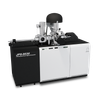
Atomic fluorescence spectroscopy is a technique used in biochemical, medical, and chemical applications that require very high sensitivity as well as precision and accuracy. An atomic fluorescence spectrometer is capable of measuring samples containing both hydride forming elements (such as: Arsenic (As), Cadmium (Cd), Zinc (Zn), Bismuth (Bi), Selenium (Se), Tellurium (Te), Antimony (Sb), Tin (Sn), Germanium (Ge), and Lead (Pb)) as well as Mercury (Hg) at a parts per trillion (ppt) level using the unique vapour hydride generator. The high sensitivity and reliability of Aurora’s series of LUMINA 3300 Atomic Fluorescence Spectrometer is ideal for elemental analysis in a variety of research sectors.

The technique behind atomic fluorescence spectroscopy is similar to atomic absorption spectrometry in that a sample absorbs light at a particular wavelength to promote its electrons from its ground electronic state into an excited state. From this excited electronic state, the electron drops down to a lower electronic state into one of several vibrational levels, emitting a photon in the process, with one of several frequencies. By measuring the intensity of the emitted light at particular frequencies, it is possible to determine the concentration of the element being measured. The technique behind the instrument has a great impact on many applications, especially those concerned with analysis of metals in biological samples, agricultural samples, water, and industrial oils.

The vapour hydride generator in the LUMINA 3300 ensures a sensitive measurement on these hydride forming elements, of which mercury determination is the most common application. Mercury analysis is a critical component of several industries, including food and water safety, agriculture and environmental monitoring. Samples must be digested prior to analysis to ensure for accurate analyte measurement. This is preferably performed using a highly efficient acid-assisted microwave digestion system. The sample is then atomized (using either a quartz tube furnace with automatic ignition or Ar-H2 diffusion flame to reduce interference) and any free mercury atoms are excited by ultraviolet light emitted by the mercury hollow cathode lamp. Consequently, the excited atoms re-radiate the absorbed energy at particular frequencies which allows for quantification and analysis. This technique is sensitive and linear over a …

Supplier's Site

Technical Specifications

  Aurora Instruments
Product Category X-Ray Fluorescence Spectrometers
Product Name Atomic Fluorescence Spectrometers
Unlock Full Specs
to access all available technical data

Similar Products

JPS-9030 Photoelectron Spectrometer -  - JEOL USA, Inc.
Specs
Detector Type multichannel plate
View Details
Handheld X-ray Fluorescence (XRF) Analyzer, Vanta Element -  - Evident Scientific
Specs
Excitation Source X-Ray Tubes
Display Digital Meter; Video
General Features Data Storage
View Details
Portable Oil Analysis System - FieldLab 58 - AMETEK Spectro Scientific
Specs
Detector Type SDD Detector
Excitation Source X-Ray Tubes
Analyzer Type Single Channel (optional feature); Multichannel (optional feature)
View Details