Cyril Bath Company Superplastic Forming Machines

Description
Superplastic Forming (SPF) Superplastic Forming is a process designed for sheet material allowing elongation of several hundred percent. Materials most commonly used with SPF: Aluminum alloys: 5083, 7475 Titanium alloys: Ti 6Al 4V Nickel Alloys: INCONEL 718 Click Here to watch the animation Superplastic Forming/Diffusion Bonding (SPF/DB) Diffusion bonding is a technique where, after heating, the materials are brought into contact under pressure for a certain amount of time. The process allows metallurgical bonding of homogeneous or heterogeneous materials. Hence, structures can be manufactured from two, three or four metal sheets. Hot Forming Process This technique is derived from the SPF forming process and features the advantage of being used for conventional aluminum alloys. The elongation values, while less then those of the SPF process, may be as high as 100 to 150%. Interest and advantages of SPF and SPF/DB The benefits of SPF increases with the complexity of the parts to be made Compared with conventional technologies, SPF offers cost savings in the range of 20-30% Typical SPF applications Titanium alloys Hot parts around engines hot air sections: pylon panels, nacelle panels, piping components... Turbine engine components: air intake, compressor ducts... Hot parts around engines: heat shields... Typical SPF/DB applications Titanium alloys Hot parts around engines or handling hot air: pylon panels, nacelle panels, wing access panels and turbine engine components and fan blades Hot parts around engines: heat shields... High-loaded aerodynamic parts: leading edges

Suppliers

Company
Product
Description
Supplier Links
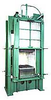
Superplastic Forming Machines -  - Cyril Bath Company
Monroe, NC, USA
Superplastic Forming Machines
Superplastic Forming (SPF) Superplastic Forming is a process designed for sheet material allowing elongation of several hundred percent. Materials most commonly used with SPF: Aluminum alloys: 5083, 7475 Titanium alloys: Ti 6Al 4V Nickel Alloys: INCONEL 718 Click Here to watch the animation Superplastic Forming/Diffusion Bonding (SPF/DB) Diffusion bonding is a technique where, after heating, the materials are brought into contact under pressure for a certain amount of time. The process allows metallurgical bonding of homogeneous or heterogeneous materials. Hence, structures can be manufactured from two, three or four metal sheets. Hot Forming Process This technique is derived from the SPF forming process and features the advantage of being used for conventional aluminum alloys. The elongation values, while less then those of the SPF process, may be as high as 100 to 150%. Interest and advantages of SPF and SPF/DB The benefits of SPF increases with the complexity of the parts to be made Compared with conventional technologies, SPF offers cost savings in the range of 20-30% Typical SPF applications Titanium alloys Hot parts around engines hot air sections: pylon panels, nacelle panels, piping components... Turbine engine components: air intake, compressor ducts... Hot parts around engines: heat shields... Typical SPF/DB applications Titanium alloys Hot parts around engines or handling hot air: pylon panels, nacelle panels, wing access panels and turbine engine components and fan blades Hot parts around engines: heat shields... High-loaded aerodynamic parts: leading edges

Superplastic Forming (SPF)

  • Superplastic Forming is a process designed for sheet material allowing elongation of several hundred percent.
  • Materials most commonly used with SPF:
    Aluminum alloys: 5083, 7475
    Titanium alloys: Ti 6Al 4V
    Nickel Alloys: INCONEL 718

Click Here to watch the animation

Superplastic Forming/Diffusion Bonding (SPF/DB)

  • Diffusion bonding is a technique where, after heating, the materials are brought into contact under pressure for a certain amount of time. The process allows metallurgical bonding of homogeneous or heterogeneous materials. Hence, structures can be manufactured from two, three or four metal sheets.

Hot Forming Process

  • This technique is derived from the SPF forming process and features the advantage of being used for conventional aluminum alloys. The elongation values, while less then those of the SPF process, may be as high as 100 to 150%.

Interest and advantages of SPF and SPF/DB

  • The benefits of SPF increases with the complexity of the parts to be made
  • Compared with conventional technologies, SPF offers cost savings in the range of 20-30%

Typical SPF applications

  • Titanium alloys
      • Hot parts around engines hot air sections: pylon panels, nacelle panels, piping components...
      • Turbine engine components: air intake, compressor ducts...
      • Hot parts around engines: heat shields...

Typical SPF/DB applications

Titanium alloys

  • Hot parts around engines or handling hot air: pylon panels, nacelle panels, wing access panels and turbine engine components and fan blades
  • Hot parts around engines: heat shields...
  • High-loaded aerodynamic parts: leading edges
Supplier's Site

Technical Specifications

  Cyril Bath Company
Product Category Superplastic Forming Machines
Product Name Superplastic Forming Machines
Unlock Full Specs
to access all available technical data

Similar Products