ACCES I/O Products, Inc. ISA Bus Isolated Digital Input Card IDI-32BC

Description
Features Individually-isolate d digital inputs for up to three 16-bit groups Polarity-protected input voltage amplitudes to 28V and 60V 60Vrms Isolation, Channel-to-Channel and Channel-to-Host PC On-card shields prevent accidental contact with user voltages Some models can generate interrupts when input bits change state. Output connectors via on-card ribbon-cable headers Lower cost per point than externally-racked solid-state relay modules IDI-xx Series cards provide individual-input optical isolation and accept as many as 48 parallel, differential digital inputs at voltages up to 60 VDC. Protection circuits are included in case of accidental polarity reversal of input connections. These cards provide a much lower cost per point than externally-mounted, optically-isolated, solid-state modules or PLC's. Input connections are via ribbon-cable headers on the cards and a tie-down bar is included to provide strain relief for those cables. IDI-Series cards are especially useful in applications where high common mode external voltages are present as found in factory automation, energy management, security systems, and process monitoring applications. In addition to protecting your computer from accidental contact with high external voltages, this isolation eliminates troublesome ground loops. If your installation will be in an electrically noisy area, then you may want to consider using a protective jacket on the ribbon cables. We optionally offer "Zippertubing" shielded protective jackets. (These are referred to as ZTR-xx on our price list.) The jacket uses 10-mil. high temperature PVC material laminated to a 1-mil. shield of aluminum foil/polyester and groundable through a tinned copper braid. 48-Bit, 32-Bit, and 16-Bit versions are available. The latter two models are de-populated versions of the 48-bit card. Further, letters are appended to the model numbers to signify options included in the card. (See table) Model Number of Bits Maximum Input Voltage Change of State Interrupt Capability IDI-16A 16 28 V No IDI-16AC 16 28 V Yes IDI-16B 16 60 V No IDI-16BC 16 60 V Yes IDI-32A 32 28 V No IDI-32AC 32 28 V Yes IDI-32B 32 60 V No IDI-32BC 32 60 V Yes IDI-48A 48 28 V No IDI-48AC 48 28 V Yes IDI-48B 48 60 V No IDI-48BC 48 60 V Yes Optional change-of-state detection capability provides means to automatically interrupt the host computer in real time. When activated, latched interrupt requests can be generated when one or more bits change state. That interrupt, in turn, can be used by your application program to poll the inputs, then signal an alarm, and/or initiate scan of other I/O points that have not been previously activated. This can greatly simplify your application program and eliminate need for the application program to continuously poll inputs. Interrupts IRQ 2 through 7, 10-12, and 14-15 can be selected by jumper installation on the card. An on-board microcontroller on "C"-version cards provides capability for a variety of modes of operation as follows: Channels 0-15 active only. Channels 16-31 active. Channels 32-47 active. Change-of-state interrupt active on channels 0-15. Change-of-state interrupt active on channels 16-31. Change-of-state interrupt active on channels 32-47. Periodic scan of all active input channels. That last operation mode can occur concurrently with Change-of-State operations. It makes use of an on-board crystal oscillator and a microcontroller and provides means to verify proper system operation, on a timed basis. This is useful in situations where there has not been any bit state changes for an extended period of time and you wish to confirm that the system is still operating properly.
Description
Features Individually-isolate d digital inputs for up to three 16-bit groups Polarity-protected input voltage amplitudes to 28V and 60V 60Vrms Isolation, Channel-to-Channel and Channel-to-Host PC On-card shields prevent accidental contact with user voltages Some models can generate interrupts when input bits change state. Output connectors via on-card ribbon-cable headers Lower cost per point than externally-racked solid-state relay modules IDI-xx Series cards provide individual-input optical isolation and accept as many as 48 parallel, differential digital inputs at voltages up to 60 VDC. Protection circuits are included in case of accidental polarity reversal of input connections. These cards provide a much lower cost per point than externally-mounted, optically-isolated, solid-state modules or PLC's. Input connections are via ribbon-cable headers on the cards and a tie-down bar is included to provide strain relief for those cables. IDI-Series cards are especially useful in applications where high common mode external voltages are present as found in factory automation, energy management, security systems, and process monitoring applications. In addition to protecting your computer from accidental contact with high external voltages, this isolation eliminates troublesome ground loops. If your installation will be in an electrically noisy area, then you may want to consider using a protective jacket on the ribbon cables. We optionally offer "Zippertubing" shielded protective jackets. (These are referred to as ZTR-xx on our price list.) The jacket uses 10-mil. high temperature PVC material laminated to a 1-mil. shield of aluminum foil/polyester and groundable through a tinned copper braid. 48-Bit, 32-Bit, and 16-Bit versions are available. The latter two models are de-populated versions of the 48-bit card. Further, letters are appended to the model numbers to signify options included in the card. (See table) Model Number of Bits Maximum Input Voltage Change of State Interrupt Capability IDI-16A 16 28 V No IDI-16AC 16 28 V Yes IDI-16B 16 60 V No IDI-16BC 16 60 V Yes IDI-32A 32 28 V No IDI-32AC 32 28 V Yes IDI-32B 32 60 V No IDI-32BC 32 60 V Yes IDI-48A 48 28 V No IDI-48AC 48 28 V Yes IDI-48B 48 60 V No IDI-48BC 48 60 V Yes Optional change-of-state detection capability provides means to automatically interrupt the host computer in real time. When activated, latched interrupt requests can be generated when one or more bits change state. That interrupt, in turn, can be used by your application program to poll the inputs, then signal an alarm, and/or initiate scan of other I/O points that have not been previously activated. This can greatly simplify your application program and eliminate need for the application program to continuously poll inputs. Interrupts IRQ 2 through 7, 10-12, and 14-15 can be selected by jumper installation on the card. An on-board microcontroller on "C"-version cards provides capability for a variety of modes of operation as follows: Channels 0-15 active only. Channels 16-31 active. Channels 32-47 active. Change-of-state interrupt active on channels 0-15. Change-of-state interrupt active on channels 16-31. Change-of-state interrupt active on channels 32-47. Periodic scan of all active input channels. That last operation mode can occur concurrently with Change-of-State operations. It makes use of an on-board crystal oscillator and a microcontroller and provides means to verify proper system operation, on a timed basis. This is useful in situations where there has not been any bit state changes for an extended period of time and you wish to confirm that the system is still operating properly.

Suppliers

Company
Product
Description
Supplier Links
ISA Bus Isolated Digital Input Card - IDI-32BC - ACCES I/O Products, Inc.
San Diego, CA, USA
ISA Bus Isolated Digital Input Card
IDI-32BC
ISA Bus Isolated Digital Input Card IDI-32BC
Features Individually-isolate d digital inputs for up to three 16-bit groups Polarity-protected input voltage amplitudes to 28V and 60V 60Vrms Isolation, Channel-to-Channel and Channel-to-Host PC On-card shields prevent accidental contact with user voltages Some models can generate interrupts when input bits change state. Output connectors via on-card ribbon-cable headers Lower cost per point than externally-racked solid-state relay modules IDI-xx Series cards provide individual-input optical isolation and accept as many as 48 parallel, differential digital inputs at voltages up to 60 VDC. Protection circuits are included in case of accidental polarity reversal of input connections. These cards provide a much lower cost per point than externally-mounted, optically-isolated, solid-state modules or PLC's. Input connections are via ribbon-cable headers on the cards and a tie-down bar is included to provide strain relief for those cables. IDI-Series cards are especially useful in applications where high common mode external voltages are present as found in factory automation, energy management, security systems, and process monitoring applications. In addition to protecting your computer from accidental contact with high external voltages, this isolation eliminates troublesome ground loops. If your installation will be in an electrically noisy area, then you may want to consider using a protective jacket on the ribbon cables. We optionally offer "Zippertubing" shielded protective jackets. (These are referred to as ZTR-xx on our price list.) The jacket uses 10-mil. high temperature PVC material laminated to a 1-mil. shield of aluminum foil/polyester and groundable through a tinned copper braid. 48-Bit, 32-Bit, and 16-Bit versions are available. The latter two models are de-populated versions of the 48-bit card. Further, letters are appended to the model numbers to signify options included in the card. (See table) Model Number of Bits Maximum Input Voltage Change of State Interrupt Capability IDI-16A 16 28 V No IDI-16AC 16 28 V Yes IDI-16B 16 60 V No IDI-16BC 16 60 V Yes IDI-32A 32 28 V No IDI-32AC 32 28 V Yes IDI-32B 32 60 V No IDI-32BC 32 60 V Yes IDI-48A 48 28 V No IDI-48AC 48 28 V Yes IDI-48B 48 60 V No IDI-48BC 48 60 V Yes Optional change-of-state detection capability provides means to automatically interrupt the host computer in real time. When activated, latched interrupt requests can be generated when one or more bits change state. That interrupt, in turn, can be used by your application program to poll the inputs, then signal an alarm, and/or initiate scan of other I/O points that have not been previously activated. This can greatly simplify your application program and eliminate need for the application program to continuously poll inputs. Interrupts IRQ 2 through 7, 10-12, and 14-15 can be selected by jumper installation on the card. An on-board microcontroller on "C"-version cards provides capability for a variety of modes of operation as follows: Channels 0-15 active only. Channels 16-31 active. Channels 32-47 active. Change-of-state interrupt active on channels 0-15. Change-of-state interrupt active on channels 16-31. Change-of-state interrupt active on channels 32-47. Periodic scan of all active input channels. That last operation mode can occur concurrently with Change-of-State operations. It makes use of an on-board crystal oscillator and a microcontroller and provides means to verify proper system operation, on a timed basis. This is useful in situations where there has not been any bit state changes for an extended period of time and you wish to confirm that the system is still operating properly.

Features

  • Individually-isolated digital inputs for up to three 16-bit groups
  • Polarity-protected input voltage amplitudes to 28V and 60V
  • 60Vrms Isolation, Channel-to-Channel and Channel-to-Host PC
  • On-card shields prevent accidental contact with user voltages
  • Some models can generate interrupts when input bits change state.
  • Output connectors via on-card ribbon-cable headers
  • Lower cost per point than externally-racked solid-state relay modules

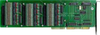
IDI-xx Series cards provide individual-input optical isolation and accept as many as 48 parallel, differential digital inputs at voltages up to 60 VDC. Protection circuits are included in case of accidental polarity reversal of input connections. These cards provide a much lower cost per point than externally-mounted, optically-isolated, solid-state modules or PLC's. Input connections are via ribbon-cable headers on the cards and a tie-down bar is included to provide strain relief for those cables. IDI-Series cards are especially useful in applications where high common mode external voltages are present as found in factory automation, energy management, security systems, and process monitoring applications. In addition to protecting your computer from accidental contact with high external voltages, this isolation eliminates troublesome ground loops.

If your installation will be in an electrically noisy area, then you may want to consider using a protective jacket on the ribbon cables. We optionally offer "Zippertubing" shielded protective jackets. (These are referred to as ZTR-xx on our price list.) The jacket uses 10-mil. high temperature PVC material laminated to a 1-mil. shield of aluminum foil/polyester and groundable through a tinned copper braid.

48-Bit, 32-Bit, and 16-Bit versions are available. The latter two models are de-populated versions of the 48-bit card. Further, letters are appended to the model numbers to signify options included in the card. (See table)

ModelNumber of BitsMaximum Input VoltageChange of State Interrupt Capability
IDI-16A1628 VNo
IDI-16AC1628 VYes
IDI-16B1660 VNo
IDI-16BC1660 VYes
IDI-32A3228 VNo
IDI-32AC3228 VYes
IDI-32B3260 VNo
IDI-32BC3260 VYes
IDI-48A4828 VNo
IDI-48AC4828 VYes
IDI-48B4860 VNo
IDI-48BC4860 VYes

Optional change-of-state detection capability provides means to automatically interrupt the host computer in real time. When activated, latched interrupt requests can be generated when one or more bits change state. That interrupt, in turn, can be used by your application program to poll the inputs, then signal an alarm, and/or initiate scan of other I/O points that have not been previously activated. This can greatly simplify your application program and eliminate need for the application program to continuously poll inputs. Interrupts IRQ 2 through 7, 10-12, and 14-15 can be selected by jumper installation on the card. An on-board microcontroller on "C"-version cards provides capability for a variety of modes of operation as follows:

  • Channels 0-15 active only.
  • Channels 16-31 active.
  • Channels 32-47 active.
  • Change-of-state interrupt active on channels 0-15.
  • Change-of-state interrupt active on channels 16-31.
  • Change-of-state interrupt active on channels 32-47.
  • Periodic scan of all active input channels.

That last operation mode can occur concurrently with Change-of-State operations. It makes use of an on-board crystal oscillator and a microcontroller and provides means to verify proper system operation, on a timed basis. This is useful in situations where there has not been any bit state changes for an extended period of time and you wish to confirm that the system is still operating properly.

Supplier's Site

Technical Specifications

  ACCES I/O Products, Inc.
Product Category Data Acquisition
Product Number IDI-32BC
Product Name ISA Bus Isolated Digital Input Card
Data Acquisition Input Module
Form Factor PC Board
User Interface Computer Programmable
Host Connection Direct Backplane Interface
Application General Lab & Industrial
Unlock Full Specs
to access all available technical data

Similar Products

Data Acquisition (DAQ) - MI-7208 - ECON Technologies Co.,Ltd
ECON Technologies Co.,Ltd
Specs
Data Acquisition DAQ Instrument; Input Module; Output Module; Input/Output Module
Sampling Frequency 205 kHz
Resolution 24 bits
View Details
iba Bus Monitors for Field and Drive Buses - ibaBM-DP - iba America LLC
Specs
Form Factor DIN Rail
Host Connection 2 x 9-pin D-Sub connector
Application General Lab & Industrial
View Details
 - LXI Standard for Ethernet Testing Instruments & DAQ Systems, EX1400 Family - AMETEK Programmable Power
Specs
Data Acquisition DAQ Instrument
Host Connection Ethernet
Analog Channels 16 #
View Details
G-Logger™ Data Acquistion System - SDI 3340 - Silicon Designs, Inc.
Specs
Data Acquisition DAQ Instrument; Datalogger
Form Factor Stand-alone
Host Connection USB; 25 Pin Female D-Sub
View Details