Additional Properties
Hydrolytic Sensitivity 7: reacts slowly with moisture/water Application Review of synthetic utility.1 Converts unsaturated alcohols to diols.2 Converts homopropargylic alcohols to ?-hydroxy ketones in a three-step process.3 Employed in the silylation/hydrosily
lation of allylic alcohols leading to useful cyclic alkoxysilane intermediates.4 Reference 1. Handbook of Reagents for Organic Synthesis, Reagents for Silicon-Mediated Organic Synthesis, Fuchs, P. L. Ed., John Wiley and Sons, Ltd., 2011, p. 488-490. 2. Tamao, K. et al. J. Am. Chem. Soc. 1988, 110, 3712. 3. Marshall, J. A.; Yanik, M.W. Org. Lett. 2000, 2, 2173. 4. Tamao, K. et al. J. Am. Chem. Soc. 1986, 108, 6090. Safety
Packaging Under Nitrogen ALD Material Atomic layer deposition (ALD) is a chemically self-limiting deposition technique that is based on the sequential use of a gaseous chemical process. A thin film (as fine as -0.1 Å per cycle) results from repeating the deposition sequence as many times as needed to reach a certain thickness. The major characteristic of the films is the resulting conformality and the controlled deposition manner. Precursor selection is key in ALD processes, namely finding molecules which will have enough reactivity to produce the desired films yet are stable enough to be handled and safely delivered to the reaction chamber. 1,1,3,3-Tetramethyld
isilazane; Bis(dimethylsilyl)am
ine; TMDS; TMDZ
Forms dimethylsilyl ethers with greater volatility than trimethylsilyl ethers
Converts unsaturated alcohols to diols
Converts homopropargylic alcohols to ?-hydroxy ketones in a three-step process
Employed in the silylation/hydrosily
lation of allylic alcohols leading to useful cyclic alkoxysilane intermediates
Gelest, Inc.
Done
Datasheet
Description
Additional Properties
Hydrolytic Sensitivity 7: reacts slowly with moisture/water Application Review of synthetic utility.1 Converts unsaturated alcohols to diols.2 Converts homopropargylic alcohols to ?-hydroxy ketones in a three-step process.3 Employed in the silylation/hydrosily
lation of allylic alcohols leading to useful cyclic alkoxysilane intermediates.4 Reference 1. Handbook of Reagents for Organic Synthesis, Reagents for Silicon-Mediated Organic Synthesis, Fuchs, P. L. Ed., John Wiley and Sons, Ltd., 2011, p. 488-490. 2. Tamao, K. et al. J. Am. Chem. Soc. 1988, 110, 3712. 3. Marshall, J. A.; Yanik, M.W. Org. Lett. 2000, 2, 2173. 4. Tamao, K. et al. J. Am. Chem. Soc. 1986, 108, 6090. Safety
Packaging Under Nitrogen ALD Material Atomic layer deposition (ALD) is a chemically self-limiting deposition technique that is based on the sequential use of a gaseous chemical process. A thin film (as fine as -0.1 Å per cycle) results from repeating the deposition sequence as many times as needed to reach a certain thickness. The major characteristic of the films is the resulting conformality and the controlled deposition manner. Precursor selection is key in ALD processes, namely finding molecules which will have enough reactivity to produce the desired films yet are stable enough to be handled and safely delivered to the reaction chamber. 1,1,3,3-Tetramethyld
isilazane; Bis(dimethylsilyl)am
ine; TMDS; TMDZ
Forms dimethylsilyl ethers with greater volatility than trimethylsilyl ethers
Converts unsaturated alcohols to diols
Converts homopropargylic alcohols to ?-hydroxy ketones in a three-step process
Employed in the silylation/hydrosily
lation of allylic alcohols leading to useful cyclic alkoxysilane intermediates
Additional Properties
Hydrolytic Sensitivity 7: reacts slowly with moisture/water Application Review of synthetic utility.1 Converts unsaturated alcohols to diols.2 Converts homopropargylic alcohols to ?-hydroxy ketones in a three-step process.3 Employed in the silylation/hydrosily
lation of allylic alcohols leading to useful cyclic alkoxysilane intermediates.4 Reference 1. Handbook of Reagents for Organic Synthesis, Reagents for Silicon-Mediated Organic Synthesis, Fuchs, P. L. Ed., John Wiley and Sons, Ltd., 2011, p. 488-490. 2. Tamao, K. et al. J. Am. Chem. Soc. 1988, 110, 3712. 3. Marshall, J. A.; Yanik, M.W. Org. Lett. 2000, 2, 2173. 4. Tamao, K. et al. J. Am. Chem. Soc. 1986, 108, 6090. Safety
Packaging Under Nitrogen ALD Material Atomic layer deposition (ALD) is a chemically self-limiting deposition technique that is based on the sequential use of a gaseous chemical process. A thin film (as fine as -0.1 Å per cycle) results from repeating the deposition sequence as many times as needed to reach a certain thickness. The major characteristic of the films is the resulting conformality and the controlled deposition manner. Precursor selection is key in ALD processes, namely finding molecules which will have enough reactivity to produce the desired films yet are stable enough to be handled and safely delivered to the reaction chamber. 1,1,3,3-Tetramethyld
isilazane; Bis(dimethylsilyl)am
ine; TMDS; TMDZ
Forms dimethylsilyl ethers with greater volatility than trimethylsilyl ethers
Converts unsaturated alcohols to diols
Converts homopropargylic alcohols to ?-hydroxy ketones in a three-step process
Employed in the silylation/hydrosily
lation of allylic alcohols leading to useful cyclic alkoxysilane intermediates
Additional Properties
Hydrolytic Sensitivity 7: reacts slowly with moisture/water
Application
Review of synthetic utility.1 Converts unsaturated alcohols to diols.2 Converts homopropargylic alcohols to ?-hydroxy ketones in a three-step process.3 Employed in the silylation/hydrosilylation of allylic alcohols leading to useful cyclic alkoxysilane intermediates.4
Reference
1. Handbook of Reagents for Organic Synthesis, Reagents for Silicon-Mediated Organic Synthesis, Fuchs, P. L. Ed., John Wiley and Sons, Ltd., 2011, p. 488-490. 2. Tamao, K. et al. J. Am. Chem. Soc. 1988, 110, 3712. 3. Marshall, J. A.; Yanik, M.W. Org. Lett. 2000, 2, 2173. 4. Tamao, K. et al. J. Am. Chem. Soc. 1986, 108, 6090.
Safety
Packaging Under Nitrogen
ALD Material
Atomic layer deposition (ALD) is a chemically self-limiting deposition technique that is based on the sequential use of a gaseous chemical process. A thin film (as fine as -0.1 Å per cycle) results from repeating the deposition sequence as many times as needed to reach a certain thickness. The major characteristic of the films is the resulting conformality and the controlled deposition manner. Precursor selection is key in ALD processes, namely finding molecules which will have enough reactivity to produce the desired films yet are stable enough to be handled and safely delivered to the reaction chamber.
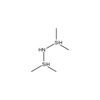
1,1,3,3-Tetramethyldisilazane; Bis(dimethylsilyl)amine; TMDS; TMDZ
Forms dimethylsilyl ethers with greater volatility than trimethylsilyl ethers
Converts unsaturated alcohols to diols
Converts homopropargylic alcohols to ?-hydroxy ketones in a three-step process
Employed in the silylation/hydrosilylation of allylic alcohols leading to useful cyclic alkoxysilane intermediates


![[(5-BICYCLO[2.2.1]HEPT-2-ENYL)ETHYL]METHYLDICHLOROSILANE, tech, endo/exo isomers - SIB0984.0 - Gelest, Inc.](https://partimages.globalspec.com/46/4396/8314396_medium.png)

