Gelest, Inc. METHACRYLOXYPROPYLTRIMETHOXYSILANE SIM6487.4

Description
Additional Properties Hydrolytic Sensitivity 7: reacts slowly with moisture/water Application Widely used coupling agent for unsaturated polyester-fiberglass composites.1 Copolymerized with styrene in formation of sol-gel composites.2 Employed in dental polymer composites.3 Reference 1. Arkles, B. Chemtech 1977, 7, 713. 2. Wei, Y. et al. J. Mater. Res. 1993, 8, 1143. 3. Matinlinna, J. et al. Int. J. Prosthodontics 2004, 17, 157. Safety Hazard Info oral rat, LD50: 3,000 mg/kg Packaging Under Nitrogen Store Cold Methacrylate Functional Trialkoxy Silane Silane coupling agents have the ability to form a durable bond between organic and inorganic materials to generate desired heterogeneous environments or to incorporate the bulk properties of different phases into a uniform composite structure. The general formula has two classes of functionality. The hydrolyzable group forms stable condensation products with siliceous surfaces and other oxides such as those of aluminum, zirconium, tin, titanium, and nickel. The organofunctional group alters the wetting or adhesion characteristics of the substrate, utilizes the substrate to catalyze chemical transformations at the heterogeneous interface, orders the interfacial region, or modifies its partition characteristics, and significantly effects the covalent bond between organic and inorganic materials. Methacryloxypropyltr imethoxysilane, 3-(Trimethoxysilyl)p ropyl methacrylate, MEMO Viscosity: 2 cSt Specific wetting surface: 314 m2/g Copolymerization parameters-e, Q: 0.07, 2.7 Coupling agent for radical cure polymer systems and UV cure systems Widely used in unsaturated polyester-fiberglass composites Copolymerized with styrene in formation of sol-gel composites Analog of (3-acryloxypropyl)tr imethoxysilane (SIA0200.0) Used in microparticle surface modification and dental polymer composites Slower hydrolysis rate than methacryloxymethyltr imethoxysilane (SIM6483.0) Comonomer for free-radical polymerizaiton Determined by TGA a 25% weight loss of dried hydrolysates at 395° Inhibited with MEHQ, HQ
Datasheet
Description
Additional Properties Hydrolytic Sensitivity 7: reacts slowly with moisture/water Application Widely used coupling agent for unsaturated polyester-fiberglass composites.1 Copolymerized with styrene in formation of sol-gel composites.2 Employed in dental polymer composites.3 Reference 1. Arkles, B. Chemtech 1977, 7, 713. 2. Wei, Y. et al. J. Mater. Res. 1993, 8, 1143. 3. Matinlinna, J. et al. Int. J. Prosthodontics 2004, 17, 157. Safety Hazard Info oral rat, LD50: 3,000 mg/kg Packaging Under Nitrogen Store Cold Methacrylate Functional Trialkoxy Silane Silane coupling agents have the ability to form a durable bond between organic and inorganic materials to generate desired heterogeneous environments or to incorporate the bulk properties of different phases into a uniform composite structure. The general formula has two classes of functionality. The hydrolyzable group forms stable condensation products with siliceous surfaces and other oxides such as those of aluminum, zirconium, tin, titanium, and nickel. The organofunctional group alters the wetting or adhesion characteristics of the substrate, utilizes the substrate to catalyze chemical transformations at the heterogeneous interface, orders the interfacial region, or modifies its partition characteristics, and significantly effects the covalent bond between organic and inorganic materials. Methacryloxypropyltr imethoxysilane, 3-(Trimethoxysilyl)p ropyl methacrylate, MEMO Viscosity: 2 cSt Specific wetting surface: 314 m2/g Copolymerization parameters-e, Q: 0.07, 2.7 Coupling agent for radical cure polymer systems and UV cure systems Widely used in unsaturated polyester-fiberglass composites Copolymerized with styrene in formation of sol-gel composites Analog of (3-acryloxypropyl)tr imethoxysilane (SIA0200.0) Used in microparticle surface modification and dental polymer composites Slower hydrolysis rate than methacryloxymethyltr imethoxysilane (SIM6483.0) Comonomer for free-radical polymerizaiton Determined by TGA a 25% weight loss of dried hydrolysates at 395° Inhibited with MEHQ, HQ
Datasheet

Suppliers

Company
Product
Description
Supplier Links
METHACRYLOXYPROPYLTRIMETHOXYSILANE - SIM6487.4 - Gelest, Inc.
Morrisville, PA, United States
METHACRYLOXYPROPYLTRIMETHOXYSILANE
SIM6487.4
METHACRYLOXYPROPYLTRIMETHOXYSILANE SIM6487.4
Additional Properties Hydrolytic Sensitivity 7: reacts slowly with moisture/water Application Widely used coupling agent for unsaturated polyester-fiberglass composites.1 Copolymerized with styrene in formation of sol-gel composites.2 Employed in dental polymer composites.3 Reference 1. Arkles, B. Chemtech 1977, 7, 713. 2. Wei, Y. et al. J. Mater. Res. 1993, 8, 1143. 3. Matinlinna, J. et al. Int. J. Prosthodontics 2004, 17, 157. Safety Hazard Info oral rat, LD50: 3,000 mg/kg Packaging Under Nitrogen Store Cold Methacrylate Functional Trialkoxy Silane Silane coupling agents have the ability to form a durable bond between organic and inorganic materials to generate desired heterogeneous environments or to incorporate the bulk properties of different phases into a uniform composite structure. The general formula has two classes of functionality. The hydrolyzable group forms stable condensation products with siliceous surfaces and other oxides such as those of aluminum, zirconium, tin, titanium, and nickel. The organofunctional group alters the wetting or adhesion characteristics of the substrate, utilizes the substrate to catalyze chemical transformations at the heterogeneous interface, orders the interfacial region, or modifies its partition characteristics, and significantly effects the covalent bond between organic and inorganic materials. Methacryloxypropyltr imethoxysilane, 3-(Trimethoxysilyl)p ropyl methacrylate, MEMO Viscosity: 2 cSt Specific wetting surface: 314 m2/g Copolymerization parameters-e, Q: 0.07, 2.7 Coupling agent for radical cure polymer systems and UV cure systems Widely used in unsaturated polyester-fiberglass composites Copolymerized with styrene in formation of sol-gel composites Analog of (3-acryloxypropyl)tr imethoxysilane (SIA0200.0) Used in microparticle surface modification and dental polymer composites Slower hydrolysis rate than methacryloxymethyltr imethoxysilane (SIM6483.0) Comonomer for free-radical polymerizaiton Determined by TGA a 25% weight loss of dried hydrolysates at 395° Inhibited with MEHQ, HQ

Additional Properties


  • Hydrolytic Sensitivity 7: reacts slowly with moisture/water
    Application
    Widely used coupling agent for unsaturated polyester-fiberglass composites.1 Copolymerized with styrene in formation of sol-gel composites.2 Employed in dental polymer composites.3
    Reference
    1. Arkles, B. Chemtech 1977, 7, 713. 2. Wei, Y. et al. J. Mater. Res. 1993, 8, 1143. 3. Matinlinna, J. et al. Int. J. Prosthodontics 2004, 17, 157.
    Safety
  • Hazard Info oral rat, LD50: 3,000 mg/kg
  • Packaging Under Nitrogen
  • Store Cold
    Methacrylate Functional Trialkoxy Silane
    Silane coupling agents have the ability to form a durable bond between organic and inorganic materials to generate desired heterogeneous environments or to incorporate the bulk properties of different phases into a uniform composite structure. The general formula has two classes of functionality. The hydrolyzable group forms stable condensation products with siliceous surfaces and other oxides such as those of aluminum, zirconium, tin, titanium, and nickel. The organofunctional group alters the wetting or adhesion characteristics of the substrate, utilizes the substrate to catalyze chemical transformations at the heterogeneous interface, orders the interfacial region, or modifies its partition characteristics, and significantly effects the covalent bond between organic and inorganic materials.
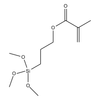
    Methacryloxypropyltrimethoxysilane, 3-(Trimethoxysilyl)propyl methacrylate, MEMO
  • Viscosity: 2 cSt
  • Specific wetting surface: 314 m2/g
  • Copolymerization parameters-e, Q: 0.07, 2.7
  • Coupling agent for radical cure polymer systems and UV cure systems
  • Widely used in unsaturated polyester-fiberglass composites
  • Copolymerized with styrene in formation of sol-gel composites
  • Analog of (3-acryloxypropyl)trimethoxysilane (SIA0200.0)
  • Used in microparticle surface modification and dental polymer composites
  • Slower hydrolysis rate than methacryloxymethyltrimethoxysilane (SIM6483.0)
  • Comonomer for free-radical polymerizaiton
  • Determined by TGA a 25% weight loss of dried hydrolysates at 395°
  • Inhibited with MEHQ, HQ
Supplier's Site Datasheet

Technical Specifications

  Gelest, Inc.
Product Category Inorganic Chemicals and Compounds
Product Number SIM6487.4
Product Name METHACRYLOXYPROPYLTRIMETHOXYSILANE
Chemical Formula C 1 0 H 2 0 O 5 Si
Unlock Full Specs
to access all available technical data

Similar Products

pH Buffer 4.01 - 238217 - Hamilton Company
Hamilton Company
Specs
Type Other; Buffer
Chemical Name Potassium Hydrogen Phthalate
Chemical Formula KHC8H4O4
View Details
Specialty Inorganic Chemicals - CIGS -  - Materion Corporation
Specs
Type Bio-Inorganic Compounds
State of Matter Powders; Evaporation Sources, Sputtering Targets
View Details
(3-GLYCIDOXYPROPYL)DIMETHYLETHOXYSILANE - SIG5825.0 - Gelest, Inc.
Specs
Chemical Formula C 1 0 H 2 2 O 3 Si
CAS Number 17963-04-1
Flash Point 189 F (87 C)
View Details