Gelest, Inc. DIISOPROPYLDICHLOROSILANE SID3537.0

Description
Additional Properties Hydrolytic Sensitivity 8: reacts rapidly with moisture, water, protic solvents Application Review of synthetic utility.1 Forms bis(blocked) or tethered alcohols.2,3 Used as tether in ring-closing-metathe sis (RCM) reaction.4 The bifunctional nature of the reagent allows for the templating of diverse groups in intermolecular reactions and ring formation.5 Reference 1. Handbook of Reagents for Organic Synthesis, Reagents for Silicon-Mediated Organic Synthesis, Fuchs, P. L. Ed., John Wiley and Sons, Ltd., 2011, p. 222-228. 2. Bradford, C. et al. Tetrahedron Lett. 1995, 36, 4189. 3. Hutchinson, J. et al. Tetrahedron Lett. 1991, 32, 573. 4. Evans, P. A. et al. J. Am. Chem. Soc. 2003, 125, 14702. 5. Evans, P. A. et al. Angew. Chem., Int. Ed. Engl. 2003, 42, 1734. Safety Packaging Under Nitrogen Bridging Silicon-Based Blocking Agent Used as a protecting group for reactive hydrogens in alcohols, amines, thiols, and carboxylic acids. Organosilanes are hydrogen-like, can be introduced in high yield, and can be removed under selective conditions. They are stable over a wide range of reaction conditions and can be removed in the presence of other functional groups, including other protecting groups. The tolerance of silylated alcohols to chemical transformations summary is presented in Table 1 of the Silicon-Based Blocking Agents brochure. Alkyl Silane - Conventional Surface Bonding Aliphatic, fluorinated aliphatic or substituted aromatic hydrocarbon substituents are the hydrophobic entities which enable silanes to induce surface hydrophobicity. The organic substitution of the silane must be non-polar. The hydrophobic effect of the organic substitution can be related to the free energy of transfer of hydrocarbon molecules from an aqueous phase to a homogeneous hydrocarbon phase. A successful hydrophobic coating must eliminate or mitigate hydrogen bonding and shield polar surfaces from interaction with water by creating a non-polar interphase. Although silane and silicone derived coatings are in general the most hydrophobic, they maintain a high degree of permeability to water vapor. This allows coatings to breathe and reduce deterioration at the coating interface associated with entrapped water. Since ions are not transported through non-polar silane and silicone coatings, they offer protection to composite structures ranging from pigmented coatings to rebar reinforced concrete. A selection guide for hydrophobic silanes can be found on pages 22-31 of the Hydrophobicity, Hydrophilicity and Silane Surface Modification brochure. Diisopropyldichloros ilane; Dichlorobis(1-methyl ethyl)silane; DIPS Forms bis(blocked) or tethered alcohols Used as tether in ring-closing-metathe sis (RCM) reaction The bifunctional nature of the reagent allows for the templating of diverse groups in intermolecular reactions and ring formation Protects 3’,5’ hydroxyls of nucleosides, but less effectively than SIT7273.0 Forms tethered silyl ethers from diols Summary of selective deprotection conditions is provided in Table 7 through Table 20 of the Silicon-Based Blocking Agents brochure
Datasheet
Description
Additional Properties Hydrolytic Sensitivity 8: reacts rapidly with moisture, water, protic solvents Application Review of synthetic utility.1 Forms bis(blocked) or tethered alcohols.2,3 Used as tether in ring-closing-metathe sis (RCM) reaction.4 The bifunctional nature of the reagent allows for the templating of diverse groups in intermolecular reactions and ring formation.5 Reference 1. Handbook of Reagents for Organic Synthesis, Reagents for Silicon-Mediated Organic Synthesis, Fuchs, P. L. Ed., John Wiley and Sons, Ltd., 2011, p. 222-228. 2. Bradford, C. et al. Tetrahedron Lett. 1995, 36, 4189. 3. Hutchinson, J. et al. Tetrahedron Lett. 1991, 32, 573. 4. Evans, P. A. et al. J. Am. Chem. Soc. 2003, 125, 14702. 5. Evans, P. A. et al. Angew. Chem., Int. Ed. Engl. 2003, 42, 1734. Safety Packaging Under Nitrogen Bridging Silicon-Based Blocking Agent Used as a protecting group for reactive hydrogens in alcohols, amines, thiols, and carboxylic acids. Organosilanes are hydrogen-like, can be introduced in high yield, and can be removed under selective conditions. They are stable over a wide range of reaction conditions and can be removed in the presence of other functional groups, including other protecting groups. The tolerance of silylated alcohols to chemical transformations summary is presented in Table 1 of the Silicon-Based Blocking Agents brochure. Alkyl Silane - Conventional Surface Bonding Aliphatic, fluorinated aliphatic or substituted aromatic hydrocarbon substituents are the hydrophobic entities which enable silanes to induce surface hydrophobicity. The organic substitution of the silane must be non-polar. The hydrophobic effect of the organic substitution can be related to the free energy of transfer of hydrocarbon molecules from an aqueous phase to a homogeneous hydrocarbon phase. A successful hydrophobic coating must eliminate or mitigate hydrogen bonding and shield polar surfaces from interaction with water by creating a non-polar interphase. Although silane and silicone derived coatings are in general the most hydrophobic, they maintain a high degree of permeability to water vapor. This allows coatings to breathe and reduce deterioration at the coating interface associated with entrapped water. Since ions are not transported through non-polar silane and silicone coatings, they offer protection to composite structures ranging from pigmented coatings to rebar reinforced concrete. A selection guide for hydrophobic silanes can be found on pages 22-31 of the Hydrophobicity, Hydrophilicity and Silane Surface Modification brochure. Diisopropyldichloros ilane; Dichlorobis(1-methyl ethyl)silane; DIPS Forms bis(blocked) or tethered alcohols Used as tether in ring-closing-metathe sis (RCM) reaction The bifunctional nature of the reagent allows for the templating of diverse groups in intermolecular reactions and ring formation Protects 3’,5’ hydroxyls of nucleosides, but less effectively than SIT7273.0 Forms tethered silyl ethers from diols Summary of selective deprotection conditions is provided in Table 7 through Table 20 of the Silicon-Based Blocking Agents brochure
Datasheet

Suppliers

Company
Product
Description
Supplier Links
DIISOPROPYLDICHLOROSILANE - SID3537.0 - Gelest, Inc.
Morrisville, PA, United States
DIISOPROPYLDICHLOROSILANE
SID3537.0
DIISOPROPYLDICHLOROSILANE SID3537.0
Additional Properties Hydrolytic Sensitivity 8: reacts rapidly with moisture, water, protic solvents Application Review of synthetic utility.1 Forms bis(blocked) or tethered alcohols.2,3 Used as tether in ring-closing-metathe sis (RCM) reaction.4 The bifunctional nature of the reagent allows for the templating of diverse groups in intermolecular reactions and ring formation.5 Reference 1. Handbook of Reagents for Organic Synthesis, Reagents for Silicon-Mediated Organic Synthesis, Fuchs, P. L. Ed., John Wiley and Sons, Ltd., 2011, p. 222-228. 2. Bradford, C. et al. Tetrahedron Lett. 1995, 36, 4189. 3. Hutchinson, J. et al. Tetrahedron Lett. 1991, 32, 573. 4. Evans, P. A. et al. J. Am. Chem. Soc. 2003, 125, 14702. 5. Evans, P. A. et al. Angew. Chem., Int. Ed. Engl. 2003, 42, 1734. Safety Packaging Under Nitrogen Bridging Silicon-Based Blocking Agent Used as a protecting group for reactive hydrogens in alcohols, amines, thiols, and carboxylic acids. Organosilanes are hydrogen-like, can be introduced in high yield, and can be removed under selective conditions. They are stable over a wide range of reaction conditions and can be removed in the presence of other functional groups, including other protecting groups. The tolerance of silylated alcohols to chemical transformations summary is presented in Table 1 of the Silicon-Based Blocking Agents brochure. Alkyl Silane - Conventional Surface Bonding Aliphatic, fluorinated aliphatic or substituted aromatic hydrocarbon substituents are the hydrophobic entities which enable silanes to induce surface hydrophobicity. The organic substitution of the silane must be non-polar. The hydrophobic effect of the organic substitution can be related to the free energy of transfer of hydrocarbon molecules from an aqueous phase to a homogeneous hydrocarbon phase. A successful hydrophobic coating must eliminate or mitigate hydrogen bonding and shield polar surfaces from interaction with water by creating a non-polar interphase. Although silane and silicone derived coatings are in general the most hydrophobic, they maintain a high degree of permeability to water vapor. This allows coatings to breathe and reduce deterioration at the coating interface associated with entrapped water. Since ions are not transported through non-polar silane and silicone coatings, they offer protection to composite structures ranging from pigmented coatings to rebar reinforced concrete. A selection guide for hydrophobic silanes can be found on pages 22-31 of the Hydrophobicity, Hydrophilicity and Silane Surface Modification brochure. Diisopropyldichloros ilane; Dichlorobis(1-methyl ethyl)silane; DIPS Forms bis(blocked) or tethered alcohols Used as tether in ring-closing-metathe sis (RCM) reaction The bifunctional nature of the reagent allows for the templating of diverse groups in intermolecular reactions and ring formation Protects 3’,5’ hydroxyls of nucleosides, but less effectively than SIT7273.0 Forms tethered silyl ethers from diols Summary of selective deprotection conditions is provided in Table 7 through Table 20 of the Silicon-Based Blocking Agents brochure

Additional Properties


  • Hydrolytic Sensitivity 8: reacts rapidly with moisture, water, protic solvents
    Application
    Review of synthetic utility.1 Forms bis(blocked) or tethered alcohols.2,3 Used as tether in ring-closing-metathesis (RCM) reaction.4 The bifunctional nature of the reagent allows for the templating of diverse groups in intermolecular reactions and ring formation.5
    Reference
    1. Handbook of Reagents for Organic Synthesis, Reagents for Silicon-Mediated Organic Synthesis, Fuchs, P. L. Ed., John Wiley and Sons, Ltd., 2011, p. 222-228. 2. Bradford, C. et al. Tetrahedron Lett. 1995, 36, 4189. 3. Hutchinson, J. et al. Tetrahedron Lett. 1991, 32, 573. 4. Evans, P. A. et al. J. Am. Chem. Soc. 2003, 125, 14702. 5. Evans, P. A. et al. Angew. Chem., Int. Ed. Engl. 2003, 42, 1734.
    Safety
  • Packaging Under Nitrogen
    Bridging Silicon-Based Blocking Agent
    Used as a protecting group for reactive hydrogens in alcohols, amines, thiols, and carboxylic acids. Organosilanes are hydrogen-like, can be introduced in high yield, and can be removed under selective conditions. They are stable over a wide range of reaction conditions and can be removed in the presence of other functional groups, including other protecting groups. The tolerance of silylated alcohols to chemical transformations summary is presented in Table 1 of the Silicon-Based Blocking Agents brochure.
    Alkyl Silane - Conventional Surface Bonding
    Aliphatic, fluorinated aliphatic or substituted aromatic hydrocarbon substituents are the hydrophobic entities which enable silanes to induce surface hydrophobicity. The organic substitution of the silane must be non-polar. The hydrophobic effect of the organic substitution can be related to the free energy of transfer of hydrocarbon molecules from an aqueous phase to a homogeneous hydrocarbon phase. A successful hydrophobic coating must eliminate or mitigate hydrogen bonding and shield polar surfaces from interaction with water by creating a non-polar interphase. Although silane and silicone derived coatings are in general the most hydrophobic, they maintain a high degree of permeability to water vapor. This allows coatings to breathe and reduce deterioration at the coating interface associated with entrapped water. Since ions are not transported through non-polar silane and silicone coatings, they offer protection to composite structures ranging from pigmented coatings to rebar reinforced concrete. A selection guide for hydrophobic silanes can be found on pages 22-31 of the Hydrophobicity, Hydrophilicity and Silane Surface Modification brochure.
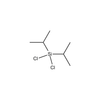
    Diisopropyldichlorosilane; Dichlorobis(1-methylethyl)silane; DIPS
  • Forms bis(blocked) or tethered alcohols
  • Used as tether in ring-closing-metathesis (RCM) reaction
  • The bifunctional nature of the reagent allows for the templating of diverse groups in intermolecular reactions and ring formation
  • Protects 3’,5’ hydroxyls of nucleosides, but less effectively than SIT7273.0
  • Forms tethered silyl ethers from diols
  • Summary of selective deprotection conditions is provided in Table 7 through Table 20 of the Silicon-Based Blocking Agents brochure
Supplier's Site Datasheet

Technical Specifications

  Gelest, Inc.
Product Category Inorganic Chemicals and Compounds
Product Number SID3537.0
Product Name DIISOPROPYLDICHLOROSILANE
Chemical Formula C 6 H 1 4 Cl 2 Si
Unlock Full Specs
to access all available technical data

Similar Products

pH Buffer 7.00 - 238218 - Hamilton Company
Hamilton Company
Specs
Type Other; Buffer
Chemical Name Potassium Dihydrogen Phosphate, di-Potassium Phosphate
Chemical Formula KH2PO4, K2HPO4
View Details
Materion Corporation
Specs
Type Bio-Inorganic Compounds
View Details
Organozinc Reagent - 2076 - Rieke Metals, Inc.
Rieke Metals, Inc.
Specs
Type OrganoMetallics
Chemical Name 2-Ethylbutylzinc Bromide
Chemical Formula C6H13BrZn
View Details
Basic Materials & Chemicals - Caustic Soda - LG Chemical of America Inc.
Specs
Bases All Inorganic Bases; Sodium Hydroxide (Caustic Soda)
Chemical Name Sodium Hydroxide
Chemical Formula NaOH 33 / NaOH 50
View Details
