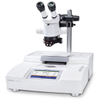
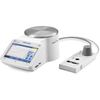
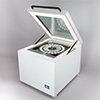
The heart of the Flash DSC 2+ is the MEMS chip sensor that enable extremely high heating and cooling rate to investigate crystallization processes.
Ultra-high cooling and heating rates Extreme cooling and heating rates (2.4 million and 3 million K/min) enable the formation of defined structures or the suppression of reorganization processes.
Measuring over a wide temperature range The Flash DSC 2+ supports measurements over a wide temperature range, from -95 to 1,000 °C, making it the ideal instrument for characterizing materials.
Measuring under oxygen-free conditions The screw lid closure enables the characterization of oxygen-sensitive materials by preventing exchange of gases with the surroundings.
High sensitivity permits measurements at low heating rates that overlap with conventional DSC
Simplicity of use from easy sample preparation and sensor change, to convenient result evaluation
Oxygen-free conditions protect your sample against oxidation
Fast response sensor enables the kinetics of extremely fast reactions or crystallization processes to be studied
Ultra-high heating rates suppress reorganization processes
Ultra-high cooling rates allow the formation of materials with defined structural properties
Wide temperature range perform measurements from -95 °C to +1000 °C
The heart of the Flash DSC 2+ is the MEMS chip sensor that enable extremely high heating and cooling rate to investigate crystallization processes.
- Ultra-high cooling and heating rates Extreme cooling and heating rates (2.4 million and 3 million K/min) enable the formation of defined structures or the suppression of reorganization processes.
- Measuring over a wide temperature range The Flash DSC 2+ supports measurements over a wide temperature range, from -95 to 1,000 °C, making it the ideal instrument for characterizing materials.
- Measuring under oxygen-free conditions The screw lid closure enables the characterization of oxygen-sensitive materials by preventing exchange of gases with the surroundings.
- High sensitivity permits measurements at low heating rates that overlap with conventional DSC
- Simplicity of use from easy sample preparation and sensor change, to convenient result evaluation
- Oxygen-free conditions protect your sample against oxidation
- Fast response sensor enables the kinetics of extremely fast reactions or crystallization processes to be studied
- Ultra-high heating rates suppress reorganization processes
- Ultra-high cooling rates allow the formation of materials with defined structural properties
- Wide temperature range perform measurements from -95 °C to +1000 °C