IEEE - Institute of Electrical and Electronics Engineers, Inc. Acoustic Array Systems: Theory, Implementation, and Application

Description
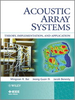
Previously, microphone arrays were used extensively used in beam-forming and estimation of source direction in speech enhancement problems. In Acoustic Array Systems: Theory, Implementation, and Application, the authors cover two other relatively less addressed problems: noise source identification and sound field visualization. Specifically, using these techniques, one is able to locate and even quantify noise sources. In addition, sound field distribution can be “visualized” by calculating the acoustical variables: pressure, particle velocity, and sound intensity. With comprehensive treatment of microphone arrays, the book covers an introduction to the theory, far-field and near-field array signal processing algorithms, practical implementations, and common applications, such as vehicles, computing and communications equipment, compressors, fans, and household appliances. The authors conclude with other emerging techniques and innovative algorithms. This book is ideal for postgraduates and researchers in acoustics, noise control engineering, audio engineering, and signal processing. It will also be helpful to practicing engineers in automotive, information, telecommunications, consumer electronics, cloud computing, and aerospace industries. Encompasses theory, implementation considerations and application know-how Provides theoretical background necessary for acoustic array systems Covers both farfield and nearfield techniques in a balanced way Introduces innovative algorithms including equivalent source imaging (NESI) and high-resolution nearfield arrays Selected code examples available for download for readers to practice on their own Presentation slides available for instructor use
Request a Quote
Description
Previously, microphone arrays were used extensively used in beam-forming and estimation of source direction in speech enhancement problems. In Acoustic Array Systems: Theory, Implementation, and Application, the authors cover two other relatively less addressed problems: noise source identification and sound field visualization. Specifically, using these techniques, one is able to locate and even quantify noise sources. In addition, sound field distribution can be “visualized” by calculating the acoustical variables: pressure, particle velocity, and sound intensity. With comprehensive treatment of microphone arrays, the book covers an introduction to the theory, far-field and near-field array signal processing algorithms, practical implementations, and common applications, such as vehicles, computing and communications equipment, compressors, fans, and household appliances. The authors conclude with other emerging techniques and innovative algorithms. This book is ideal for postgraduates and researchers in acoustics, noise control engineering, audio engineering, and signal processing. It will also be helpful to practicing engineers in automotive, information, telecommunications, consumer electronics, cloud computing, and aerospace industries. Encompasses theory, implementation considerations and application know-how Provides theoretical background necessary for acoustic array systems Covers both farfield and nearfield techniques in a balanced way Introduces innovative algorithms including equivalent source imaging (NESI) and high-resolution nearfield arrays Selected code examples available for download for readers to practice on their own Presentation slides available for instructor use
Request a Quote

Suppliers

Company
Product
Description
Supplier Links
Acoustic Array Systems: Theory, Implementation, and Application -  - IEEE -  Institute of Electrical and Electronics Engineers, Inc.
Piscataway, NJ, USA
Acoustic Array Systems: Theory, Implementation, and Application
Previously, microphone arrays were used extensively used in beam-forming and estimation of source direction in speech enhancement problems. In Acoustic Array Systems: Theory, Implementation, and Application, the authors cover two other relatively less addressed problems: noise source identification and sound field visualization. Specifically, using these techniques, one is able to locate and even quantify noise sources. In addition, sound field distribution can be “visualized” by calculating the acoustical variables: pressure, particle velocity, and sound intensity. With comprehensive treatment of microphone arrays, the book covers an introduction to the theory, far-field and near-field array signal processing algorithms, practical implementations, and common applications, such as vehicles, computing and communications equipment, compressors, fans, and household appliances. The authors conclude with other emerging techniques and innovative algorithms. This book is ideal for postgraduates and researchers in acoustics, noise control engineering, audio engineering, and signal processing. It will also be helpful to practicing engineers in automotive, information, telecommunications, consumer electronics, cloud computing, and aerospace industries. Encompasses theory, implementation considerations and application know-how Provides theoretical background necessary for acoustic array systems Covers both farfield and nearfield techniques in a balanced way Introduces innovative algorithms including equivalent source imaging (NESI) and high-resolution nearfield arrays Selected code examples available for download for readers to practice on their own Presentation slides available for instructor use

Previously, microphone arrays were used extensively used in beam-forming and estimation of source direction in speech enhancement problems. In Acoustic Array Systems: Theory, Implementation, and Application, the authors cover two other relatively less addressed problems: noise source identification and sound field visualization. Specifically, using these techniques, one is able to locate and even quantify noise sources. In addition, sound field distribution can be “visualized” by calculating the acoustical variables: pressure, particle velocity, and sound intensity. With comprehensive treatment of microphone arrays, the book covers an introduction to the theory, far-field and near-field array signal processing algorithms, practical implementations, and common applications, such as vehicles, computing and communications equipment, compressors, fans, and household appliances. The authors conclude with other emerging techniques and innovative algorithms. This book is ideal for postgraduates and researchers in acoustics, noise control engineering, audio engineering, and signal processing. It will also be helpful to practicing engineers in automotive, information, telecommunications, consumer electronics, cloud computing, and aerospace industries. Encompasses theory, implementation considerations and application know-how Provides theoretical background necessary for acoustic array systems Covers both farfield and nearfield techniques in a balanced way Introduces innovative algorithms including equivalent source imaging (NESI) and high-resolution nearfield arrays Selected code examples available for download for readers to practice on their own Presentation slides available for instructor use

Supplier's Site

Technical Specifications

  IEEE - Institute of Electrical and Electronics Engineers, Inc.
Product Category Technical Books
Product Name Acoustic Array Systems: Theory, Implementation, and Application
Unlock Full Specs
to access all available technical data

Similar Products

A Tutorial on Queuing and Trunking with Applications to Communications -  - IEEE -  Institute of Electrical and Electronics Engineers, Inc.
IEEE - Institute of Electrical and Electronics Engineers, Inc.
View Details
Active Learning -  - IEEE -  Institute of Electrical and Electronics Engineers, Inc.
IEEE - Institute of Electrical and Electronics Engineers, Inc.
View Details
Bicycle Design: An Illustrated History -  - IEEE -  Institute of Electrical and Electronics Engineers, Inc.
IEEE - Institute of Electrical and Electronics Engineers, Inc.
View Details
A Survey of Photometric Stereo Techniques -  - IEEE -  Institute of Electrical and Electronics Engineers, Inc.
IEEE - Institute of Electrical and Electronics Engineers, Inc.
View Details