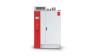
HiTemp Technology Corporation Fume Incineration Systems

Description
Thermal and catalytic type fume incineration systems as well as one of the most efficient dual fuel electric and gas catalytic oxidizers on the market with applications for SVE, VOC, and CO emissions. We have developed technology in thermal and catalytic fume systems utilizing a two-pass design with preheat exchangers for VOC disposal. Destruction efficiency of our catalyst systems can be as high as 95 to 99% or more, with some of the lowest operating costs in the industry. Systems can be designed for two basic types of waste gas streams. In the first and most common type, the application has a waste gas stream that is mostly ambient air containing a small quantity of VOCs. For these applications, the size selected is based on the flow rate in SCFM. The second type is more complicated. In these applications, the gas stream contains little or no oxygen and high concentrations of VOCs. The system design must account for the amount of combustion air necessary to burn all the hydrocarbons in the stream while adding sufficient additional combustion air so the final exhaust gas contains a minimum of 8 to 10 percent oxygen.
Datasheet
Description
Thermal and catalytic type fume incineration systems as well as one of the most efficient dual fuel electric and gas catalytic oxidizers on the market with applications for SVE, VOC, and CO emissions. We have developed technology in thermal and catalytic fume systems utilizing a two-pass design with preheat exchangers for VOC disposal. Destruction efficiency of our catalyst systems can be as high as 95 to 99% or more, with some of the lowest operating costs in the industry. Systems can be designed for two basic types of waste gas streams. In the first and most common type, the application has a waste gas stream that is mostly ambient air containing a small quantity of VOCs. For these applications, the size selected is based on the flow rate in SCFM. The second type is more complicated. In these applications, the gas stream contains little or no oxygen and high concentrations of VOCs. The system design must account for the amount of combustion air necessary to burn all the hydrocarbons in the stream while adding sufficient additional combustion air so the final exhaust gas contains a minimum of 8 to 10 percent oxygen.
Datasheet

Suppliers

Company
Product
Description
Supplier Links
Fume Incineration Systems -  - HiTemp Technology Corporation
Flemington, NJ, USA
Fume Incineration Systems
Thermal and catalytic type fume incineration systems as well as one of the most efficient dual fuel electric and gas catalytic oxidizers on the market with applications for SVE, VOC, and CO emissions. We have developed technology in thermal and catalytic fume systems utilizing a two-pass design with preheat exchangers for VOC disposal. Destruction efficiency of our catalyst systems can be as high as 95 to 99% or more, with some of the lowest operating costs in the industry. Systems can be designed for two basic types of waste gas streams. In the first and most common type, the application has a waste gas stream that is mostly ambient air containing a small quantity of VOCs. For these applications, the size selected is based on the flow rate in SCFM. The second type is more complicated. In these applications, the gas stream contains little or no oxygen and high concentrations of VOCs. The system design must account for the amount of combustion air necessary to burn all the hydrocarbons in the stream while adding sufficient additional combustion air so the final exhaust gas contains a minimum of 8 to 10 percent oxygen.

Thermal and catalytic type fume incineration systems as well as one of the most efficient dual fuel electric and gas catalytic oxidizers on the market with applications for SVE, VOC, and CO emissions. We have developed technology in thermal and catalytic fume systems utilizing a two-pass design with preheat exchangers for VOC disposal. Destruction efficiency of our catalyst systems can be as high as 95 to 99% or more, with some of the lowest operating costs in the industry.

Systems can be designed for two basic types of waste gas streams. In the first and most common type, the application has a waste gas stream that is mostly ambient air containing a small quantity of VOCs. For these applications, the size selected is based on the flow rate in SCFM.

The second type is more complicated. In these applications, the gas stream contains little or no oxygen and high concentrations of VOCs. The system design must account for the amount of combustion air necessary to burn all the hydrocarbons in the stream while adding sufficient additional combustion air so the final exhaust gas contains a minimum of 8 to 10 percent oxygen.

Supplier's Site Datasheet

Technical Specifications

  HiTemp Technology Corporation
Product Category Thermal Oxidizers and Catalytic Oxidizers
Product Name Fume Incineration Systems
Applications SVE, VOC, and CO Emissions
Unlock Full Specs
to access all available technical data

Similar Products

Thermal-wet-hybrid - CT-TW-H - Pfeiffer Vacuum, Inc.
Pfeiffer Vacuum, Inc.
Specs
Applications LPCVD / Diffusion; PECVD; Oxyde Etch
Oxidizer Type Thermal
Dimensions 1300 x 840 x 1930 mm
View Details
Catalytic Oxidizers -  - HiTemp Technology Corporation
HiTemp Technology Corporation
Specs
Applications VOCs in exhaust gas
Oxidizer Type Catalytic
Power Source Electric Motor (optional feature); Natural Gas (optional feature)
View Details
 - Regenerative Thermal Oxidizer - B&B Engineered Systems
B&B Engineered Systems
Specs
Applications Removal of VOCs, HAPs, Exhaust Fumes, & Odors
Oxidizer Type Thermal
Oxidation Technology Regenerative Thermal
View Details
PureAir E.DOC-SC -  - EBARA Technologies, Inc.
EBARA Technologies, Inc.
Specs
Applications Chlorine, Boron Trichloride, Hydrogen Bromide, Ammonia, Dichlorosilane
Oxidizer Type Dynamic Oxidation
Oxidation Technology Regenerative Thermal
View Details