HORIBA Instruments, Inc. Optical Emission Spectroscopy Etching End-point Monitor EV-140C

Description
This emission analysis type end-point monitor is intended for end-point detection or plasma condition control in the plasma-based semiconductor thin-film process. The newly-developed Rapture Intensity algorithm allows accurate end-point detection by capturing faint signal changes. The ability of capturing subtle changes in emission has significantly improved the sensitivity. The enhanced noise immunity ensures highly stable operation in hostile environments of round-the-clock manufacturing lines. Bright grating with opening ratio of F/2 A bright optical system is achieved by the use of a large, aberration-correctin g concave grating of 70 mm in diameter manufactured by HORIBA Jobin Yvon. The light-gathering ability of the concave grating itself enables the construction of a simple optical system that is brighter than Czerny-Turner spectroscopes and that can minimize the reflection loss caused by mirrors and other reflective surfaces. Back-illuminated CCD line sensor offering high sensitivity and high resolution of 2,048 channels A back-illuminated CCD achieves high quantum efficiency, ensuring stable spectroscopy in the broad spectrum from UV to visible regions. The highly sensitive measurement possible in the UV region, in particular, enables end-point detection in the wavelength range which is less affected by interference. Sigma-P software for advanced process control This software executes a variety of steps required for process control, from the analysis of plasma behavior to the creation of databases of measured data and remote control of manufacturing equipment. The programmable structure of the measurement recipe enables setting of multiple detection conditions and sequential processing. This allows the monitor to be used not only for end-point applications but also for comprehensive plasma condition monitoring. Recipe setting example This is an advanced setting which warns of abnormal plasma condition as well as conducting end-point measurement using the ratio between two wavelengths. Full reprocessing function Once spectroscopy data is obtained, simulation for recipe optimization or end-point detection can be repeated as desired by applying new recipe conditions. A library used to identify the emission species in plasma is included as standard. Spectroscopy data can be converted into a time course graph, or can be displayed freely on the screen using screen layout, operation waveforms, and comparative calculation waveforms against reference data, and other information. Auto Pattern software for the analysis of time course patterns It is a daunting challenge to find minute pattern changes from an enormous amount of spectrum data with noise. Auto Pattern automatically finds characteristic pattern changes to determine the optimum end-point wavelength. Strong end-point algorithms End-points can be accurately detected by using the user-specified wavelength-to-wavele ngth calculation waveform and filtering. The newly-developed Rapture Intensity algorithm allows constant monitoring of the changes in the intersecting angle between the two straight lines which approximate the two specified sections. This ensures that points of change are differentiated appropriately from noise without delay, and that extremely small signal changes such as end-points with small opening areas, are accurately detected. Example of weak signal waveform reprocessing Etching monitoring over a small opening area (<0.2%). After a frequency filter processes noise from the original signal, the differential signal (pink line) of the ratio (black line) of (rise (A+B+C)/decrease (D+E+F) curve) leads to accurate detection of the end-point. Recipe Designer, a recipe generation tool automatically synchronized with analysis results (optional software) Recipe Designer is an extended version of the Auto Pattern analysis tool. It allows the user to generate an optimum Rapture Intensity algorithm simply by following on-screen instructions for analysis and simulation. The algorithm can easily be built into the real recipe. This can greatly lighten the load of recipe generation for end-points of weak and complicated emission species or end-points which cannot be detected due to changes in process conditions, or similar cases. Example of Recipe Designer setting STEP1: Automatic extraction of the pattern of wavelength changes STEP2: Identification of the point of change using the approximation of two straight lines STEP3: The EDP simulation conducted by Rapture Intensity and the completed algorithm can be exported and built into Sigma-P. Advanced statistical processing: Feedback to recipes The statistical process editor is able to analyze the log data from many different perspectives, helping to improve abnormality analysis and yield rates. The results of the analysis can be fed back to measurements.
Description
This emission analysis type end-point monitor is intended for end-point detection or plasma condition control in the plasma-based semiconductor thin-film process. The newly-developed Rapture Intensity algorithm allows accurate end-point detection by capturing faint signal changes. The ability of capturing subtle changes in emission has significantly improved the sensitivity. The enhanced noise immunity ensures highly stable operation in hostile environments of round-the-clock manufacturing lines. Bright grating with opening ratio of F/2 A bright optical system is achieved by the use of a large, aberration-correctin g concave grating of 70 mm in diameter manufactured by HORIBA Jobin Yvon. The light-gathering ability of the concave grating itself enables the construction of a simple optical system that is brighter than Czerny-Turner spectroscopes and that can minimize the reflection loss caused by mirrors and other reflective surfaces. Back-illuminated CCD line sensor offering high sensitivity and high resolution of 2,048 channels A back-illuminated CCD achieves high quantum efficiency, ensuring stable spectroscopy in the broad spectrum from UV to visible regions. The highly sensitive measurement possible in the UV region, in particular, enables end-point detection in the wavelength range which is less affected by interference. Sigma-P software for advanced process control This software executes a variety of steps required for process control, from the analysis of plasma behavior to the creation of databases of measured data and remote control of manufacturing equipment. The programmable structure of the measurement recipe enables setting of multiple detection conditions and sequential processing. This allows the monitor to be used not only for end-point applications but also for comprehensive plasma condition monitoring. Recipe setting example This is an advanced setting which warns of abnormal plasma condition as well as conducting end-point measurement using the ratio between two wavelengths. Full reprocessing function Once spectroscopy data is obtained, simulation for recipe optimization or end-point detection can be repeated as desired by applying new recipe conditions. A library used to identify the emission species in plasma is included as standard. Spectroscopy data can be converted into a time course graph, or can be displayed freely on the screen using screen layout, operation waveforms, and comparative calculation waveforms against reference data, and other information. Auto Pattern software for the analysis of time course patterns It is a daunting challenge to find minute pattern changes from an enormous amount of spectrum data with noise. Auto Pattern automatically finds characteristic pattern changes to determine the optimum end-point wavelength. Strong end-point algorithms End-points can be accurately detected by using the user-specified wavelength-to-wavele ngth calculation waveform and filtering. The newly-developed Rapture Intensity algorithm allows constant monitoring of the changes in the intersecting angle between the two straight lines which approximate the two specified sections. This ensures that points of change are differentiated appropriately from noise without delay, and that extremely small signal changes such as end-points with small opening areas, are accurately detected. Example of weak signal waveform reprocessing Etching monitoring over a small opening area (<0.2%). After a frequency filter processes noise from the original signal, the differential signal (pink line) of the ratio (black line) of (rise (A+B+C)/decrease (D+E+F) curve) leads to accurate detection of the end-point. Recipe Designer, a recipe generation tool automatically synchronized with analysis results (optional software) Recipe Designer is an extended version of the Auto Pattern analysis tool. It allows the user to generate an optimum Rapture Intensity algorithm simply by following on-screen instructions for analysis and simulation. The algorithm can easily be built into the real recipe. This can greatly lighten the load of recipe generation for end-points of weak and complicated emission species or end-points which cannot be detected due to changes in process conditions, or similar cases. Example of Recipe Designer setting STEP1: Automatic extraction of the pattern of wavelength changes STEP2: Identification of the point of change using the approximation of two straight lines STEP3: The EDP simulation conducted by Rapture Intensity and the completed algorithm can be exported and built into Sigma-P. Advanced statistical processing: Feedback to recipes The statistical process editor is able to analyze the log data from many different perspectives, helping to improve abnormality analysis and yield rates. The results of the analysis can be fed back to measurements.

Suppliers

Company
Product
Description
Supplier Links
Optical Emission Spectroscopy Etching End-point Monitor - EV-140C - HORIBA Instruments, Inc.
Irvine, CA, United States
Optical Emission Spectroscopy Etching End-point Monitor
EV-140C
Optical Emission Spectroscopy Etching End-point Monitor EV-140C
This emission analysis type end-point monitor is intended for end-point detection or plasma condition control in the plasma-based semiconductor thin-film process. The newly-developed Rapture Intensity algorithm allows accurate end-point detection by capturing faint signal changes. The ability of capturing subtle changes in emission has significantly improved the sensitivity. The enhanced noise immunity ensures highly stable operation in hostile environments of round-the-clock manufacturing lines. Bright grating with opening ratio of F/2 A bright optical system is achieved by the use of a large, aberration-correctin g concave grating of 70 mm in diameter manufactured by HORIBA Jobin Yvon. The light-gathering ability of the concave grating itself enables the construction of a simple optical system that is brighter than Czerny-Turner spectroscopes and that can minimize the reflection loss caused by mirrors and other reflective surfaces. Back-illuminated CCD line sensor offering high sensitivity and high resolution of 2,048 channels A back-illuminated CCD achieves high quantum efficiency, ensuring stable spectroscopy in the broad spectrum from UV to visible regions. The highly sensitive measurement possible in the UV region, in particular, enables end-point detection in the wavelength range which is less affected by interference. Sigma-P software for advanced process control This software executes a variety of steps required for process control, from the analysis of plasma behavior to the creation of databases of measured data and remote control of manufacturing equipment. The programmable structure of the measurement recipe enables setting of multiple detection conditions and sequential processing. This allows the monitor to be used not only for end-point applications but also for comprehensive plasma condition monitoring. Recipe setting example This is an advanced setting which warns of abnormal plasma condition as well as conducting end-point measurement using the ratio between two wavelengths. Full reprocessing function Once spectroscopy data is obtained, simulation for recipe optimization or end-point detection can be repeated as desired by applying new recipe conditions. A library used to identify the emission species in plasma is included as standard. Spectroscopy data can be converted into a time course graph, or can be displayed freely on the screen using screen layout, operation waveforms, and comparative calculation waveforms against reference data, and other information. Auto Pattern software for the analysis of time course patterns It is a daunting challenge to find minute pattern changes from an enormous amount of spectrum data with noise. Auto Pattern automatically finds characteristic pattern changes to determine the optimum end-point wavelength. Strong end-point algorithms End-points can be accurately detected by using the user-specified wavelength-to-wavele ngth calculation waveform and filtering. The newly-developed Rapture Intensity algorithm allows constant monitoring of the changes in the intersecting angle between the two straight lines which approximate the two specified sections. This ensures that points of change are differentiated appropriately from noise without delay, and that extremely small signal changes such as end-points with small opening areas, are accurately detected. Example of weak signal waveform reprocessing Etching monitoring over a small opening area (<0.2%). After a frequency filter processes noise from the original signal, the differential signal (pink line) of the ratio (black line) of (rise (A+B+C)/decrease (D+E+F) curve) leads to accurate detection of the end-point. Recipe Designer, a recipe generation tool automatically synchronized with analysis results (optional software) Recipe Designer is an extended version of the Auto Pattern analysis tool. It allows the user to generate an optimum Rapture Intensity algorithm simply by following on-screen instructions for analysis and simulation. The algorithm can easily be built into the real recipe. This can greatly lighten the load of recipe generation for end-points of weak and complicated emission species or end-points which cannot be detected due to changes in process conditions, or similar cases. Example of Recipe Designer setting STEP1: Automatic extraction of the pattern of wavelength changes STEP2: Identification of the point of change using the approximation of two straight lines STEP3: The EDP simulation conducted by Rapture Intensity and the completed algorithm can be exported and built into Sigma-P. Advanced statistical processing: Feedback to recipes The statistical process editor is able to analyze the log data from many different perspectives, helping to improve abnormality analysis and yield rates. The results of the analysis can be fed back to measurements.

This emission analysis type end-point monitor is intended for end-point detection or plasma condition control in the plasma-based semiconductor thin-film process. The newly-developed Rapture Intensity algorithm allows accurate end-point detection by capturing faint signal changes. The ability of capturing subtle changes in emission has significantly improved the sensitivity. The enhanced noise immunity ensures highly stable operation in hostile environments of round-the-clock manufacturing lines.

  • Bright grating with opening ratio of F/2

A bright optical system is achieved by the use of a large, aberration-correcting concave grating of 70 mm in diameter manufactured by HORIBA Jobin Yvon. The light-gathering ability of the concave grating itself enables the construction of a simple optical system that is brighter than Czerny-Turner spectroscopes and that can minimize the reflection loss caused by mirrors and other reflective surfaces.

  • Back-illuminated CCD line sensor offering high sensitivity and high resolution of 2,048 channels

A back-illuminated CCD achieves high quantum efficiency, ensuring stable spectroscopy in the broad spectrum from UV to visible regions. The highly sensitive measurement possible in the UV region, in particular, enables end-point detection in the wavelength range which is less affected by interference.

  • Sigma-P software for advanced process control

This software executes a variety of steps required for process control, from the analysis of plasma behavior to the creation of databases of measured data and remote control of manufacturing equipment.
The programmable structure of the measurement recipe enables setting of multiple detection conditions and sequential processing. This allows the monitor to be used not only for end-point applications but also for comprehensive plasma condition monitoring.

  • Recipe setting example

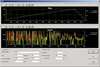
This is an advanced setting which warns of abnormal plasma condition as well as conducting end-point measurement using the ratio between two wavelengths.

  • Full reprocessing function

Once spectroscopy data is obtained, simulation for recipe optimization or end-point detection can be repeated as desired by applying new recipe conditions.
A library used to identify the emission species in plasma is included as standard.
Spectroscopy data can be converted into a time course graph, or can be displayed freely on the screen using screen layout, operation waveforms, and comparative calculation waveforms against reference data, and other information.

  • Auto Pattern software for the analysis of time course patterns

It is a daunting challenge to find minute pattern changes from an enormous amount of spectrum data with noise. Auto Pattern automatically finds characteristic pattern changes to determine the optimum end-point wavelength.

  • Strong end-point algorithms

End-points can be accurately detected by using the user-specified wavelength-to-wavelength calculation waveform and filtering. The newly-developed Rapture Intensity algorithm allows constant monitoring of the changes in the intersecting angle between the two straight lines which approximate the two specified sections. This ensures that points of change are differentiated appropriately from noise without delay, and that extremely small signal changes such as end-points with small opening areas, are accurately detected.

  • Example of weak signal waveform reprocessing

Etching monitoring over a small opening area (<0.2%).
After a frequency filter processes noise from the original signal, the differential signal (pink line) of the ratio (black line) of (rise (A+B+C)/decrease (D+E+F) curve) leads to accurate detection of the end-point.

  • Recipe Designer, a recipe generation tool automatically synchronized with analysis results (optional software)

Recipe Designer is an extended version of the Auto Pattern analysis tool. It allows the user to generate an optimum Rapture Intensity algorithm simply by following on-screen instructions for analysis and simulation. The algorithm can easily be built into the real recipe. This can greatly lighten the load of recipe generation for end-points of weak and complicated emission species or end-points which cannot be detected due to changes in process conditions, or similar cases.

  • Example of Recipe Designer setting

STEP1: Automatic extraction of the pattern of wavelength changes
STEP2: Identification of the point of change using the approximation of two straight lines
STEP3: The EDP simulation conducted by Rapture Intensity and the completed algorithm can be exported and built into Sigma-P.

  • Advanced statistical processing: Feedback to recipes

The statistical process editor is able to analyze the log data from many different perspectives, helping to improve abnormality analysis and yield rates. The results of the analysis can be fed back to measurements.

Supplier's Site

Technical Specifications

  HORIBA Instruments, Inc.
Product Category Continuous Emissions Monitoring Systems (CEMS)
Product Number EV-140C
Product Name Optical Emission Spectroscopy Etching End-point Monitor
Unlock Full Specs
to access all available technical data

Similar Products