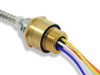
SAE (Standards for Automotive Engineers) threads are more common in industrial and automotive applications. For electrical feedthroughs, the preferred interface is an O-ring seal design versus a metal-to-metal seal with a tapered thread. SAE feedthroughs have an O-ring is installed between the thread and hex of the feedthrough. Straight threads engage with the mating surface and seal between the hex housing, O-ring, and mating surface. SAE feedthroughs can typically operate at higher pressures than NPT threads, but require more mating surface wall thickness to manage the pressure. Metric threads are also available in tapered and straight thread applications. The same materials and sealing methods are also available.
Douglas Electrical Components can hermetically seal a variety of electrical connections in an SAE configuration. Hermetic terminal seals are very popular for transmitting power in compressor and motor applications, utilizing SAE threads. Douglas offers a variety of standard configurations within the StudSeal motor terminal line.
Connectors, wires and circuits are also available in SAE feedthrough designs. Douglas can combine various types of electrical connections to simplify installation or retrofit existing designs. We source high quality electrical components to include in the design.
Locate a Technical Sales Engineer
Features
FEATURES
Hermetically seal a variety of electrical connection types in vacuum and positive pressure environments
Simple threaded installation
Create a high density, hermetic wire feedthrough using our epoxy technology
Hermetically seal optical fibers in pressurized environments
Design connectors to either end of the feedthrough for plug-and-play connections
Integrate flex or rigid circuits for OEM applications requiring a high density, lightweight design
SAE ADVANTAGES
Designs for medium to high pressure applications
Variety of threaded options
SAE DISADVANTAGES
O-ring sealing technology in most common types
More complicated thread machining can increase housing cost
Requires thicker bulkheads
SAE (Standards for Automotive Engineers) threads are more common in industrial and automotive applications. For electrical feedthroughs, the preferred interface is an O-ring seal design versus a metal-to-metal seal with a tapered thread. SAE feedthroughs have an O-ring is installed between the thread and hex of the feedthrough. Straight threads engage with the mating surface and seal between the hex housing, O-ring, and mating surface. SAE feedthroughs can typically operate at higher pressures than NPT threads, but require more mating surface wall thickness to manage the pressure. Metric threads are also available in tapered and straight thread applications. The same materials and sealing methods are also available.
Douglas Electrical Components can hermetically seal a variety of electrical connections in an SAE configuration. Hermetic terminal seals are very popular for transmitting power in compressor and motor applications, utilizing SAE threads. Douglas offers a variety of standard configurations within the StudSeal motor terminal line.
Connectors, wires and circuits are also available in SAE feedthrough designs. Douglas can combine various types of electrical connections to simplify installation or retrofit existing designs. We source high quality electrical components to include in the design.
Locate a Technical Sales Engineer
Features
FEATURES
- Hermetically seal a variety of electrical connection types in vacuum and positive pressure environments
- Simple threaded installation
- Create a high density, hermetic wire feedthrough using our epoxy technology
- Hermetically seal optical fibers in pressurized environments
- Design connectors to either end of the feedthrough for plug-and-play connections
- Integrate flex or rigid circuits for OEM applications requiring a high density, lightweight design
SAE ADVANTAGES
- Designs for medium to high pressure
applications
- Variety of threaded options
SAE DISADVANTAGES
- O-ring sealing technology in most common types
- More complicated thread machining can increase housing cost
- Requires thicker bulkheads