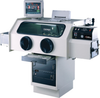
Hot Plate Welding is widely used for plastic part assembly with high strength weld requirements. FPM Tooling & Automation has manufactured automated hot plate systems for single layer and multi layered fuel tanks, including multiple parts per weld cycle. Our Experience has resulted in the design of equipment based on a rigid construction with detailed melt control to ensure repeatability of part quality in production.
Fr
om manually loaded and unloaded machines to semi and robot automated systems, FPM Tooling & Automation offers qualified engineering support to accommodate your product development. Typical hot plate welding applications include fuel tanks, reservoirs, taillight lenses, and ductwork.
Hot Plate Welding Process: independent part-to-part pressure control; PLC controlled system with touch panel operator interface; multiple heat zones with digital temperature control; weld by distance or time; ability to weld large parts and compound contours; vertical or horizontal platen configurations; highest joint strength of any weld process with most thermoplastics; produce a molecular, permanent, smooth welds are typical; multiple parts per cycle can be welded; and also design and build tooling.
<p>Hot Plate Welding is widely used for plastic part assembly with high strength weld requirements. FPM Tooling & Automation has manufactured automated hot plate systems for single layer and multi layered fuel tanks, including multiple parts per weld cycle. Our Experience has resulted in the design of equipment based on a rigid construction with detailed melt control to ensure repeatability of part quality in production.</p><p>From manually loaded and unloaded machines to semi and robot automated systems, FPM Tooling & Automation offers qualified engineering support to accommodate your product development. Typical hot plate welding applications include fuel tanks, reservoirs, taillight lenses, and ductwork.</p><p>Hot Plate Welding Process: independent part-to-part pressure control; PLC controlled system with touch panel operator interface; multiple heat zones with digital temperature control; weld by distance or time; ability to weld large parts and compound contours; vertical or horizontal platen configurations; highest joint strength of any weld process with most thermoplastics; produce a molecular, permanent, smooth welds are typical; multiple parts per cycle can be welded; and also design and build tooling.</p>