The Small-Scale Powder Disperser (SSPD) Model 3433 is the preferred choice for dispersing small amounts of powder. It is often used in studies that involve rare, expensive, or hazardous materials. It also effectively disperses polystyrene latex (PSL) spheres, used to calibrate measurement instruments. Use the SSPD with our Aerodynamic Particle Sizer® (APS™) Spectrometer for particle-size-distri
bution measurements of dry powders.
The SSPD* Model 3433 produces small quantities of powder by lifting particles from a turntable using a Venturi aspirator. The turntable rotates at variable speeds to control aerosol concentrations. Shear forces created in the SSPD are sufficient to de-agglomerate most dry particles in the range from 0.5 to 50 µm.
A selection of optional turntables is available to meet special needs.
Applications
Aerosol generation
Powder dispersion
*Developed in cooperation with the University of Minnesota Particle Technology Laboratory.
Features & Benefits
Deagglomerates most dry particles in the range from 0.5 to 50 µm
Selection of turntables available to meet specific dispersion needs
Use as an APS accessory for particle-size-distri
bution measurements
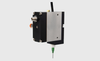
The Small-Scale Powder Disperser (SSPD) Model 3433 is the preferred choice for dispersing small amounts of powder. It is often used in studies that involve rare, expensive, or hazardous materials. It also effectively disperses polystyrene latex (PSL) spheres, used to calibrate measurement instruments. Use the SSPD with our Aerodynamic Particle Sizer® (APS™) Spectrometer for particle-size-distribution measurements of dry powders.
The SSPD* Model 3433 produces small quantities of powder by lifting particles from a turntable using a Venturi aspirator. The turntable rotates at variable speeds to control aerosol concentrations. Shear forces created in the SSPD are sufficient to de-agglomerate most dry particles in the range from 0.5 to 50 µm.
A selection of optional turntables is available to meet special needs.
Applications
- Aerosol generation
- Powder dispersion
*Developed in cooperation with the University of Minnesota Particle Technology Laboratory.
Features & Benefits
- Deagglomerates most dry particles in the range from 0.5 to 50 µm
- Selection of turntables available to meet specific dispersion needs
- Use as an APS accessory for particle-size-distribution measurements